17 Sep 2026
Budapest
17 Sep 2026
Budapest
Wednesday 16 September 2026
Pre-Conference Networking Event
Kick off the Solarplaza Summit one day early and connect with fellow solar and storage professionals in an informal setting before the conference begins. Join industry leaders, investors, developers, utilities, and technology providers for an evening of networking, drinks, and valuable conversations.
Attendance is free of charge, but spaces are limited and available on a first-come, first-served basis. Be sure to include the Networking Drinks when registering for your ticket to secure your spot. The event will take place at a surprise location, which will be shared with registered participants closer to the event date.

Thursday 17 September 2026
Registration & welcome coffee

Radmyla Nikitchenko
Solarplaza
Session 1
A data-led briefing on the operational reality that the new policy framework will have to address. We will gain insights into the current status and outlook of Hungary’s solar market, alongside the latest developments and future prospects of the BESS sector.

Dr. Pálma Szolnoki
Zero Carbon Hub
Three corporate offtakers on stage: Bosch, an international industrial manufacturer, Linde, a global industrial gases operator, and Prologis, a logistics real estate landlord, each solving the same net-zero challenge with a different structural response. An originator moderates, quering on price, tenor, and shape. If you are modelling contracted revenue for a Hungarian asset, this is the session where you find out whether your offtake assumption survives contact with the buyer.
Ákos Pesti

Krisztián Somosi
Linde

Sjaak Voogd
Prologis

Tamás Szoták
Bosch
Katalin Szécsi
KPMG
Morning networking break
Session 2
Why attend: Real numbers. Not 'opportunities exist', a 12-month back-cast of stacked revenues from a Hungarian asset, with the gross margin breakdown.
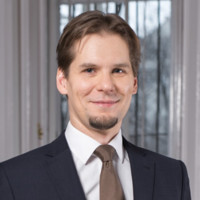
Péter Horváth
Dunamenti Power Plant

Bálint Vass
MET Group
A cash flow model deep-dive from a leading aggregator. The contract structures, fee models, and line-item revenue breakdown of a 1 MW / 2 MWh asset operating in Hungary’s Power Exchange (HUPX) through 2025, including the negative-price hours.

Péter Kósa
Voltrack
Co-location is no longer a future trend in Hungary, but is the new standard that the structure is being built around. But the legal, regulatory, and commercial framework is currently being figured out in real deals, not in theory. The operators putting hybrid projects on the ground will walk us through what's actually being negotiated, what's hitting walls, and how the new government's stance is shaping the next 18 months.

Beáta Szoboszlai
PwC
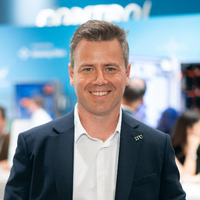
Thomas Neff
meteocontrol

Laszlo Modos
Renalfa

John Susa
WHES

Bálint Frang
E.ON Group
Networking lunch break
Session 3
A bank's perspectives on negative hours: what changed in the lender model for Hungarian PV and hybrid assets between 2023 and 2026, and what financing looks like for the next wave of co-located projects.

Nikoletta Zóna
K&H Bank
During this panel, five experts will test the bankability bar across international financing institutions, commercial banks, infra funds, borrowers, and international comparisons. What's replicable from Renalfa, what's specific to it, and what should Hungary learn from the UK’s Cap-and-Floor and Italy’s MACSE market structures, as these countries are two years ahead on the same curve.

Louiza Moutafi
Aurora Energy Research

Sándor Végh
Erste Bank

Amila Colakhodzic
Kommunalkredit

Bence Klemanovits
CIB Bank

Péter Gyurcsák
otpbank
Afternoon networking break
Session 4
A 40-minute interactive session with Jan Willem Zwang, founder of Stratergy, whose BESS and energy-trading trainings regularly sell out to Dutch industry. Rather than a straight presentation, Jan Willem walks the audience through the three trading decisions every HU BESS operator will face in the next 18 months, using live audience input via Sli.do at each decision point. This is his only 2026 appearance in Hungary.

Jan Willem Zwang
Stratergy
The day's closing panel. Five market leaders, one moderator, three predictions each. By the end of this panel, the audience will have learned about the Ministry's roadmap, the cost of midday, the hybridization playbook, the offtake question, the financing reality, and the 2027 capture-price forecast. This panel takes everything from the day and converts it into a position. Not "what might happen", what will happen, who's already moving on it, and what the audience should do on Monday morning.
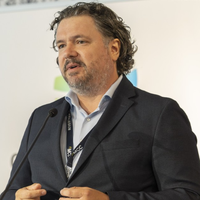
András Jenei
W2W

Csaba Polgár
Pontes
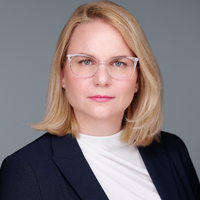
Eszter Nagy
Electron Holding

Gábor Makai
Raiffeisen Bank Hungary

András Kósa
ABO Energy
Radmyla Nikitchenko
Solarplaza
Networking drinks
Got questions?
We’ve got you covered — explore our most frequently asked questions about Solarplaza Summit Hungary!
Send us an email; we’d be more than happy to help.
Radmyla Nikitchenko
Junior Event Manager
For questions about the program and content of the event:
[email protected]
Maryana Malyshevska
Business Developer
For questions regarding partnership opportunities:
[email protected]