Hungary's battery fleet grew from a few pilots to almost 1 GW in less than two years. Now the question is what those batteries will earn as more of them compete for the same markets. At the Solarplaza Summit Hungary, Péter Horváth and Bálint Vass from MET Group, Péter Kósa from Voltrack, and Jan Willem Zwang from Stratergy walked through real numbers, contract models, and trading tactics. Their message was consistent: the easy money is fading, and the revenue that remains goes to whoever optimizes best.
Key takeaways
- As battery markets mature, revenues disappear in a set order: ancillary services first, then intraday, with day-ahead arbitrage lasting longest.
- MET Group earned a gross margin close to €300,000 per MW over the past 12 months in Hungary, but warned against projecting that into the future.
- Aggregators deliberately keep battery capacity open for market volatility instead of locking it into day-ahead trades.
- A Voltrack example showed a merchant battery keeping around 60% of its market result after trader, aggregator, and grid fees.
- Speakers advised battery owners to pick an aggregator before commissioning, not after.
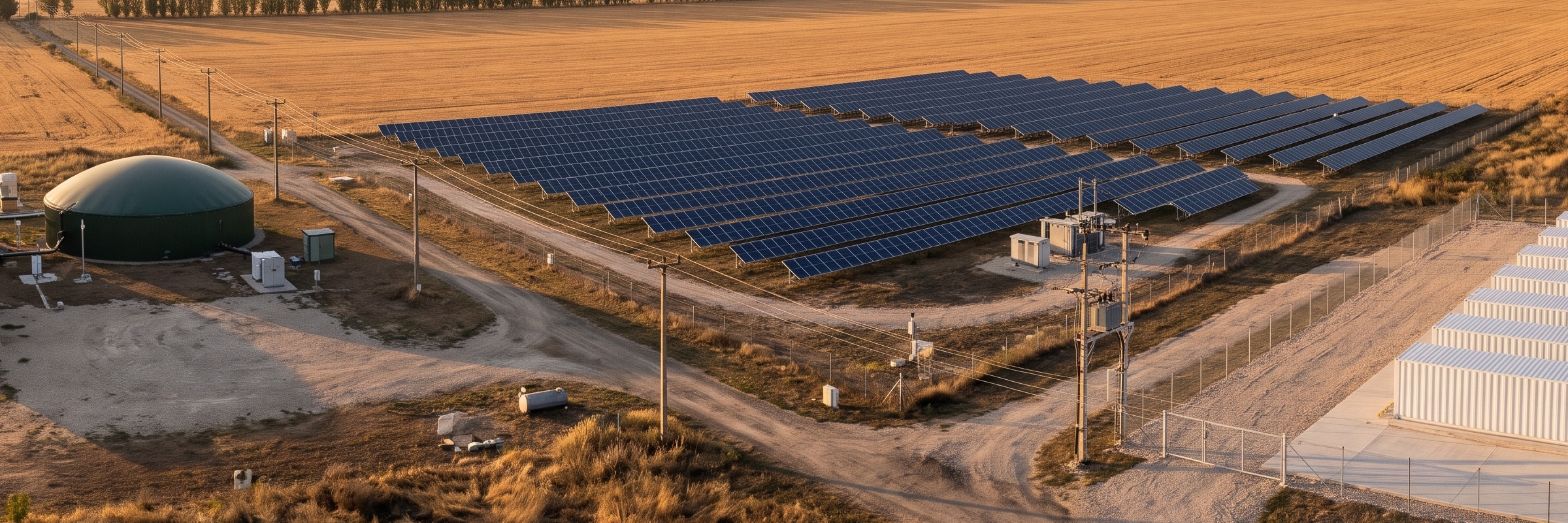
Value pools disappear in a set order
Horváth, CEO of Dunamenti Power Plant (MET Group), described batteries as a boom-and-bust industry. Battery technology became competitive in Europe in 2023 and 2024, prices attracted investment, and revenues are now inevitably falling as more capacity arrives. Unit capital expenditure (CAPEX), on the other hand, has started to plateau.
He used two markets as a preview. In Belgium, battery revenue indices were extremely high in 2023 and 2024, at around half a million euros per MW per year. Values then dropped sharply after a market design change: Belgium's connection to the European balancing platforms PICASSO and MARI. In California, revenues were already at $120,000 to $150,000 USD per MW per year in 2022 and have fallen substantially as installations grew. Ancillary services were the first value pool to disappear, followed by real-time energy, while day-ahead arbitrage proved the most persistent.
Hungary is following the same path. Zwang showed that the Hungarian upward automatic frequency restoration reserve (aFRR) capacity price fell from €106 per MW per hour in 2022 to €6 in 2026 so far, a 94% drop. Dr. Pálma Szolnoki from Zero Carbon Hub said Hungarian batteries are already operated mainly for wholesale arbitrage because of this. Since the event, Hungary's transmission system operator MAVIR joined PICASSO on 1 October 2026.
Be first, be smart, or cheat
To make his point, Horváth borrowed a line from the film Margin Call: there are three ways to make a living in this business. "Be first, be smart or cheat." Being first is no longer an option in Hungary, and cheating is out, which leaves being smart. That includes not cheating yourself with revenue assumptions. "Let's not take an example of last August with the record intraday spreads and then project that," he said.
Being smart, in MET's view, means lowering unit CAPEX and time to market by reusing existing grid connections and infrastructure. MET starts with standalone batteries and then moves to co-located batteries that can charge from both solar and the grid. Batteries that can only charge from solar come last, because they often support solar assets that are already struggling with zero or negative midday prices. His final advice: talk to several aggregators, understand the risks in their revenue projections, and ask for their credentials.
Twelve months of MET data
Vass, Head of Power Trading at MET International, showed how MET ran a representative battery in Hungary from July 2025 to the end of this summer. Day-ahead trading made up a smaller share of revenue than most would expect, and that was a choice. "Batteries are options and options should be traded as such," he said. MET keeps much of the battery's flexibility open for balancing and intraday volatility instead of selling full cycles on the day-ahead market.
The monthly results show both sides of that approach. In February, day-ahead spreads were narrow because most power plants were running, but balancing volatility let MET earn far more than a day-ahead benchmark would have. In May, the balancing market was quiet and extreme negative day-ahead prices were hard to forecast, so MET barely matched the benchmark, which Vass sees as the bare minimum for any optimizer. July improved again as balancing activity picked up.
In capacity markets, MET bids selectively and goes for high unit margins rather than volume. "The preferred strategy of us… is not to win at any price," Vass said. Asked about results, he said the gross margin was close to €300,000 per MW over the year for a battery of this setup in Hungary. Horváth immediately put that in context. "You cannot just take the current unit price, the previous 12 months average gross margin price and then put that into a formula and then come to a two year cash on cash return," he said.

The gas tank is already a battery
Péter Kósa, Managing Director of Voltrack, came to storage from an unusual direction: biogas. Voltrack takes over underperforming biogas plants, refurbishes them, and sells their output more actively. One plant in Csongrád went from earnings before interest, taxes, depreciation, and amortization (EBITDA) of HUF -17 mln (about -€47,000) under the feed-in tariff to HUF +65 mln (about €178,000) under the new model, according to Voltrack's figures.
In 2022, Kósa could not find an aggregator whose software could handle biogas, so Voltrack built its own. A biogas plant's gas tank works much like a battery's state of charge. When the tank is low, the plant bids into downward regulation; when it is nearly full, it switches to upward regulation. The same logic now runs Voltrack's batteries. Its portfolio has grown to around 220 MW, more than 90% of it third-party assets, including over 30 MW of storage.
What the aggregator keeps
Both Szolnoki and Kósa described three common contract structures between battery owners and aggregators:
- A share of the total profit, which suits the owner as long as a good aggregator clearly beats simple day-ahead arbitrage.
- A low fee up to a benchmark, usually day-ahead arbitrage, plus a success fee on everything above it.
- A guaranteed result, regardless of how the aggregator performs.
Kósa expects the benchmark model to become more attractive as spreads compress. Voltrack does not offer guarantees. He also shared an example based on actual results for a 0.5 MW / 1 MWh merchant battery charging from the grid. A market result of €139,800 per year shrank to an annual net result of €85,000 after the trader fee (about €4,900), volumetric grid fee (about €9,300), aggregator fee (about €18,800), and fixed grid fee (about €21,800). For a battery at a consumer site, he said, those grid costs can be close to zero.
Szolnoki noted that owners and aggregators are currently having "very heavy, difficult discussions" as they learn what real revenues look like. Kósa's advice was to choose an aggregator before switching the battery on, so both sides can agree on the site's local control logic. Otherwise, he has seen projects lose another half year adapting the software after commissioning.
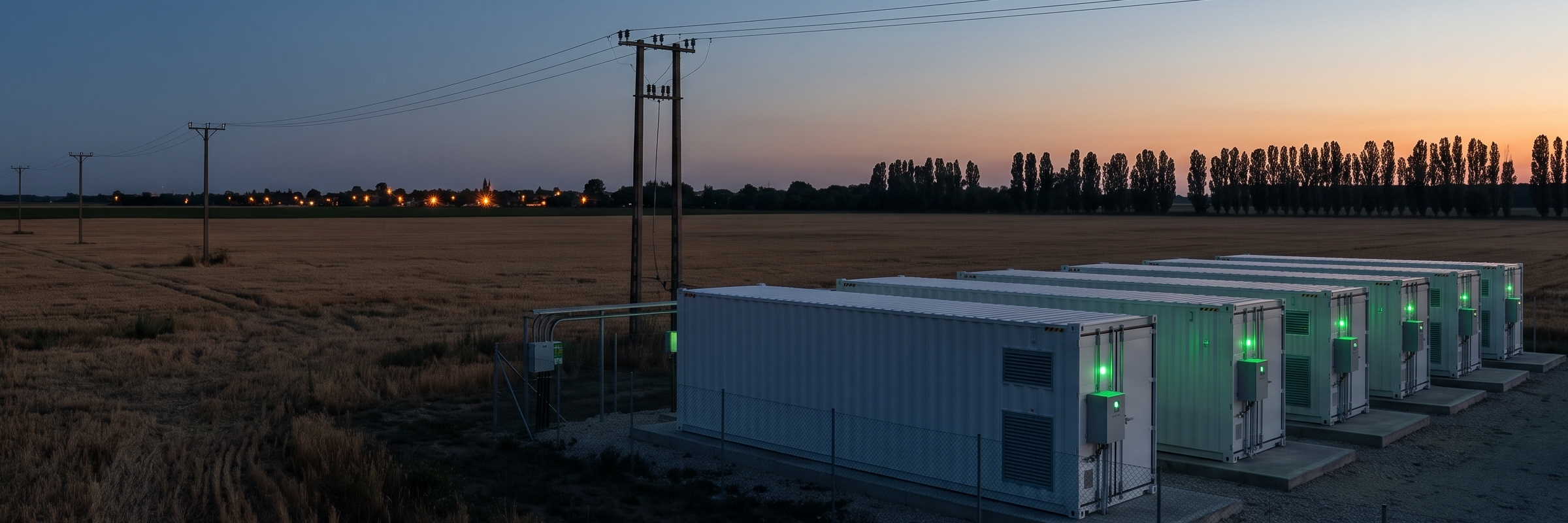
Trading tactics from the Netherlands
Zwang, a former trader, presented the Netherlands as a preview of Hungary's next few years. The day-ahead market will be the last to saturate, he said, and good aggregators decide every day which market to target, for example frequency containment reserve (FCR) in the afternoon and upward aFRR in the evening. Dutch and German aggregators now sell only about 85% of their forecast on the day-ahead market. Some even sell into negative prices to buy themselves the option to curtail or buy back at lower prices on the intraday market.
He also pointed to a Hungarian tactic driven by grid fees: some two-hour batteries charge at half their inverter capacity, like a four-hour battery, but discharge at full power when prices peak. And he named a risk no one else had mentioned: a lower gas price. Higher gas prices widen spreads and lift balancing prices, so they raise battery revenue too. In the end, he said, "an aggregator is very important, but a good forecaster I think is even more important."
Want the full picture of the day? Read our recap of the Solarplaza Summit Hungary 2026: Solarplaza Summit Hungary 2026: making the hybrid era pay

