Hungary's banks financed a solar build-out that took the country to the world's highest solar share. Batteries now need the same, but their revenues are harder to predict. At the Solarplaza Summit Hungary, Nikoletta Zóna from K&H Bank and a panel of lenders from Erste Bank, Kommunalkredit, CIB Bank, and OTP Bank explained how they assess storage projects. The short version: banks finance cash flows, and a battery's cash flow is only as strong as the contract behind it.
Key takeaways
- Hungarian lenders have shifted from financing megawatts of generation to financing the durability of a project's revenue.
- A standalone battery without contracted revenue is rarely financed in Hungary, partly because grid charging fees weigh on its returns.
- Tolling agreements are currently the most bankable structure for standalone battery energy storage systems (BESS), but few have been signed in Hungary so far.
- Merchant revenue needs a much higher debt service coverage ratio (DSCR) than contracted revenue, which directly cuts the amount of debt a project can raise.
- Lenders want control over how a battery is operated, so the aggregator becomes a formal party to the financing.
From financing megawatts to financing systems
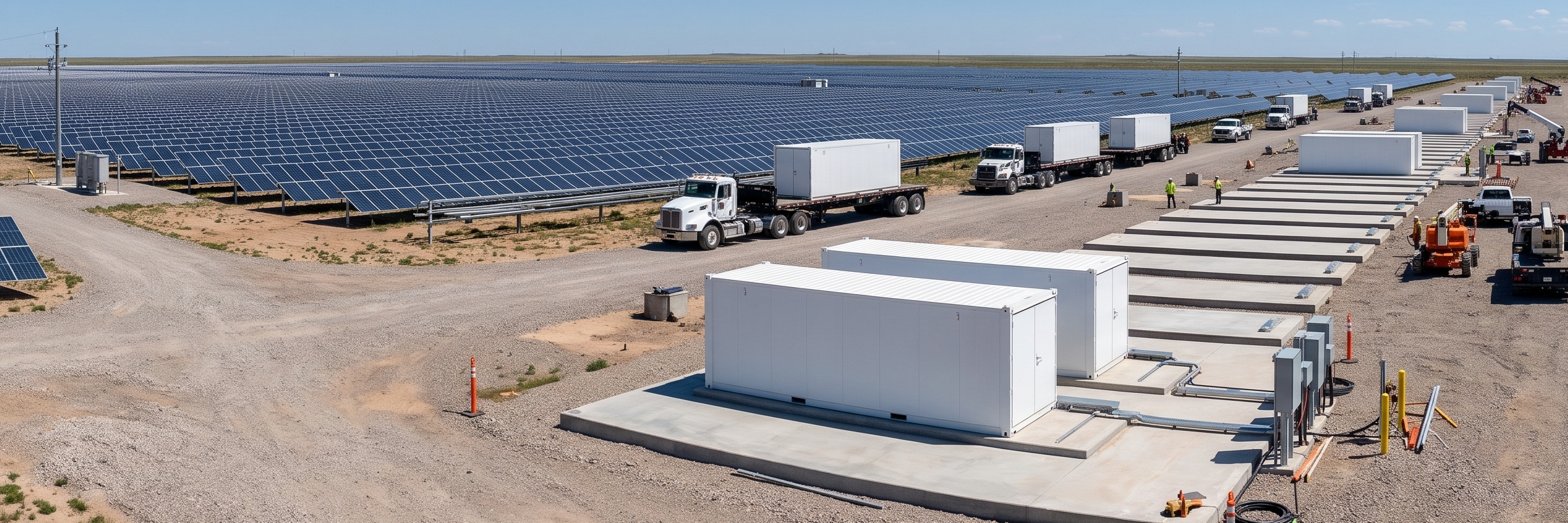
Zóna opened with the scale of what banks have already done. Industrial solar in Hungary grew from 55 MW in 2016 to 4.9 GW in 2025, and Hungarian banks have provided HUF 468 bln (about €1.3 bln) in solar financing. Most of it is backed by support schemes: around two-thirds of industrial solar capacity sits under the feed-in tariff scheme (KÁT), the METÁR contract-for-difference scheme, or other subsidies. For those projects, the main risk lenders took on was regulatory.
That model is changing. The merchant share of the solar fleet grows every year, and banks have started financing merchant structures. At the same time, Hungary's battery fleet grew from 146 MW at the end of 2024 to 984 MW in August 2026, according to Zóna. Most of the large projects were supported by the METÁR storage scheme and financed with corporate loans at the holding level rather than project finance. "Today we are not focusing anymore on financing the megawatts. We are focusing on financing energy systems," she said.
Zóna does not see negative prices as a threat to solar returns yet. Negative hours made up 3.2% of total production hours in Hungary, compared to 4.2% in the Netherlands and 5.7% in Germany, according to her figures. Banks do, however, now model a curtailed solar curve and curtailed prices when they assess revenue.
Why standalone storage struggles
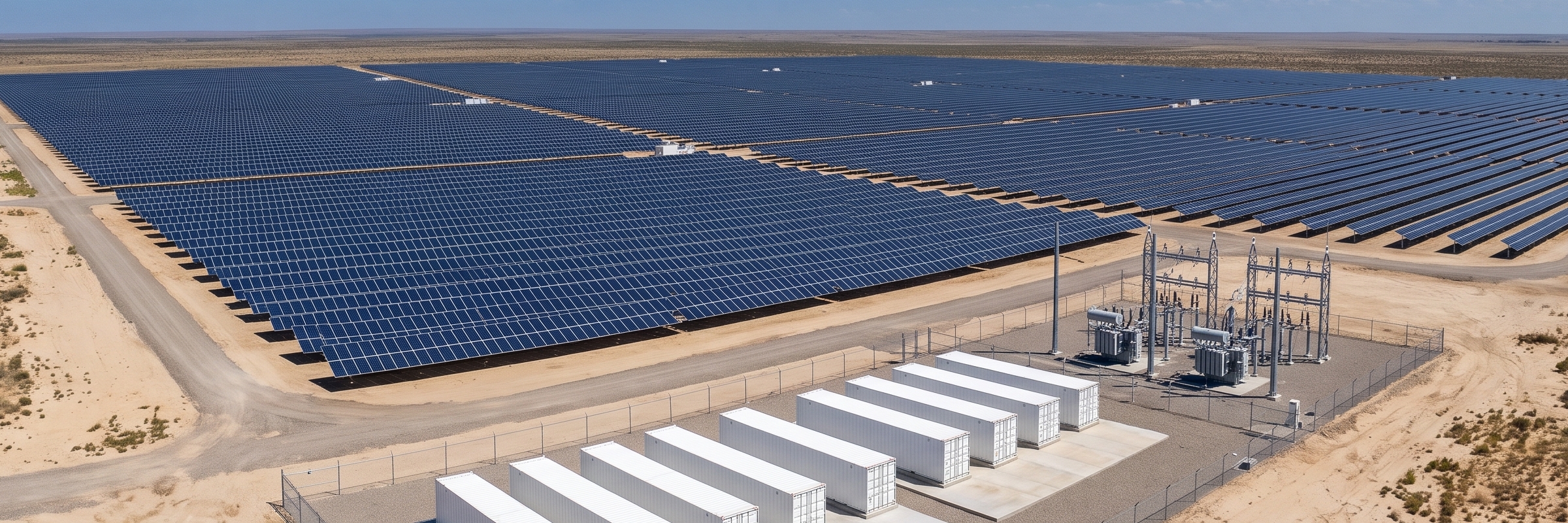
For standalone batteries, the problem is the fees paid to charge from the grid. Louiza Moutafi from Aurora Energy Research presented modeling that puts a standalone two-hour battery in Hungary below a 6% internal rate of return (IRR), against more than 12% for a battery co-located with solar or wind. Co-location can also save around 15% on capital expenditure (CAPEX) and 10% on operating costs compared to building the two assets separately, according to Aurora.
Zóna said tolling, where an offtaker pays a fixed fee for the use of the battery, is the most viable way to finance a standalone battery in Hungary today. Partly or fully merchant projects need a higher share of equity. Lenders also look closely at the sponsor, and international sponsors with battery portfolios elsewhere have an advantage over Hungarian ones. Asked for her number one piece of advice to developers, she was clear: get a revenue contract. "We need long-term fixed cash flow to provide financing for standalone BESS," she said. Péter Gyurcsák from OTP Bank agreed: "on a purely merchant basis, at least the standalone projects won't fly.
The contract decides the debt
The main tool lenders use is the DSCR, the ratio of a project's cash flow to its debt payments. Zóna's indicative benchmarks for debt sizing range from 1.20 to 1.30x for subsidized solar up to 1.50 to 1.80x for full merchant projects, with battery tolling at 1.25 to 1.40x. Sándor Végh from Erste Bank gave similar figures: close to 2x for a merchant structure, against 1.2 to 1.3x for contracted revenue. A higher DSCR means less debt for the same cash flow.
Bence Klemanovits from CIB Bank explained that his bank sizes the debt piece by piece. The solar and battery parts of a hybrid project are assessed separately, and within the solar part, contracted and merchant revenue get different criteria. Higher risk leads to a lower financing ratio, a higher DSCR, a shorter tenor, or a more aggressive cash sweep. Végh added that Erste uses low- or mid-low-revenue cases from advisors rather than the reference case to keep a buffer for downside scenarios.
Tenor is limited by technology. Banks generally do not lend for more than 10 years against a standalone battery because of degradation, according to Zóna. Gyurcsák said OTP Bank may accept a somewhat longer tenor if the product warranty covers it.
The biggest open question is how fast battery revenues will fall. Végh noted that solar took a long time to reach cannibalization, while batteries seem to be getting there much faster. Hungary has only around 1 GW of storage, and lenders already see revenues decreasing.
Who controls the battery?
Moutafi raised a risk that rarely gets discussed: the bank's counterparty is the developer, but the battery is run day to day by a trader or aggregator. An optimizer chasing short-term revenue could overuse the asset and drive up costs later. Végh explained how Erste handles this. The aggregator must be reliable and experienced; it is named as a major project party in the finance documents, and problems with its activity can trigger an event of default. The aggregation agreement becomes a project document, and the bank receives monthly or quarterly operating data and regular reviews by its technical advisor
What other markets show
Gyurcsák has seen only one tolling agreement in Hungary so far. In Romania, where OTP Bank is also active, contracted cash flows often cover 60 to 70% of a project for five to seven years. He said tolls there are in the range of €60,000 to €70,000 per MW per year, spread hedges have been seen at around €80 per MWh, and optimizers on revenue-sharing deals take 15 to 25% of revenue.
Jan Willem Zwang from Stratergy brought the Dutch view. Standalone battery toll deals in Europe grew from three to 15 in one year, according to his figures. But tolls also carry timing risk: one large European utility offered Dutch developers five-year tolls for four-hour batteries at around €350,000 per MW last year and has since dropped its offer to about €120,000. Formula-based contracts signed during the 2021 and 2022 price spike have also aged badly, with one Dutch project now struggling to meet its debt service requirements. The emerging template, in his view, is a contracted floor with a merchant tail, and Hungary's scarce resource is not batteries but creditworthy local tollers.
Kommunalkredit sits earlier in that process. Amila Colakhodzic said the bank provides bridge financing during construction, stresses its downside cases heavily, and helps developers build a track record before refinancing with local commercial banks. Her closing advice summed up the panel: "contract enough downside to make the debt resilient, but also preserve some upside to keep the equity case attractive."
Want the full picture of the day? Read our recap of the Solarplaza Summit Hungary 2026 here: Solarplaza Summit Hungary 2026: making the hybrid era pay

