3 Jun 2026
Paris
3 Jun 2026
Paris
Tuesday 2 June 2026
Pre-Conference Networking Event
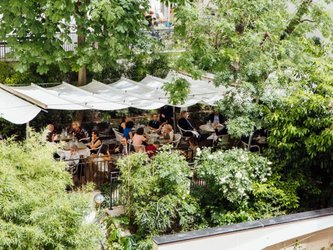
We invite you to join us for an intimate evening at Flora Danica, a refined Nordic brasserie tucked away in a hidden patio just off the iconic Champs-Élysées. Set on an elegant outdoor terrace, this secluded space offers a rare sense of calm and exclusivity in the heart of Paris. With its warm atmosphere, Scandinavian-inspired cuisine, and relaxed sophistication, Flora Danica provides the perfect setting to unwind, connect, and enjoy meaningful conversations ahead of the conference.
Wednesday 3 June 2026
Registration & welcome coffee

Radmyla Nikitchenko
Solarplaza
Session 1
Europe's agrivoltaic pipeline looks impressive on paper. The reality of what gets built - where, why, and on what timeline - tells a different story. This keynote draws on five years of tracked announcement-to-commissioning data across nine European markets to answer the question investors and developers need answered before they place their next bet: where does agri-PV actually scale, and why?
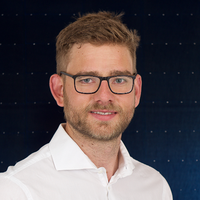
Constantin Klyk
Agri-PV Consulting
The numbers are in. This session digs directly into the agronomic data to explore what Europe’s operational agrivoltaic projects are actually delivering on farms today, in terms of crop performance and climate adaptation.

Jorrit Becking
AgRadiance
Agri-PV development looks very different across Europe, and the gap between a project that closes and one that stalls is rarely the technology. This panel puts developers who have navigated real permitting battles, agronomic audits, and financing processes in France, Italy, Germany, and Spain in the same room, and asks them to be honest about what actually kills projects early, and what makes the survivors bankable.

Morgan Verdier
Glint Solar

Alvaro Sanz
Enerside Energy

Maud Gaide
Q Energy
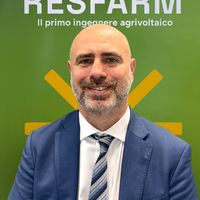
Alessio Pinzone
Agrivoltaica

Richmond Kuleape
Uniper Renewables
Morning networking break
Session 2
This session offers a candid investor perspective on how developers can structure agri-PV projects that meet financing criteria from day one, reducing risk, accelerating permitting, and unlocking capital at scale.

Paz Díaz Bauluz
Demea
This session explores how technology evolution, smarter system design, and operational optimisation are reducing CAPEX and OPEX., bringing agri-PV closer to mainstream utility-scale economics.
Engineering, procurement, and O&M choices that materially improve project economics
Elevated structures, adaptive shading, semi-transparent modules, and design standardisation
Where CAPEX and OPEX are falling, and where they are not

Elina Bosch
Becquerel Institute
The deals are closing. This panel goes behind the scenes of the most significant agri-PV financing transactions of the past three years, including the €144M EIB and Erste Bank structure behind PÜSPÖK's 257 MWp Austrian portfolio, to update attendees on how lenders are assessing Agri-PV risk today and what makes a project geniunely bankable in 2026.
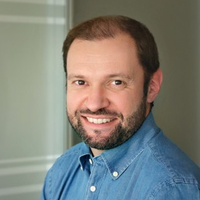
Emilien Simonot
Eppur Labs
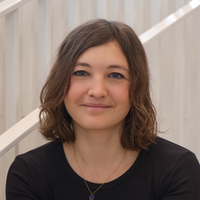
Johana Svobodova
Triodos Bank
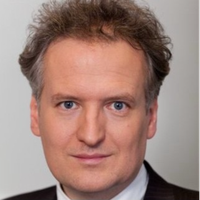
Gerald Klauss
Erste Bank

Amélie de Magondeaux
Green Giraffe
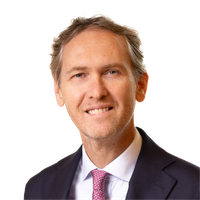
Peter van Ees
ABN AMRO Bank
Vincent Girard
European Investment Bank (EIB)
Networking lunch break
Session 3
Agri-PV projects must deliver strong agricultural performance while remaining economically viable and sustainable over the long term. Achieving this requires carefully balancing the expectations of farmers, investors, local authorities, and regulators within a rapidly evolving regulatory environment.
In this context, developers play a critical role in aligning agricultural productivity, regulatory compliance, and project bankability.
This presentation explores how the recent French decree is redefining this balance, with a particular focus on its cost implications and the short-term impacts on Agri-PV project development in France.

Alice Lefort
BayWa r.e.
Getting the permit was the hard part. What comes next is ensuring that agricultural activity is effectively maintained over time, within a framework that is still evolving and interpreted differently across territories. While the French law sets clear objectives, its implementation remains uneven, creating risks for developers. This session provides a field-based perspective on how to design projects that remain credible and defensible in the long term.

Sebastian Ackermann
AS DEV
System design is where agri-PV projects are won or lost before a single panel goes in the ground. This session combines a live demonstration of the tools developers actually use with a panel debate on the design trade-offs that determine whether a project maximises both yields, or quietly optimises for one at the expense of the other. Bring your laptop, and your questions!

Stéphanie Maalouf
Akuo Energy

Giacomo Aglio
Dual Energy

Camelia Farchado
DNV

Stéphane Héraud
Agrisoleo
Afternoon networking break
Session 4
Batteries are coming to agri-PV, not as an add-on, but as a structural shift in how projects are financed, valued, and operated. This session explores what adding storage actually does to the agri-PV business model: who benefits, what the revenue stack looks like in practice, and whether flexibility revenues are genuinely bankable in 2026 or still too uncertain to underwrite.
Regulatory signals underpinning the growth of Agri-PV + BESS
The revenue stack unpacked and how that changes the income model and implications for the agricultural partner
The farmer's perspective: concerns, challenges, and best practices
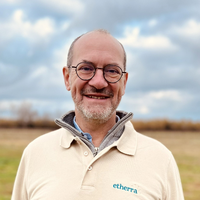
Alex Houtart
Etherra
This session tells you what that model looks like, what it gets right that others don't, and what it means for developers and investors watching Central Europe as the next wave of European agri-PV volume.
What the framework covers today
The replicability question, can the Czech model become the regional template
The commercial implication for developers

Jiri Bim
Czech Solar Association
Policy is where agri-PV either scales or stalls. The EAGER project has spent the past two years doing something no market report has done: sitting with policymakers, farmers, regional authorities, and energy agencies across nine regions in Europe, Italy, Bulgaria, Germany, Spain, Poland, Lithuania, Serbia, Belgium, and Ukraine, to map exactly where the policy barriers are, what good practice looks like when it works, and what it would take to replicate it. This closing keynote shares what that cross-regional knowledge exchange has revealed.

Ying Huang
Landshut University of Applied Sciences
Radmyla Nikitchenko
Solarplaza
Networking drinks
Got questions?
We’ve got you covered — explore our most frequently asked questions about Solarplaza Summit Agri-PV Europe!
Send us an email; we’d be more than happy to help.
Marjory Dupouy
Teamleader Events Team
For questions about the program and content of the event:
[email protected]
Dee Yon Chng
Project Manager
For questions about the program and content of the event:
[email protected]
Alfonso de la Peña Flores
Business Developer
For questions regarding partnership opportunities:
[email protected]