The market landscape for Nordic energy storage is shifting rapidly from specialized grid services toward full wholesale market optimization. Battery systems initially achieved high financial returns by providing fast frequency containment reserves. However, as storage capacity expands, increased competition in ancillary markets is compressing margins and compelling asset owners to build more sophisticated revenue stacks. We created this analysis for asset managers, storage operators, and technical consultants evaluating utility-scale storage investments. We distilled these insights directly from our white paper, 'Can BESS Solve the Nordic Power Market’s Growing Flexibility Crisis?', which you can download on its landing page.
Key takeaways
- Rapid battery deployment in ancillary service markets is driving down returns and forcing operators to diversify revenue streams.
- Operational Battery Energy Storage System (BESS) capacity across Finland, Sweden, and Denmark is projected to reach 5.1 GW by the end of 2028.
- Market shifts toward 15-minute settlement intervals and expanding manual Frequency Restoration Reserve (mFRR) procurement are opening wholesale trading opportunities.
- System operators are increasingly favoring two-hour duration systems over one-hour systems to capture wider energy arbitrage spreads.
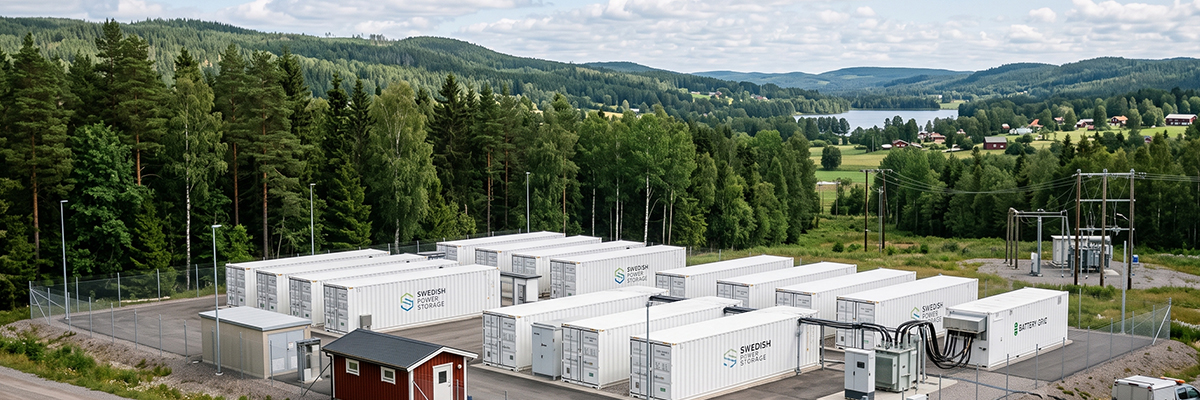
The rapid scaling of Nordic BESS capacity
Early utility-scale Battery Energy Storage System (BESS) assets focused primarily on Frequency Containment Reserves (FCR) due to their fast response times and technical accuracy. Strong returns between 2022 and 2024 drove significant capital into the sector, particularly across Sweden and Finland. As operational capacity increased, reserve markets became saturated, causing ancillary service prices to fall and encouraging operators to seek alternative market revenue.
According to capacity projections from Aurora Energy Research, storage buildout across the region will continue to accelerate:
- Total operational BESS capacity across Finland, Sweden, and Denmark is projected to reach approximately 5.1 GW by the end of 2028.
- Sweden leads regional deployment, having passed 1 GW of operational storage capacity in the first quarter of 2025 and aiming for 2,800 MW by 2028.
- Finland is building a substantial project pipeline, with projected capacity reaching 1,747 MW by 2028.
- Denmark is expanding its storage footprint, with capacity projected to reach 510 MW by 2028.
The evolution of the revenue stack
Modern BESS business models combine ancillary services, balancing market participation, and wholesale energy trading. Energy arbitrage is becoming a central value driver, allowing batteries to charge during low-price or negative-price periods and discharge when wholesale prices peak.
Structural market developments are enabling this multi-market approach:
- The transition to 15-minute market settlement intervals provides granular price signals that align market pricing with real-time physical conditions.
- The manual Frequency Restoration Reserve (mFRR) market is expanding procurement volumes, offering new participation opportunities for storage assets.
- Hardware choices are shifting toward two-hour duration systems, which capture wider intraday price spreads more effectively than one-hour systems while retaining access to balancing markets.
Co-location and broader flexibility requirements
Co-locating battery storage with wind or solar generation provides direct commercial benefits. By storing excess generation during hours of local grid congestion or negative pricing, co-located assets maximize the use of grid connections and stabilize revenue profiles under Power Purchase Agreements (PPAs).
While BESS excels at managing short-term hourly flexibility, long-term system balancing requires a combination of technologies. Montel forecasts that Nordic electricity demand will grow by 72% between 2022 and 2040, reaching 656 TWh due to industrial electrification, hydrogen production, and data centers. Meeting these expanding flexibility needs will require combining short-duration batteries with large hydropower reservoirs, demand response, hydrogen storage, and continuous grid expansion.