White Paper
13 July 2026
Estimated reading time: 10 min
Can BESS solve the Nordic power market's growing flexibility crisis?
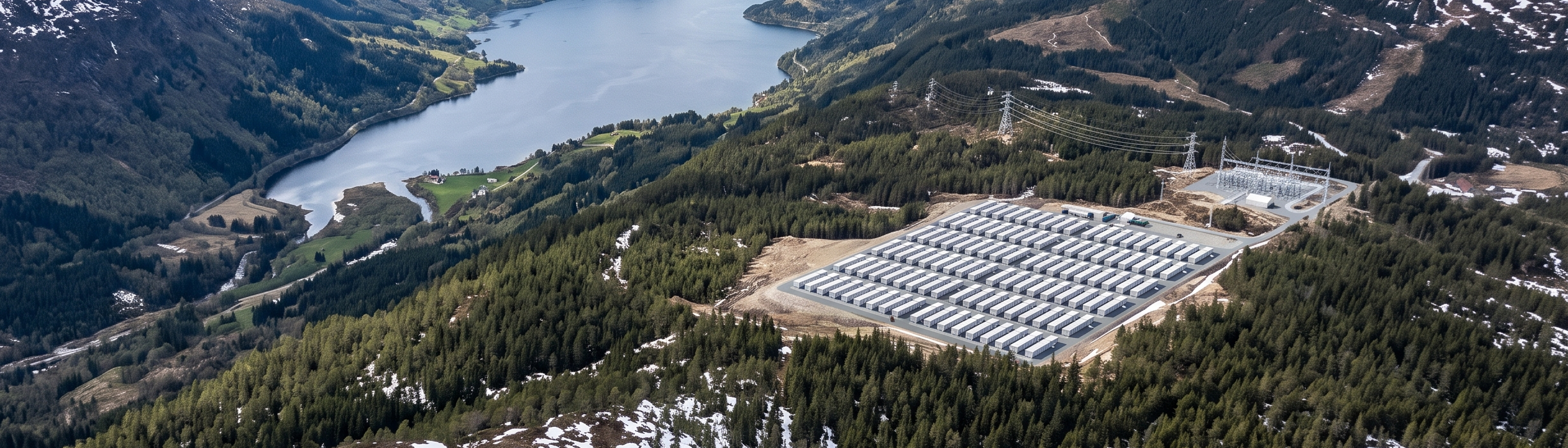
The Nordic power market is undergoing a structural shift in which weather-dependent generation regularly outpaces regional transmission capacity, leading to severe price cannibalization and rising curtailment rates. For developers and investors handling Nordic renewable assets, relying solely on traditional energy generation models is becoming a direct threat to project ROI. The strategic risk of inaction is clear, as localized grid bottlenecks can quickly translate into millions of euros in foregone revenue. We are entering a phase where market success is no longer about how much electricity you generate but about how effectively you manage your flexibility.
Key takeaways
- Negative prices have shifted from rare anomalies to structural market signals that depress asset-capture prices across the region.
- Transmission congestion drives massive regional price divergence, trapping cheap generation in northern zones while south zones experience higher costs.
- BESS is rapidly transitioning from niche grid-frequency assets to core market-traded assets driven by energy arbitrage.
- Relying on a single technology will not protect your portfolio; a diversified mix of storage, flexible demand, and grid reinforcement is essential.
Visualizing the market shift
To understand the scale of this transition, this white paper highlights two critical market projections that every asset manager needs to analyze.
The Aurora Energy Research 2028 installed capacity projection
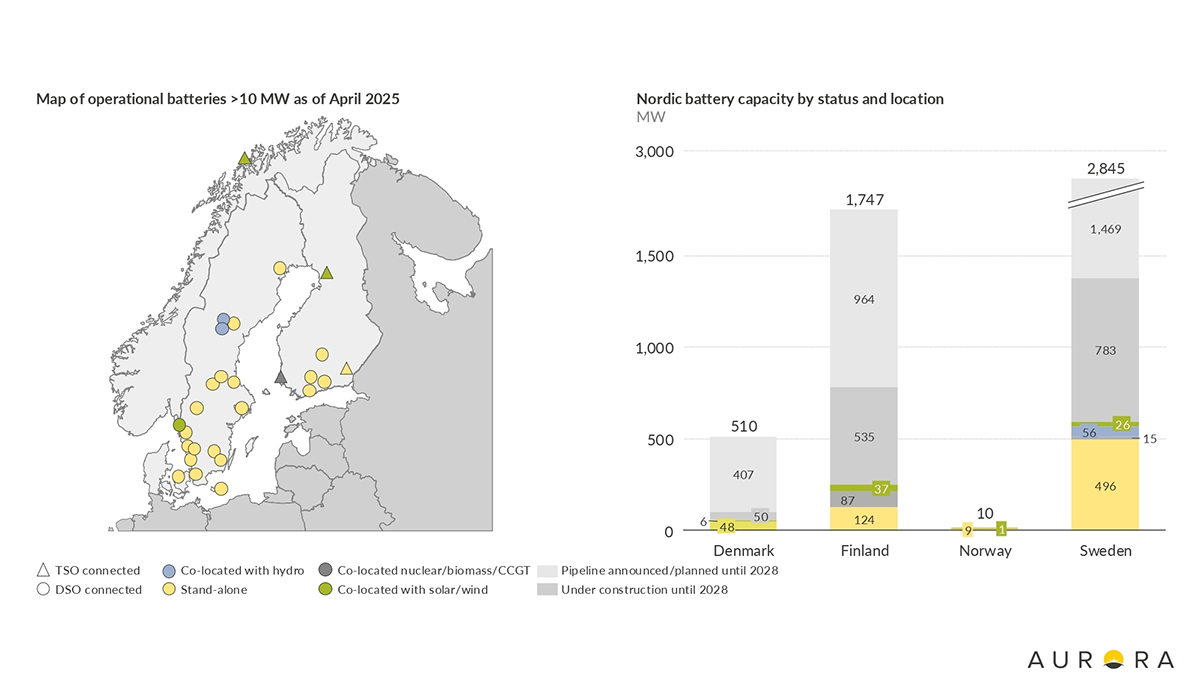
Source: Aurora Energy Research
The scale of incoming flexibility capital is accelerating. The data indicates that operational BESS capacity across Finland, Sweden, and Denmark is projected to reach approximately 5.1 GW by the end of 2028. Sweden leads this buildout with an expected 2,800 MW of installed capacity. This rapid scaling means the early-mover advantage in frequency reserve markets is shrinking, forcing operators to adapt to a complex revenue stack that combines ancillary services with intraday energy arbitrage.
The Fortum Nordic demand projection
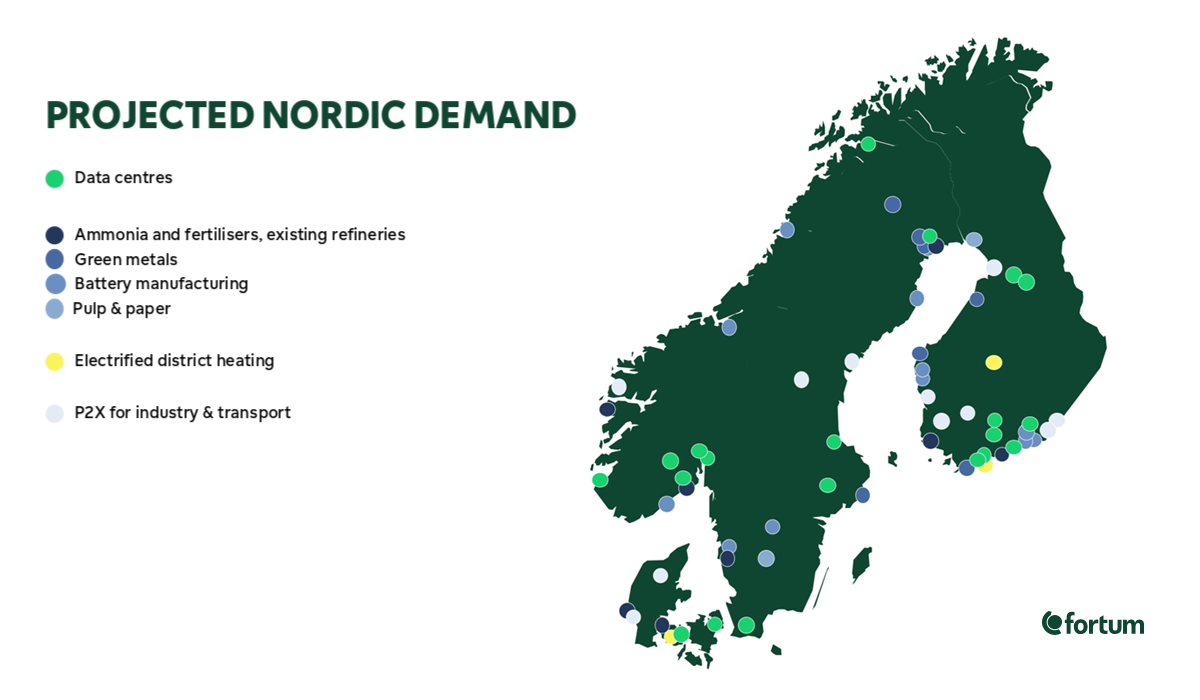
Source: Fortum
While storage supply is scaling, long-term profitability hinges on massive electrification. Projected industrial demand from data centers, green metals, and power-to-X (P2X) facilities must materialize to absorb excess renewable volumes. Industry forecasts indicate a 72% surge in total Nordic power demand by 2040, reaching 656 TWh. This visual map outlines exactly where new consumption hubs will emerge, providing a strategic blueprint for where localized storage will deliver the highest merchant value.
Access the full analysis
Download the complete white paper below to get the full insights you need to navigate grid bottlenecks, manage your revenue stack, and protect your assets from price cannibalization. To dive even deeper into these market dynamics, network with top industry players, and discover practical strategies for optimizing your regional portfolio, join us at The Solarplaza Summit Nordics in Copenhagen on 15 September.


This white paper was created in preparation for Solarplaza Summit Nordics Renewables & Storage. Be the first to know when the new edition will be held by signing up for updates.
