In the run-up to our two European events wholly focused on energy storage - the Solarplaza Summit Energy Storage Spain (16 November, Madrid) and the Solarplaza Summit Energy Storage Germany (23 November, Cologne) - we hosted two webinars to introduce some of the key themes of the rapidly-developing storage markets in Spain and Germany.
During the first webinar, which took place on 21 September, we were joined by Raúl García Posada from ASEALEN and Valentin Albinet of DNV to get a “Fast-charged Overview of the Spanish Energy Storage Market”. In the second session, on 28 September, Jan Figgener RWTH Aachen University similarly highlighted the main trends in the German energy storage market under the header “Germany's Energy Storage Market Unveiled”.
In this article, powered by Jinko Solar, we will share key learnings from these two sessions, which offer vital insights into the development of these two front-running European energy storage markets.
1. Introduction and key market figures
We’ll kick off with some key market figures to set the scene. As of the beginning of 2023, Spain had accumulated a total operational storage capacity of 8.3 GW (including pumped hydro storage, batteries, and other electrochemical, thermal, electrical, or mechanical systems). In contrast, Germany's operational battery storage projects amounted to approximately 3.8 GW during the same period.
Projections from the European Association for Storage of Energy indicate that Spain is expected to maintain an annual battery energy installation rate slightly exceeding 1 GW of capacity. Meanwhile, Germany is poised to exhibit a robust deployment rate, with expectations of surpassing 2 GW of annual installations by 2030.

2. Summary of the first webinar on the Spanish market
Fast-charged Overview of the Spanish Energy Storage Market with Raúl García Posada (ASEALEN), Valentin Albinet (DNV)
The energy storage market in Spain is currently at a pivotal juncture, with several key developments shaping its trajectory. Let's delve into the various aspects of this market.
Technology Advancements:
- On the technology front, significant strides have been made, rendering energy storage solutions ready for deployment. Innovations and advancements in storage technologies have reached a stage where they are robust and reliable.
- Importantly, the levelized cost of energy storage has reached a competitive threshold. This cost-effectiveness is now acting as a catalyst, enticing initial investments and contributing to the reduction of electricity costs for consumers.
Market Dynamics:
Within the energy market in Spain, several interesting trends have emerged.
- In the Day-Ahead Market, there's a growing interest in energy storage solutions to mitigate the escalating volatility witnessed in the energy sector.
- Ancillary Services, which are crucial for grid stability, currently offer attractive prices. However, this is primarily due to the limited competition, with hydro and gas playing dominant roles. The imminent approval of storage for additional services promises to diversify the landscape.
- The Capacity Market in Spain has been somewhat delayed, but anticipation is high, with expectations of a new draft regulation in the coming weeks. This development could further stimulate investments in the storage sector.
Investments and Risks:
- Pioneering entities have already made substantial investments in energy storage, often opting for full equity ownership.
- However, the financial sector is still in the process of embracing this technology and addressing the unique challenges it presents. The merchant nature of energy storage entails inherent risks that must be carefully managed.
Regulatory Landscape:
Spain has been actively evolving its regulatory framework for energy storage over the past three years. Several notable regulations have come into play.
- The presence of an Energy Storage Strategy and a well-defined Storage Definition in the Electricity Sector Law.
- Regulations related to "Grid Access & Connection," applicable to both producers and demand-side flexibility providers.
- "Permitting" regulations, particularly relevant for storage as a producer, although it doesn't fall under renewable energy regulations.
- In the "Energy Market," distinctions have been made within the OMIE (Iberian Electricity Market Operator) for Production and Demand, which is a significant development.
- Advancements in "Ancillary Services" are near completion, with new operational procedures being established by REE (Red Eléctrica de España). These include:
- CNMC public consultations on "Technical Restrictions"
- REE public consultation – mFRR (Tertiary) & aFRR (Secondary) European platforms
- Voltage Control in the near future - REE public consultation
- Black Star – REE public consultation closed recently
In conclusion, the energy storage market in Spain is poised for growth, with favorable technological advancements, a changing market landscape, ongoing investments, and an evolving regulatory framework. These factors collectively indicate a promising future for energy storage in Spain's energy ecosystem.
3. Summary of the second webinar on the German market
Germany's Energy Storage Market Unveiled
with Jan Figgener (RWTH Aachen University), Celina Gundlach as moderator (Solarplaza)
Jan Figgener, Head of Grid Integration & Storage System Analysis at RWTH Aachen University, presented insights into Germany's energy storage market during the webinar.
Global Energy Storage Growth
- The global stationary energy storage market is experiencing rapid growth, with an estimated cumulative power of 400 gigawatts and over one terawatt-hour of energy storage capacity expected by the end of 2030, according to Bloomberg New Energy Finance.
Segmentation of the Market
- Germany's energy storage landscape comprises four segments: home storage, industrial storage, large-scale storage, and electric vehicles (EVs).
- Home storage witnessed robust growth, reaching 650,000 installations by the end of 2022, accumulating 5.5 gigawatt-hours of capacity.
- The industrial storage sector, though smaller, exhibited steady growth.
Home Storage Market
- By the end of 2022, Germany had 650,000 home storage systems installed, totaling 5.5 gigawatt-hours of cumulative installations.
- The market has shown substantial growth over the years, with 220,000 systems installed in 2022.
Industrial Storage Market (CNI)
- Industrial storage systems, catering to commercial and industrial needs, totaled around 300 megawatt-hours of capacity by the end of 2022.
- Growth has been relatively steady, with notable expansion in 2023.
Large-Scale Storage Market
- The large-scale storage market is the second-largest in Germany and has seen fluctuating growth.
- Large-scale storage experienced a significant surge in 2022, with new use cases like renewable energy integration and grid services driving expansion.
- In the renewable energy integration space, regulatory changes, such as shifting market premiums and minimum storage duration requirements, influenced project announcements.
Renewable Energy Integration
- Renewable energy integration, particularly through innovation auctions, is driving the growth of large-scale storage projects.
- However, regulatory changes, such as shifting market premiums and minimum storage duration requirements, have impacted project announcements.

Comparison of Key Metrics
- Energy-to-power ratio (storage duration) varies across segments, with home storage systems averaging around 2 hours, industrial storage at 3 hours, and large-scale storage systems mainly at 1 hour. Future large-scale storage projects tend to have longer durations.
- Prices differ across segments, with home storage systems having the highest specific prices, followed by industrial storage and large-scale storage. Electric vehicle (EV) batteries have relatively low costs, making them attractive for grid services.
Electric Vehicle Market
- The EV market in Germany is rapidly growing, boasting increased battery capacity and charging power.
- Considering both stationary and EV battery capacity, Germany holds significant battery energy potential, with EVs contributing substantially.
- Germany's energy storage market is evolving rapidly, presenting promising opportunities for grid integration, renewable energy utilization, and EV battery participation.
Total Battery Energy Potential
- When considering both stationary and EV battery capacity, Germany has a significant battery energy potential.
- By the end of 2022, there were 72 gigawatt-hours of battery energy in EVs, compared to 7 gigawatt-hours in stationary storage. This potential is expected to grow substantially by 2030.
Overall, the home storage market is the largest and continues to grow. The industrial storage market is on the rise, and the large-scale storage market is experiencing a renaissance, with strong growth expected in the coming years. However, the electric vehicle market holds the highest battery potential, which needs to be unlocked for grid services. Overall, Germany's energy storage market is evolving rapidly, with promising opportunities for grid integration and renewable energy.
4. Views from a leading market player
Having firmly anchored itself as one of the world’s leading manufacturers of solar modules, Jinko Solar was quick to recognize the game-changing and value-enhancing potential of energy storage technologies and has expanded its product offerings to include storage solutions, in order to capture the full potential of solar energy. With deep roots in both Spain and Germany, Jinko Solar is bringing its new Sun Tera storage product to these mature solar markets. We’ve asked them to share their views on the storage market development in these countries and to explain how their Sun Tera solution can be effectively applied in these markets.
Jinko Solar:
Deep within Germany's ambitious quest for a more sustainable future and Spain's commitment to combating climate change lies a shared vision of energy transition and a cleaner, greener world: a world with clean air, blue skies, and an unwavering commitment to environmental protection. Germany and Spain are spearheading efforts to reduce greenhouse gas emissions and transition to renewable energy sources, each with its own plan and strategy.
Germany's Energiewende is a bold and electrifying strategy that aims to achieve net-zero greenhouse gas emissions by 2045, but Spain's equally ambitious Plan Nacional Integrado de Energía y Clima (PNIEC) is also driving significant change. The PNIEC seeks to reduce emissions of greenhouse gases (GEI) by 23% compared to 1990 levels, eliminating one-third of the current emissions. This commitment aligns with European goals for 2030 and the Paris Agreement.
Both plans are based on the urgent need to move away from fossil fuels and use renewable energy sources such as solar and wind. Unfortunately, though, these renewable energy sources are inherently unpredictable and at the mercy of the ever-changing weather conditions. To bridge the intermittency gap between demand and renewable energy production such as wind and solar, energy storage has become an indispensable player.
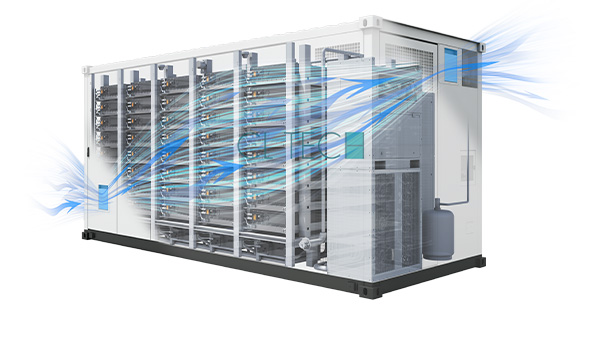
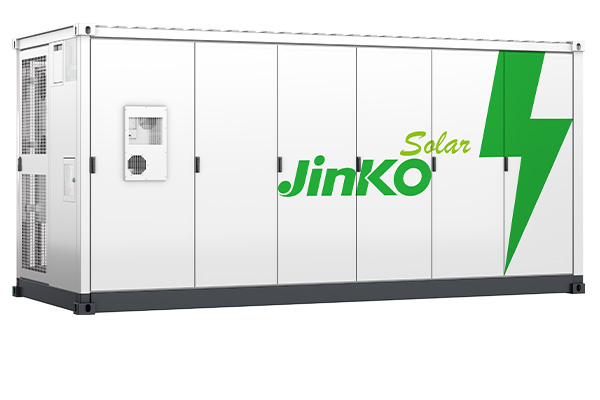
Significant advances have been brought about in the Utility Scale storage arena due to the quality and innovation of such products as SunTera from Jinko Solar and others, which is at the forefront of driving Germany's energy transition. Jinko Solar's SunTera is a prime example of technological innovation helping to revolutionize energy storage towards achieving sustainability. These advances include:
- Increased efficiency: SunTera's cluster management architecture significantly increases system efficiency, promoting optimal use of its high energy density battery technology.
- Intelligent operations and maintenance: SunTera's real-time monitoring and intelligent operations optimize system performance, enabling enhanced lifecycle, reliability, and maintenance planning.
- Modular design for versatility: SunTera's modular design can be easily adapted to various applications and scenarios, facilitating the flexible integration of renewable energy into the grid.
In today’s Energy Storage market, SAFETY is an assumed prerequisite for any modern, high-tech battery system provider. At its heart, every SunTera battery system is monitored by its own state-of-the-art Battery Management System which uses command & control logic to keep the battery safe and optimized. The Jinko Solar solution utilizes not only the stability and inherent safety afforded by the Lithium Iron Phosphate (LFP) chemistry used in the prismatic battery, but Jinko Solar has deployed features such as smoke, gas, and heat detection along with active ventilation and deflagration panels backed up with a fire suppression system all being fully integrated into the cabinet solution.
Both Germany and Spain recognize that addressing climate change and transitioning to sustainable energy sources are global imperatives. The PNIEC and Energiewende exemplify their commitment to these goals, with energy storage solutions such as SunTera playing a central role. Collectively they serve to stabilise the grid, reducing dependence on traditional polluting energy sources whilst promoting the use of renewable energies. While SunTera clearly represents an innovative solution, it is part of a broader movement toward advanced energy storage technologies which are essential to addressing the challenges posed by intermittent renewable energy. These technologies are the linchpin for achieving the goals of the energy transition and for a long-term sustainable energy landscape for us all.
To learn more about the topic beyond this article, join Solarplaza Summit Energy Storage Germany on November 23 in Cologne.

This article was created in preparation for Solarplaza Summit Energy Storage Spain. Be the first to know when the new edition will be held by signing up for updates.
