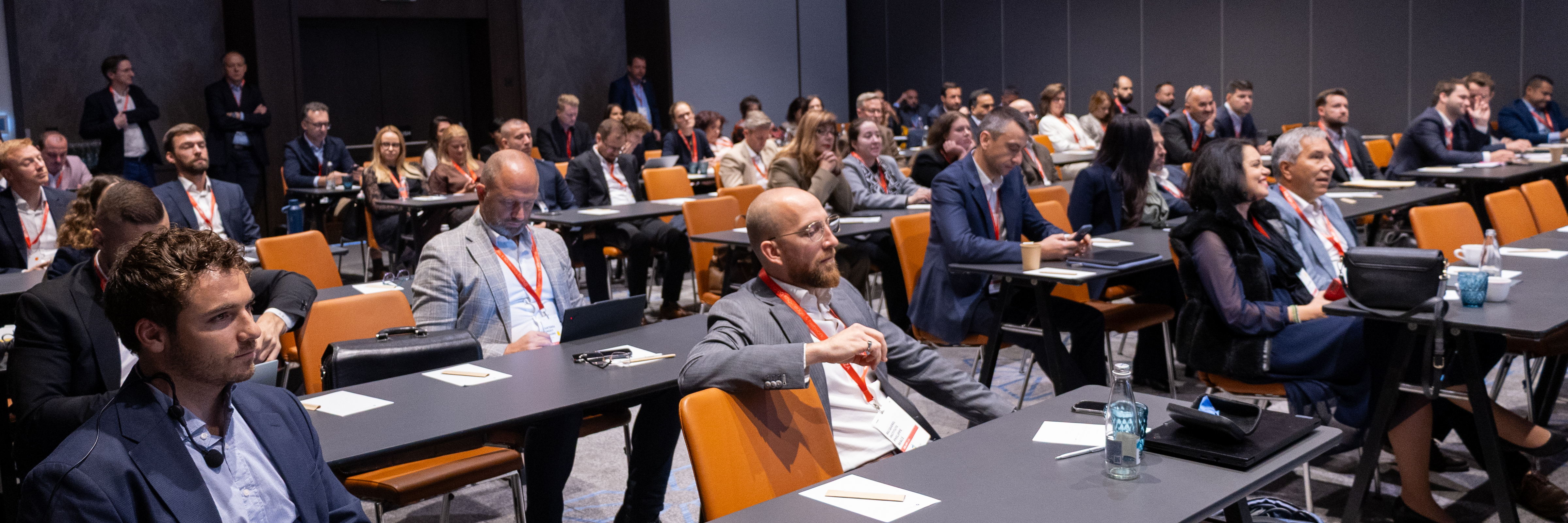
On 14 October 2026, we brought the Solarplaza Summit to Bulgaria for the first time. At the Hyatt Regency Sofia, developers, investors, traders, lenders, lawyers, and the national system operator spent the day on one question: what happens after a storage boom that arrived years ahead of plan? According to the Electricity System Operator (ESO), Bulgaria now has more than 6 GW of battery energy storage systems (BESS) connected, while the national energy and climate plan had foreseen around 1.5 GW by 2030. Across four sessions, speakers agreed that the next phase depends less on how much gets installed and more on how well the grid, the market, and each project can use it.
Key takeaways
- Bulgaria's grid was not prepared for the speed of the BESS build-out, and the system operator is changing its investment plans and operating procedures to catch up.
- Grid access and curtailment are now the main constraints, which makes a good grid connection one of the most valuable assets a project can have.
- Battery revenues are strong today but come almost entirely from day-ahead and intraday trading, because the ancillary services market is small and largely closed to batteries.
- Adding storage to solar is fast becoming the standard, with offtakers, lenders, and investors all favoring co-located projects.
- Many problems in solar and storage projects are created long before construction starts, in site checks, grid contracts, and unclear responsibilities between contractors.
- Wind is widely seen as the missing piece of Bulgaria's energy mix, and the largest share of the audience in the final panel named new wind capacity as the biggest opportunity for 2030.
Setting the scene: solar holds up, prices stay low
Philippe Macé from the Becquerel Institute opened the day with the global and European picture. Solar remains resilient: the world installed a record 693 GW in 2025, and Macé expects the global market to hold roughly steady in 2026, as growth in Africa, the Middle East, and Latin America offsets a slowdown in China. In Europe, established markets are flattening, while newer ones, including Bulgaria, Romania, and Greece, are making up the difference.
Prices are still falling. Battery system prices dropped by more than 10% again in 2026, reaching around $100 USD per kWh, although European systems remain much more expensive than Chinese ones. Module prices are also low, and Macé sees no end in sight, with Indian manufacturers running at less than 40% utilization and now looking to sell in Europe.
He then set out four trends for 2027. The easy sites are gone, so projects are moving to agrivoltaics, floating PV, land along railways and motorways, and lightweight systems for weaker roofs. Negative prices are getting more frequent, including in Bulgaria, where Macé counted around 150 negative-price hours so far in 2026, compared to around 120 the year before. Procurement rules are tightening, from the Net-Zero Industry Act's resilience criteria to upcoming rules on forced labor and cybersecurity. And artificial intelligence (AI) and robotics could cut the labor needed per MW of solar by 75% by 2030.
When asked what people still underestimate, Macé pointed to procurement. Large developers have legal teams that see the new rules coming, but many mid-sized players are not ready and are missing a growing part of the market as a result. He also warned about transformers, where demand exceeds supply by around 40% and lead times run into years.
A grid caught by surprise
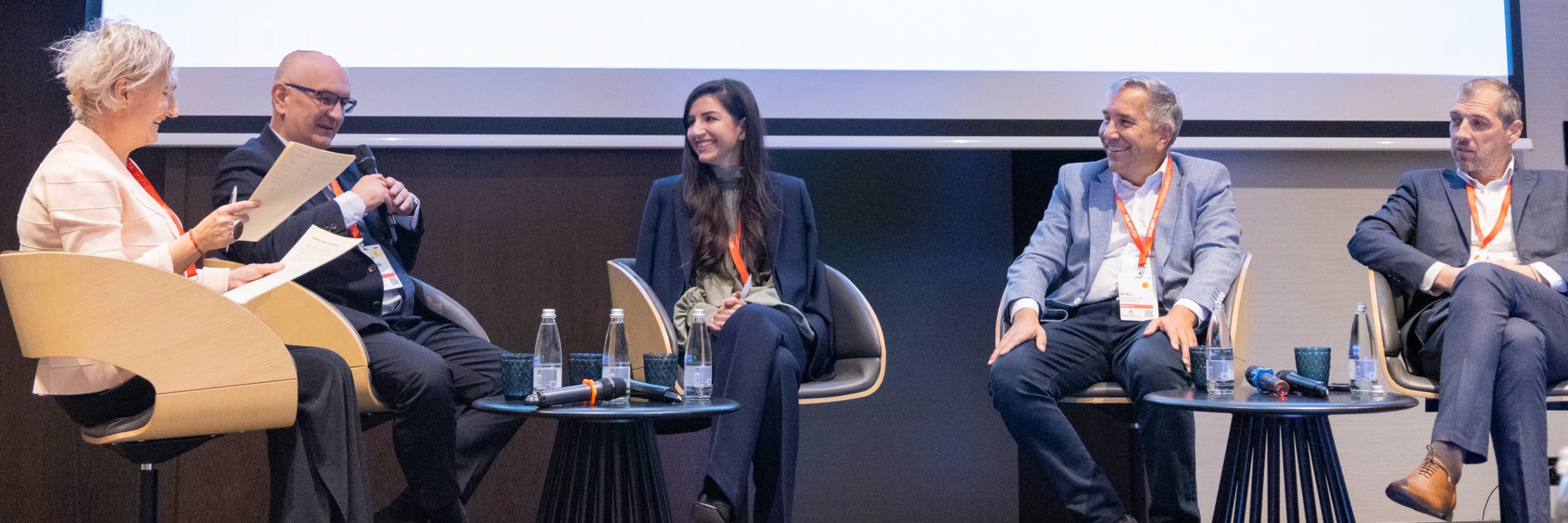
The opening panel, moderated by Dinna Temelkova, gave the system operator's view first. Dimitar Zarchev, director of the National Dispatch Center at ESO, did not sugarcoat it. Bulgaria has 6,226 MW of BESS, more than 7.3 GW of renewables (mainly solar), and wind capacity that has stayed around 790 MW since 2012. "All of you guys came too fast," he told the room. "Our network is not prepared for that."
The scale shows up in daily flows. Zarchev described importing around 4.5 GW during the day to charge batteries and exporting around 5 GW in the evening peak. ESO has had to change its investment plans and operating procedures to fit it all in, and he is unsure what the coming winter will bring. Still, as he put it: "I'm talking about problems, problems, problems, problems. But as you can see, lights are still on."
Temelkova noted that the build-out itself was a feat, with hundreds of subsidized projects tested and accepted in around a month, each running a 72-hour test. Elena Rasheva from Evklips Energy said it was reassuring to hear that ESO knows the problems and is working on them. She urged developers to involve every party early and check the basics before mobilizing, because "a building permit does not always give you a ready-to-build project." Konstantin Stamenov from the Bulgarian Federation of Industrial Energy Consumers (BFIEC) added the consumer side: moving one of his industrial sites from a high-voltage to a medium-voltage connection will likely take about two years, and industrial parks that run their own internal grids still have no clear legal framework.
Rules that helped, and rules still coming
Borislava Piperkova from CMS Law explained how regulation shaped the second Bulgarian renewables boom, which started in 2019. The biggest change, in her view, is that developers can now secure a grid connection as soon as they hold a notarized promise of land rights, without first finishing zoning and environmental procedures. That speeds things up, but it also means committing to a connection, and a deposit of €25,000 per MW for production units, before you know the project will happen. Standalone BESS has benefited from not needing a license and from lower grid access fees than generators.
She flagged two things to watch. Cybersecurity rules aimed at limiting equipment from certain third countries are not yet fully enforced in Bulgaria, while most installed plants use Chinese inverters. "Drafting the papers for paper compliance with cybersecurity is the easy part," she said. "The hard part is how you apply it in practice." She also noted that appeals by non-governmental organizations, long a problem for wind, are now reaching solar, BESS, and even national grid infrastructure, which developers should factor into their timelines.
On the opportunity side, she pointed to co-located BESS at existing solar plants, the EU-funded Greenabler program for ESO grid upgrades, availability contracts with the grid operator, and closed distribution systems as a way to develop portfolios without blocking large deposits early on. International investors, she added, still mostly ask for solar projects first, ideally with co-located storage.
Storage revenues, strong now, harder later
Session 2 moved to money. Rosemary Colaert from Clean Horizon showed that a four-hour standalone battery in Bulgaria could have earned around €210,000 per MW in 2026, roughly double the €107,000 per MW per year Clean Horizon calculates as the profitability threshold. Almost all of that comes from day-ahead trading, with a smaller share from intraday. Batteries charge on cheap midday solar and discharge in the evening, much of it exported to neighboring countries.
The catch is that ancillary services, which helped batteries in other markets, are small in Bulgaria and largely closed to storage. Colaert expects spreads to narrow as more batteries come online and argued that new projects will need low costs, smart optimization, and hedging products such as floors and tolling agreements.
The revenue panel, moderated by Valery Drenikov from the Association of Traders with Energy in Bulgaria (ATEB), showed how differently players handle that risk. Petya Dimova from Enery Energy said her company secures power purchase agreements (PPAs) for at least 70–80% of a project's output. Yuri Katanov from TOKI said his group runs its assets almost fully merchant, hedging short term instead. Martin Georgiev from Electrohold Trade estimated that 65–80% of a battery's trading revenue currently comes from day-ahead and the rest from intraday, and said his company made nearly 1.6 million optimization trades in a single month. His advice to investors: don't get carried away by today's spot prices and take a harder look at the market risks ahead.
Panu Matilainen from Capalo AI, which entered Bulgaria this year, said entering Bulgaria had been easier than entering Poland. Much of the credit, the panel agreed, goes to Bulgaria's liberal market design and a supportive system operator.
Solar plus storage becomes the default
If one idea came up in almost every session, it was hybridization. Severin Vartigov from Enery Energy said that over the past two or three months, all credible PPA buyers have asked for storage to be included in offers. His company's 15-year PPA with Teva Pharmaceuticals is a good example: a newly built 122 MW solar park combined with battery storage, structured as a virtual solar PPA where a share of the battery's income lowers the fixed price for the offtaker. "The lenders were fine with it," he said. Dimova added that storage can add €30–40 on top of a pure solar PPA price for a seven- to ten-year deal.
Sebastiaan Groenhuijsen from ion Ventures brought lessons from the UK, where co-located batteries make up just under 10% of the storage fleet, a share he believes should be far higher. His advice for Bulgaria: make solar plus storage the default for new PV and retrofit batteries at existing plants, of which he estimates around 5 GW have no storage today. In ion Ventures' experience, planned hybrids sized at 30–70% of solar capacity bring 40–80% more revenue than solar alone, while retrofits sized at 20–50% bring 15–40% more. Longer term, he sees Bulgaria moving towards firmed and even dispatchable renewables. "If you can build that many batteries in 18 months, why not?"
The lenders agreed. Nikola Stoyanov from Postbank said his bank prefers co-located projects, partly because curtailment in 2025 left many solar plants 20–30% below their projected output. Bulgaria also allows a single grid connection point for both the solar and the battery, which cuts costs. Requests to add batteries to already-financed solar plants are now common, and Stoyanov called it "the right way to go."
Not everyone sees co-location replacing standalone storage. Martin Garkov from xFigure Finance said the two serve different purposes, and that standalone BESS will keep attracting regional investors who need storage in their portfolio. He expects the market to consolidate, with the most vertically integrated players expanding and others looking to sell.
Financing and building after the subsidies
The financing panel, moderated by Rafał Skowroński from JLL, looked at what lenders will want now that the subsidy programs are over. Vasil Bachvarov from DSK Bank explained that with up to 50% of CapEx covered, most sponsors bought the best equipment and locations to meet the subsidy deadlines. Merchant-only projects will face more scrutiny. He was clear about where not to save: availability decides revenue, and cutting corners on equipment or maintenance puts the whole business model at risk. "You cannot make up lost time."
Session 4 continued on execution. Lucian Safta from CJR Renewables argued that storage projects mostly fail at the interfaces between suppliers, not in the battery itself. His central message: "A battery project may be procured through several contracts, but it must ultimately be delivered, tested, and accepted as one asset."
Bulgaria in 2030: wind, flexibility, and resilience
The closing panel, moderated by Sevda Yontcheva from CWP Global, who introduced herself as "the Bulgarian wind lady," looked ahead. Yontcheva called wind the missing piece of the energy mix and said that in her view, around 4 GW of onshore wind by 2030 is realistic with public acceptance and clear policy. The audience seemed to agree: in the panel's poll, new wind capacity came out as the biggest opportunity for Bulgaria by 2030.
Mariyana Yaneva from IPS International Power Supply argued that Bulgaria has focused heavily on utility-scale projects and left small players and the public out, which hurts social acceptance. She also warned that most installed batteries cannot provide the grid-forming services she expects to be required within three to five years, and that the market looks less saturated than the headline numbers suggest. Her word for 2030 was resilience: learn to sustain what has been built instead of going through boom and bust cycles.
Martin Slavov from EVN Bulgaria called for better interconnections, real market coupling with neighbors, and more attention to industrial consumers. "No country became rich by producing electricity and exporting it," he said. Asked what success in 2030 looks like, he gave the last word of the day a humorous edge: producers, consumers, traders, and optimizers should all end up "equally unhappy."
See you next year
Our first Solarplaza Summit Bulgaria showed a market that moves fast, argues openly, and is not short on ideas. Thank you to all speakers, partners, and attendees for making it happen. We're already working on the Solarplaza Summit Bulgaria 2027 and look forward to continuing the conversation
