If one message came through at the Solarplaza Summit Nordics in Copenhagen on 15 September 2026, it was that solar on its own no longer makes the case. Adding a battery is the obvious answer, but doing it in practice is anything but simple. Morten Porse, CEO of Ænergy, walked the audience through his company's first hybrid plant, the Kroghøj solar park in western Jutland. A technical panel then dug into how retrofits work on the ground, with Anders Hellström, Sales Director Nordics at Sigenergy, Martin Rivadeneira, Senior Sales Manager at meteocontrol, and Umur Uğurlu, Energy Automation Manager at inavitas.
Key takeaways
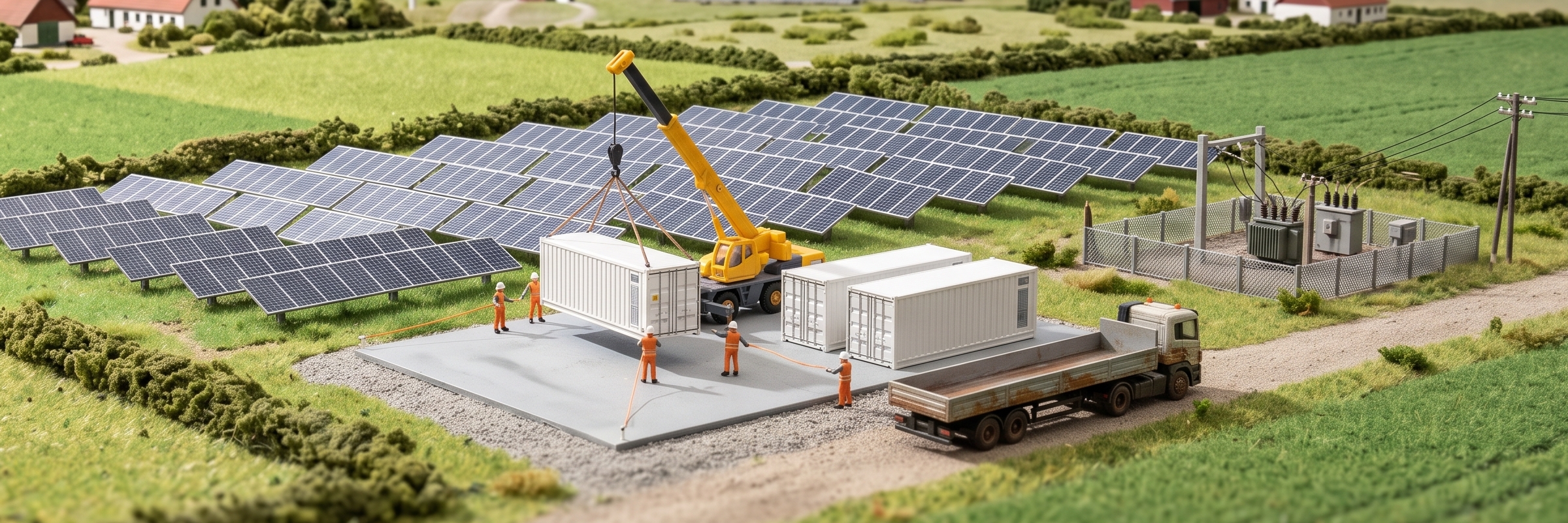
- Plan for storage early: Ænergy prepared Kroghøj's high-voltage infrastructure for a battery and built a BESS option into the sale agreement, allowing it to add 20 MW of storage to a 44 MW solar park after divestment.
- Speed has real value: Kroghøj's battery went from permitting to completion in just over nine months, compared to the one to one and a half years Porse sees at other developers.
- The rules haven't caught up with hybrids: Below 75 MW, the PV and BESS parts of a hybrid plant are approved under separate grid requirements, even though a single controller runs the whole site.
- Controls and compatibility matter: Panelists stressed millisecond-level response, brand-independent control systems, and cybersecurity as keys to keeping hybrid plants compliant and upgradeable.
Why solar owners are adding batteries
Ænergy is a Danish developer based in Holstebro, with roots in the regional utility Jysk Energi. Set up in 2023, it covers the full chain from securing land to construction and O&M, both for its own portfolio and as an EPC for third parties. It has built 84 MW of solar and 20 MW of storage so far, with a pipeline of over 1.1 GW of PV and more than 700 MW of BESS.
For Porse, the reason to add storage is simple. Solar capture rates in Denmark have dropped sharply, and investors buying a project to hold for 30 years want an asset they can rely on. A battery lets a solar park:
- Store power when prices are low and sell it when prices are higher
- Use the grid connection more fully by adding flexibility
- Access ancillary service markets, which Porse called a major source of value
- Strengthen the long-term business case with additional revenue streams
The panel saw the same drivers across the market. Martin Rivadeneira of meteocontrol pointed out that many solar parks face export limits, either built into their grid contract or imposed by the grid operator. A battery can store the power that cannot be exported and sell it later. Anders Hellström of Sigenergy added that many owners whose solar assets have underperformed now see batteries and virtual power plant participation as a way to improve returns.
Investors still have questions
The business case is attractive, but Porse was candid about investor doubts. How quickly will ancillary service revenues fade as more batteries come online? And will banks lend to an asset class with so little revenue history? "It's very difficult to get something approved for which there is no history," he said. In his view, BESS needs long-term investors who look beyond the next three to five years.
The Kroghøj case
Kroghøj is a 44 MW solar park in western Jutland, producing around 52,000 MWh per year on a 36.7 MW grid connection. Its story shows how quickly the market can shift during a single project.
| Phase | Timing |
|---|---|
| PV development and permitting | 2022–2024 |
| PV final investment decision | 2024 |
| PV construction and inauguration | 2024–summer 2025 |
| Divestment, with BESS option | 2025 |
| BESS investment proposal and order | October 2025 |
| 20 MW BESS construction and commissioning | 2026, opened August 2026 |
When development started, power prices were high, and the outlook for solar was bright. By the time the project reached its final investment decision, capture rates had fallen considerably. Ænergy responded by ensuring the high-voltage equipment and substation could later accommodate a battery, and by including a 20 MW BESS option in its agreement with the investor who bought the park.
Even so, Porse said Kroghøj's two to three years of permitting make it one of the faster solar projects in Denmark. Demands from municipalities, neighbors, and other stakeholders keep growing, and developers have to show early in the process exactly what they will build.
Partners decide the timeline
After the sale, Ænergy presented the battery case to the investor in October 2025, covering component lead times, permitting, and the business case. The order followed, and the battery was operational the next summer. From permitting to completion took just over nine months. Porse said other developers typically need one to one and a half years for the same steps, without even reaching operation.
His main lesson was to choose partners carefully. The battery supplier, the power plant controller, the trader interface, and the contractor all have to work together, and in a young market there are few reference projects to lean on. "You can always aim for the lowest prices," he said, but every month of delay costs revenue that is hard to win back.
Ænergy's next hybrid project, Nagbøl, pairs 53 MW of solar with a 36 MW/72 MWh battery. It is under construction now and expected to be commissioned in Q2 2027.
Three hurdles for hybrid projects in Denmark
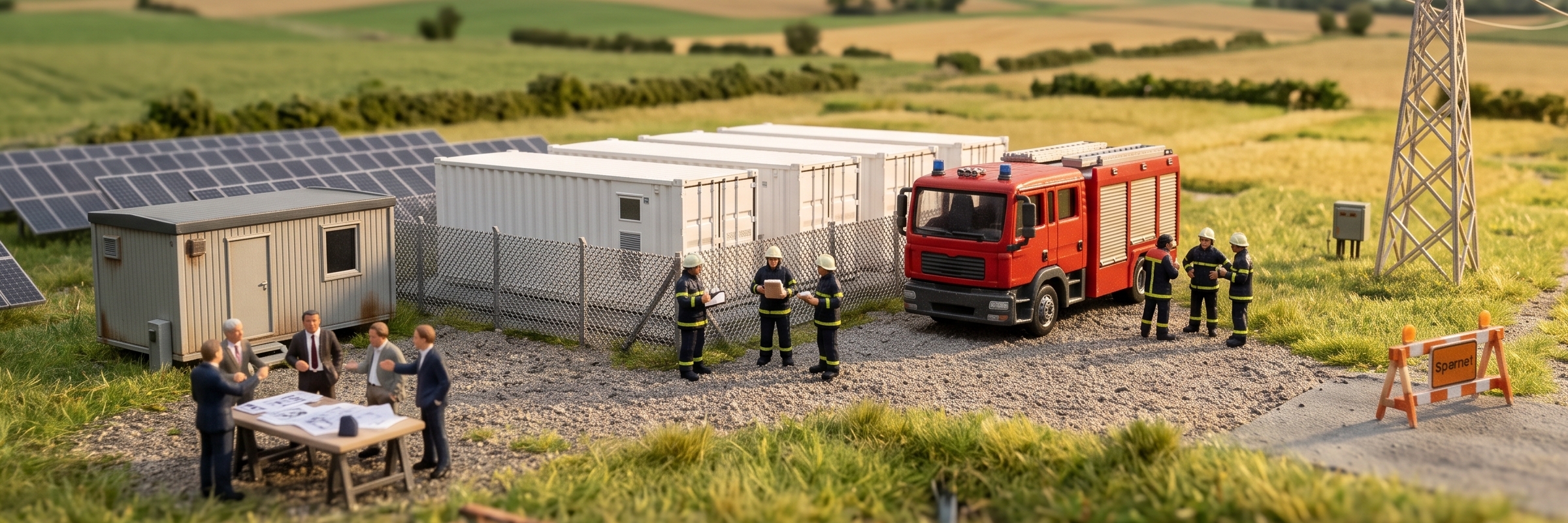
Adding a battery may sound like plugging in a box, but Porse listed more than 20 workstreams involved, from grid pre-studies and fire strategy to insurance, cold and warm testing, and the grid operator's EON, ION, and FON approvals. Looking ahead, he sees three issues as the biggest.
1. Grid connection
In March 2026, Energinet put new grid connections on hold to get an overview of transmission capacity. Porse described the past three years as a roller coaster: early optimism about high prices, then doubts about whether solar had a future in Denmark, renewed optimism once BESS arrived, and then the connection freeze. Much now depends on how Energinet handles the allocation of new connections.
2. Grid compliance
For a hybrid plant below 75 MW, the solar and storage parts are approved under different requirements. The PV side follows the European RfG grid code, while the battery falls under Energinet's technical regulation TF 3.3.1. Yet a single hybrid controller runs the whole plant, and grid operators are still working out whether it should be approved as one asset. For now, the answer is two separate approvals.
3. Environmental and emergency compliance
There is no specific law on battery fire safety yet, only guidelines that vary between municipalities and do not always fit together. Porse raised the kind of questions developers face: if firefighters use water on a burning battery, what is the environmental impact, and what happens if they don't? To keep projects moving, he said, developers are agreeing to safety measures that will likely never be used, which risks turning them into new standards for the whole industry.
Patience pays off
Porse closed by naming four qualities BESS development requires: a tolerance for high upfront investment, the ability to handle technical complexity, risk appetite for a volatile market, and patience, mainly because of grid connection. He also took a more optimistic view than many in the market. Because a new grid takes years to build in Denmark, he expects the value of flexibility, including ancillary services, to last longer than the three to five years some predict.
Technical choices that make or break a retrofit
The panel that followed focused on the practical side of turning a solar park into a hybrid plant.
AC or DC coupling
For retrofits, Hellström said AC coupling is usually the easiest option because the battery connects alongside the existing PV system without needing a redesign. For new co-located builds, he sees a strong case for DC coupling, where the solar panels and battery share one connection behind the inverter. He pointed to a Sigenergy project in Stuttgart that paired a 20 MWh DC-coupled battery with 8 MW of solar, improving round-trip efficiency by 3.7%. The design also removed the need for an extra transformer and keeps maintenance needs minimal.
Check the grid requirements first
Rivadeneira's advice to developers was to start with the grid contract. Before anything else, check the export limits, study expected production, and understand which grid components and simulation models the project will need. In Denmark, larger plants also need simulation models of the power plant controller before they can connect. He also stressed planning: rushed projects are where mistakes happen.
Speed of control
Uğurlu explained that grid codes require functions such as voltage and frequency response to react within milliseconds. He described control as a chain of four links: measuring, running the algorithm, sending active and reactive power set points, and the site equipment responding. "If some of these links are slow, you will be slow," and a slow plant cannot meet grid requirements or the demanding prequalification for ancillary services such as FCR and aFRR.
Build for change
Uğurlu and Rivadeneira both warned that a hybrid plant has to adapt over a long life. Uğurlu listed four priorities:
- Hardware sized for expansion: Plan the setup for future capacity, not just today's.
- Brand independence: The control system should support every common industrial communication protocol.
- Up-to-date engineering: Grid codes change often, and the team must be able to apply those changes on site.
- Easy integration: Aggregators, traders, and virtual power plants each have their own requirements and control logic.
Rivadeneira added a cautionary example. If a battery or inverter model disappears from the market, a plant tied to it may need its controls reprogrammed from scratch. In his words, cheap can become expensive in the long term.
Costs and cybersecurity
On costs, Hellström expects hardware prices to fall a little further, helped by larger battery cells and higher energy density per container. Operating costs are also coming down through features such as active cell balancing and integrated heating systems. Spending on energy management and data-driven maintenance, however, is more likely to rise as sites rely more on software.
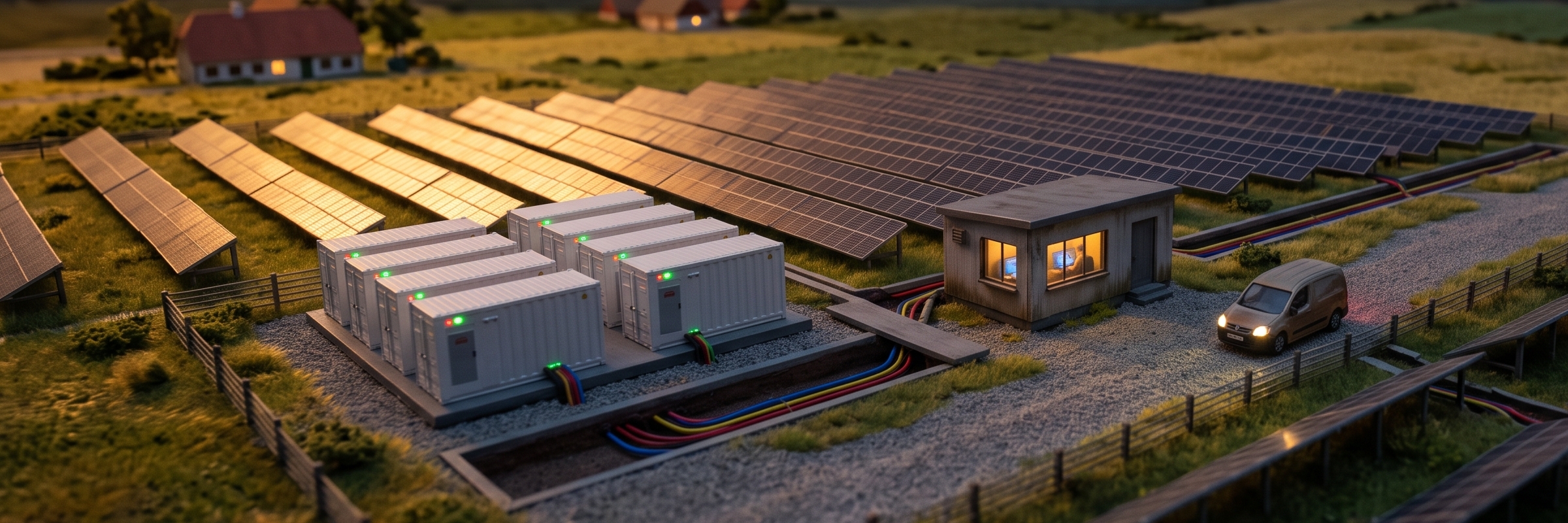
Cybersecurity is the other growing cost. Rivadeneira described the measures now being requested, from redundant firewalls and SCADA servers to network segmentation and round-the-clock surveillance. "It is not a cheap issue, but the fines are more expensive." A full 24/7 control room, however, only makes sense for larger sites. Rivadeneira put the threshold at around 60–70 MW, while Hellström pointed to sites of around 100 MW.
Closing words
Retrofitting solar with storage is quickly becoming standard practice in Denmark, but it is not the plug-and-play exercise it is sometimes made out to be. Kroghøj shows what helps: preparing the site for a battery before it is needed, choosing partners who can deliver quickly, and staying realistic about permitting and grid timelines. The panel added the technical layer: choose the right coupling for the job, build controls that are fast and brand-independent, and budget for cybersecurity from the start. Grid connection, compliance, and fire safety rules will keep testing developers' patience for some time yet.
If you want the full picture of the market dynamics, financing, and PPA discussions from the Solarplaza Summit Nordics, read our complete event report: Nordic renewables are learning to live with volatility. Here's how.