White Paper
12 October 2026
Estimated reading time: 10 min
Renewable Energy Trading in South Africa
Introduction
Southern Africa’s power sector is moving toward a market with more generators, buyers, traders, and routes to market. South Africa is preparing the South African Wholesale Electricity Market (SAWEM), while the Southern African Power Pool (SAPP) already operates bilateral, forward, day-ahead, and intraday electricity markets across the region.¹,²
The Electricity Regulation Amendment Act, in force since January 1, 2025, provides the legal basis for competitive wholesale trading and separates transmission, system operation, and market operation functions.¹ NERSA approved NTCSA’s Market Operator license and the Grid Capacity Allocation Rules in November 2025.³
SAWEM was initially targeted for April 2026 and later moved to the third quarter of 2026.⁴ By late September, NTCSA’s public portal still described the market as “coming soon”, while the government’s latest reform update targets operationalization by early 2027.⁵,⁶
The reform is being introduced into a market where private procurement has already expanded. GreenCape reports more than 217 GW of solar, wind, and BESS projects under development, with corporate PPAs and electricity traders forming major private routes to market.⁷
This white paper examines how Southern Africa’s transition toward more competitive electricity trading is reshaping renewable energy pricing, routes to market, flexibility revenues, and project bankability. It looks at the interaction between South Africa’s emerging wholesale market and regional SAPP trading, with particular attention to grid constraints, cross-border flows, PPAs, battery energy storage, and risk allocation.
Building a competitive electricity trading market
NTCSA describes South Africa’s reform as a move from a vertically integrated electricity model dominated by Eskom toward a competitive, multi-market structure.⁸ The Market Code sets the rules for participation, trading, balancing, settlement, credit requirements, and market conduct. Revision 2.3 was published in February 2026.
The new market will add a formal wholesale route alongside existing bilateral contracts. PPAs remain important for revenue certainty and project finance, but generators and buyers will have more options for managing contracted and market-exposed volumes.
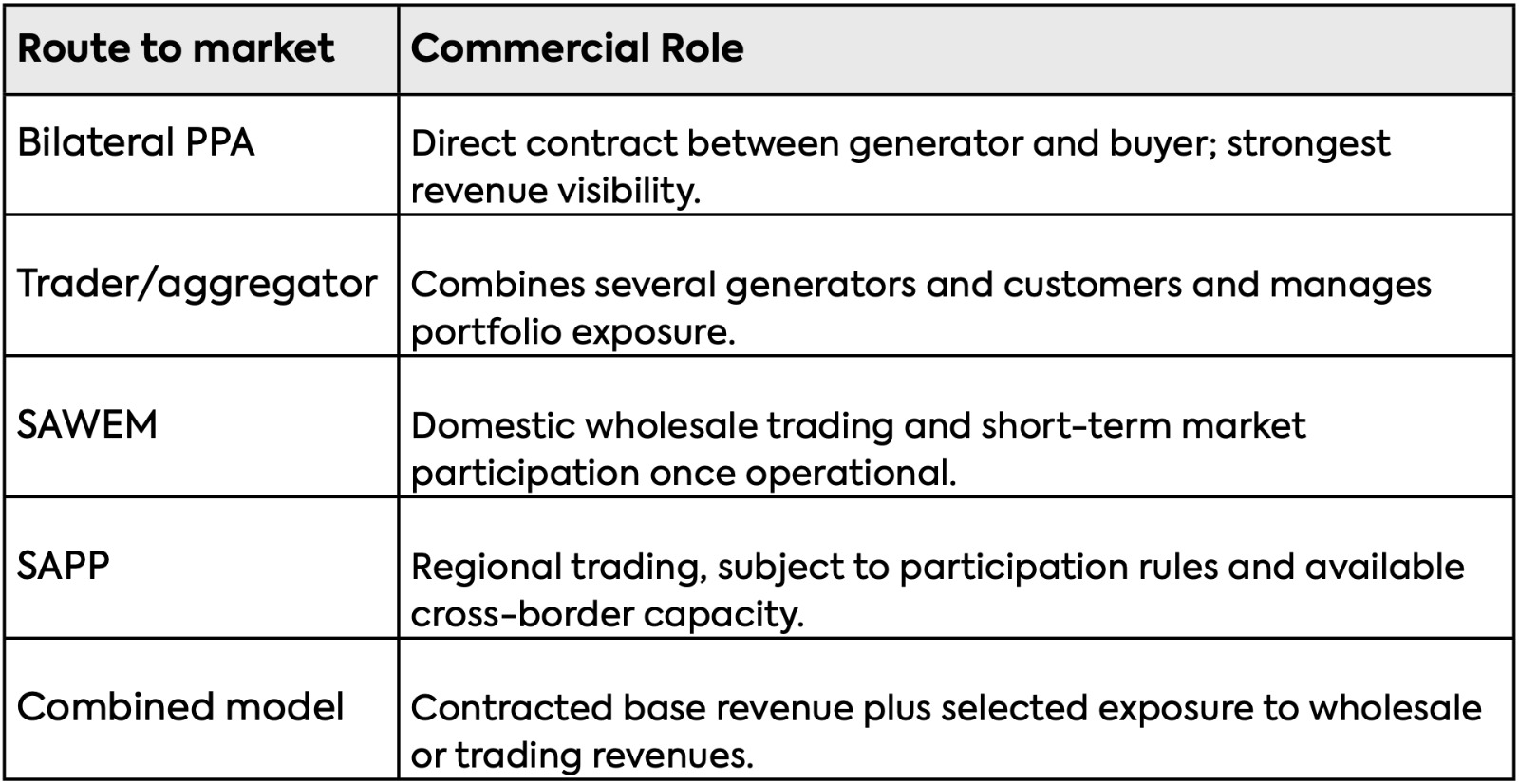
SAPP already provides the regional layer. Its Forward Physical Market offers weekly and monthly products, the Day-Ahead Market trades hourly delivery for the next day, and the Intraday Market allows positions to be adjusted closer to delivery.²
The link between SAWEM and SAPP matters because regional trading can widen the pool of supply and demand available to South African participants. Market rules alone are not enough, however. Scheduling, settlement, balancing, and transmission capacity must support the physical transaction.
How power prices will shape renewable revenues
Renewable project economics have traditionally centered on resource quality, construction cost, financing, and the contracted PPA price. Wholesale trading adds another factor because the value of electricity can change materially between hours.
Apart from annual MWh output, project revenue depends on when electricity reaches the market. For merchant solar, the relevant benchmark is the project’s capture price during its own generating hours. As more solar enters the system, midday supply can depress the value of additional solar output relative to tighter evening periods.
SAPP already provides observable short-term price signals through its Day-Ahead and Intraday Markets. In June 2026, 134.4 GWh was traded across SAPP markets, compared with 156.7 GWh in May.⁹
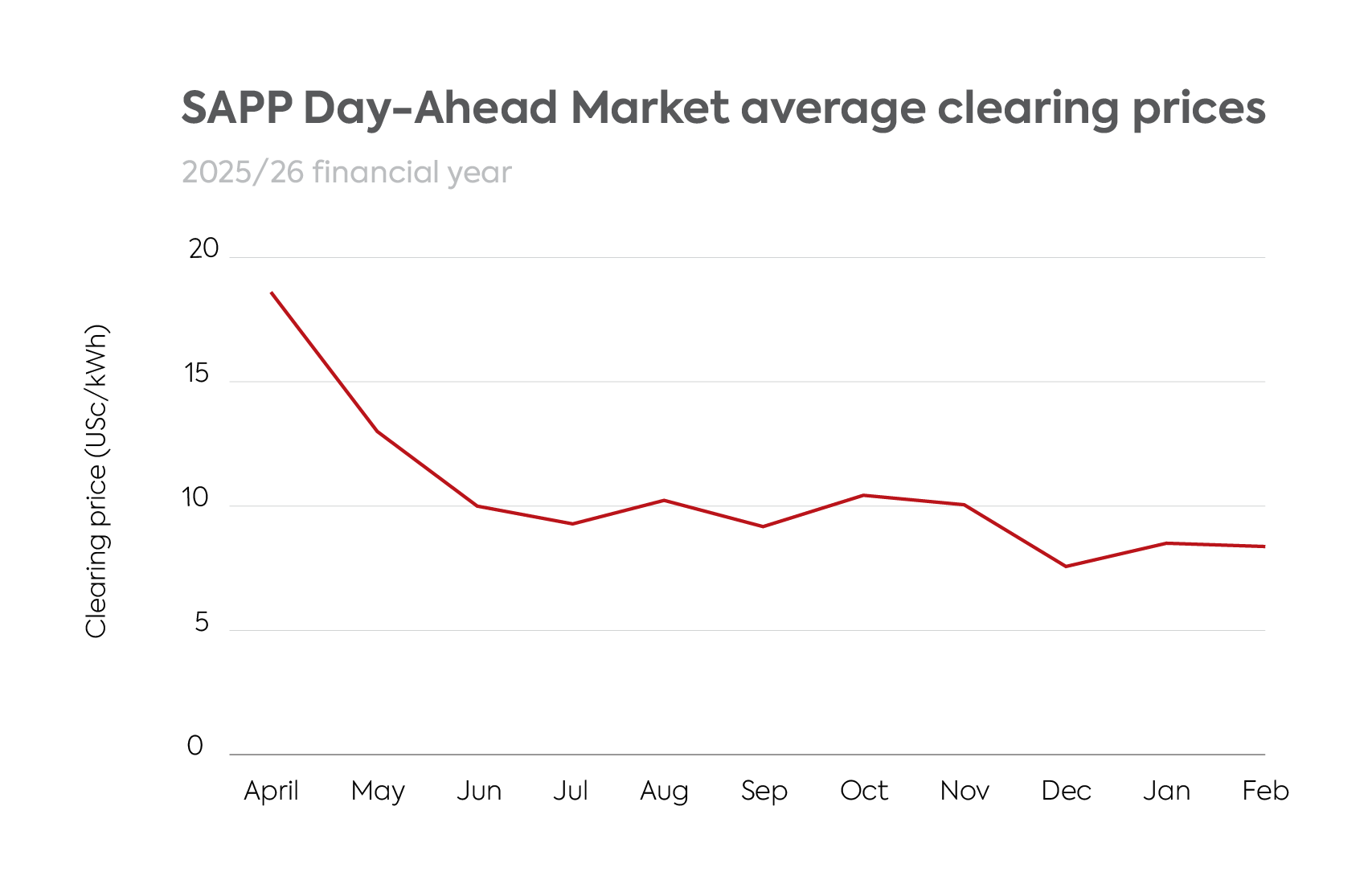
For corporate buyers and traders, the commercial issue is the mismatch between generation profiles and demand. Solar may cover much of a buyer’s daytime consumption while leaving evening demand exposed. Traders can reduce this residual exposure by combining complementary generation profiles, short-term market purchases, and BESS. The value of forecasting and portfolio optimization therefore rises as more revenue is exposed to market prices.
From PPAs to portfolio trading
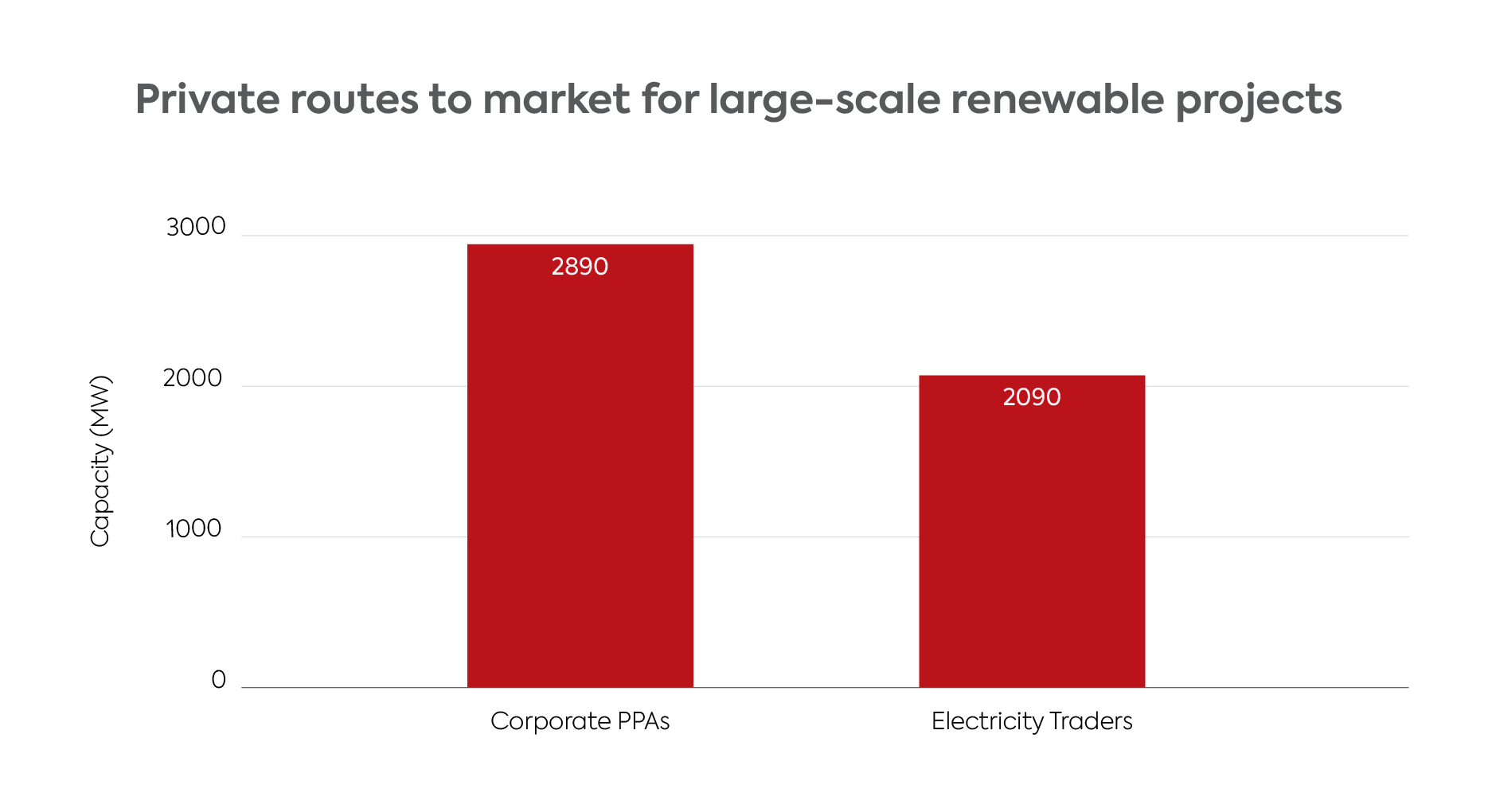
Private procurement is already a significant part of South Africa’s renewable market. GreenCape’s March 2026 mapping identified 2890 MW associated with corporate PPAs and 2090 MW linked to electricity traders within the large-scale project pipeline.⁷
Corporate demand is already concentrated among several large industrial buyers. Sasol reports roughly 1.2 GW of renewable capacity secured for internal consumption, while Sibanye-Stillwater has built a 765 MW contracted renewable-energy portfolio. On the trader side, publicly disclosed portfolios include Discovery Green with 740 MW of generation under construction, Etana with more than 500 MW under construction, and NOA targeting around 1.5 TWh of annual supply to mining customers.
The shift toward portfolio trading does not remove the role of long-term PPAs. It changes how they can be assembled. A single-buyer PPA provides clear revenue visibility but concentrates counterparty risk. A trader can spread demand across several customers and combine generation sources with different production profiles.
South African law firm Cliffe Dekker Hofmeyr (CDH) describes traders as already using “many-to-many” structures that pool private generators and end-users while SAWEM is still under development.¹⁰ CDH also notes that these structures can support shorter, more flexible contracts for customers who cannot commit to the volume or duration of a conventional utility-scale PPA.
Wheeling is the network mechanism behind these contracts. Eskom describes it primarily as a financial and settlement arrangement: the generator injects power at one point, while the buyer receives the corresponding commercial allocation at another point on the network.11 Virtual wheeling expands this model to multiple generators and multiple offtakers, including customers connected through Eskom and municipal networks.¹²
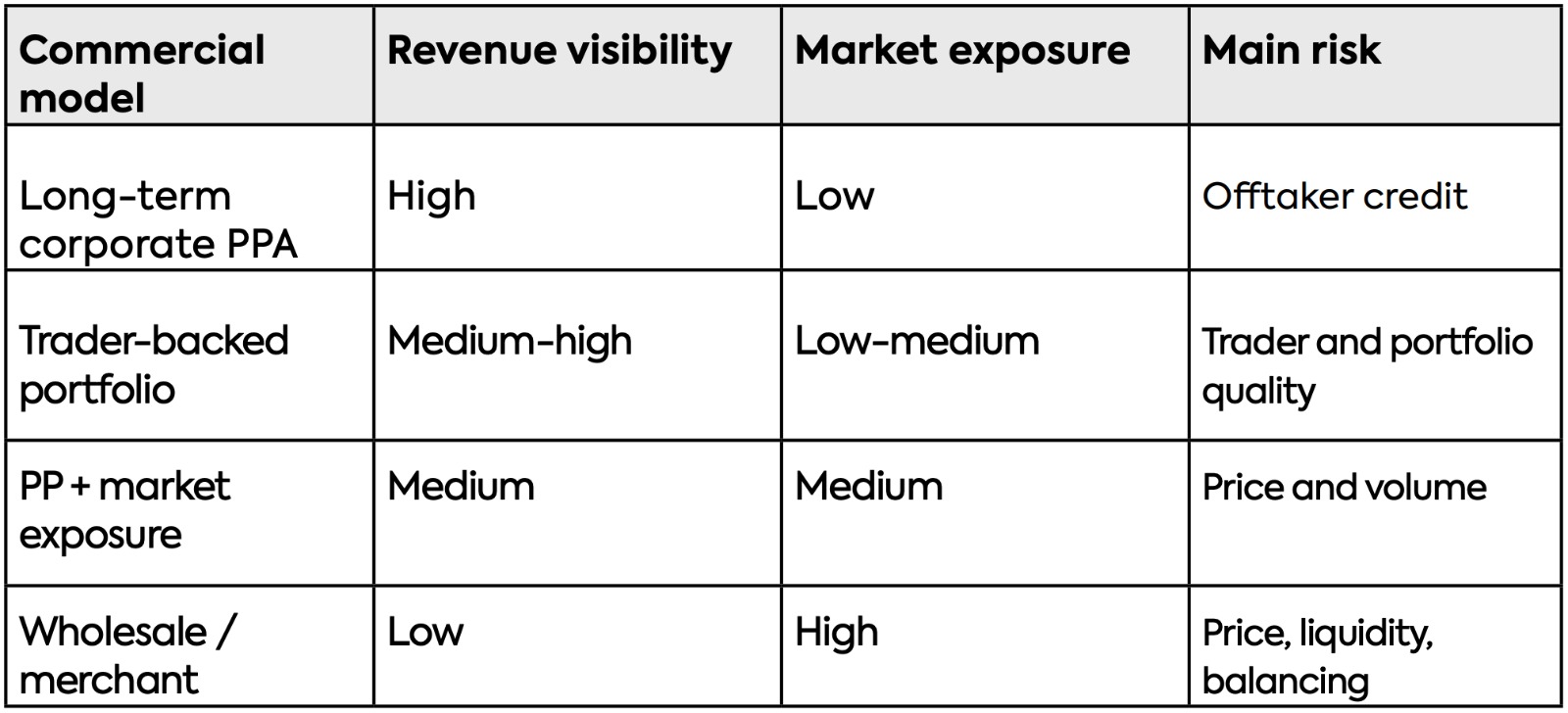
The likely development is a larger set of hybrid structures rather than a broad move to fully merchant projects. Contracted revenues can provide a financing base, while traders, wholesale markets, or BESS add optional revenue on top of that base.
The grid sets the physical limit
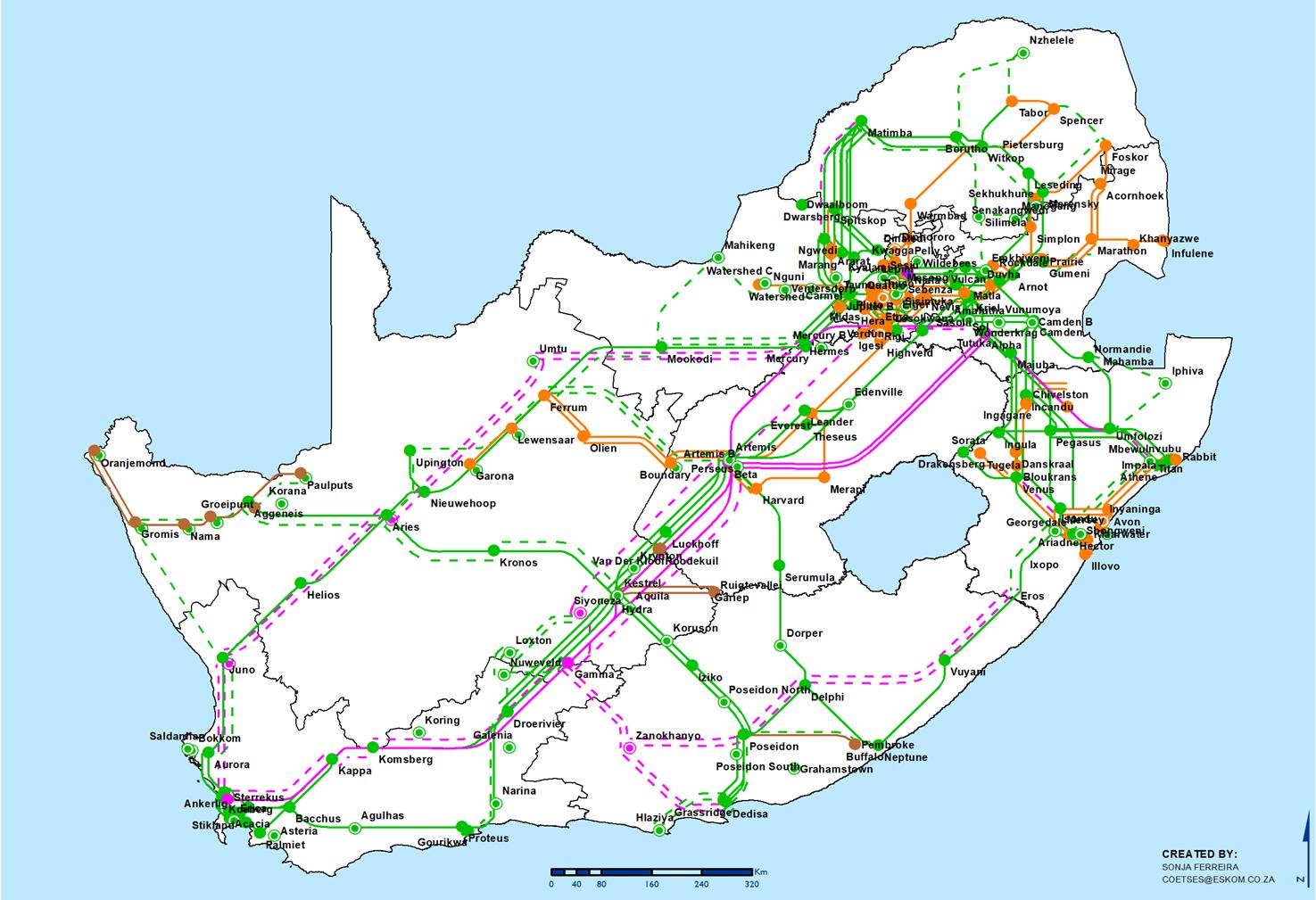
South Africa has far more renewable projects under development than the grid can currently connect. GreenCape reports a pipeline above 217 GW and identifies fully allocated capacity in key renewable regions, including the Northern Cape for solar and the Western and Eastern Cape for wind.⁷ Projects with credible grid access, budget quotes, or advanced connection solutions therefore carry a clear development advantage.
The Grid Capacity Allocation Rules place greater weight on project readiness when allocating scarce connection capacity.³ Land rights, permitting, engineering, offtake, and financing readiness now have greater relevance to grid access.
NTCSA’s Transmission Development Plan 2025-2034 illustrates the size of the build-out. Around 56 GW of new generation must be integrated, requiring nearly 14,500 km of new transmission lines and 210 transformers totaling roughly 133,000 MVA of capacity.¹³ NTCSA estimates that line delivery needs to run at around five times the pace achieved in the previous decade.
The case for regional trading is strengthened by the different supply-demand positions across SAPP markets.
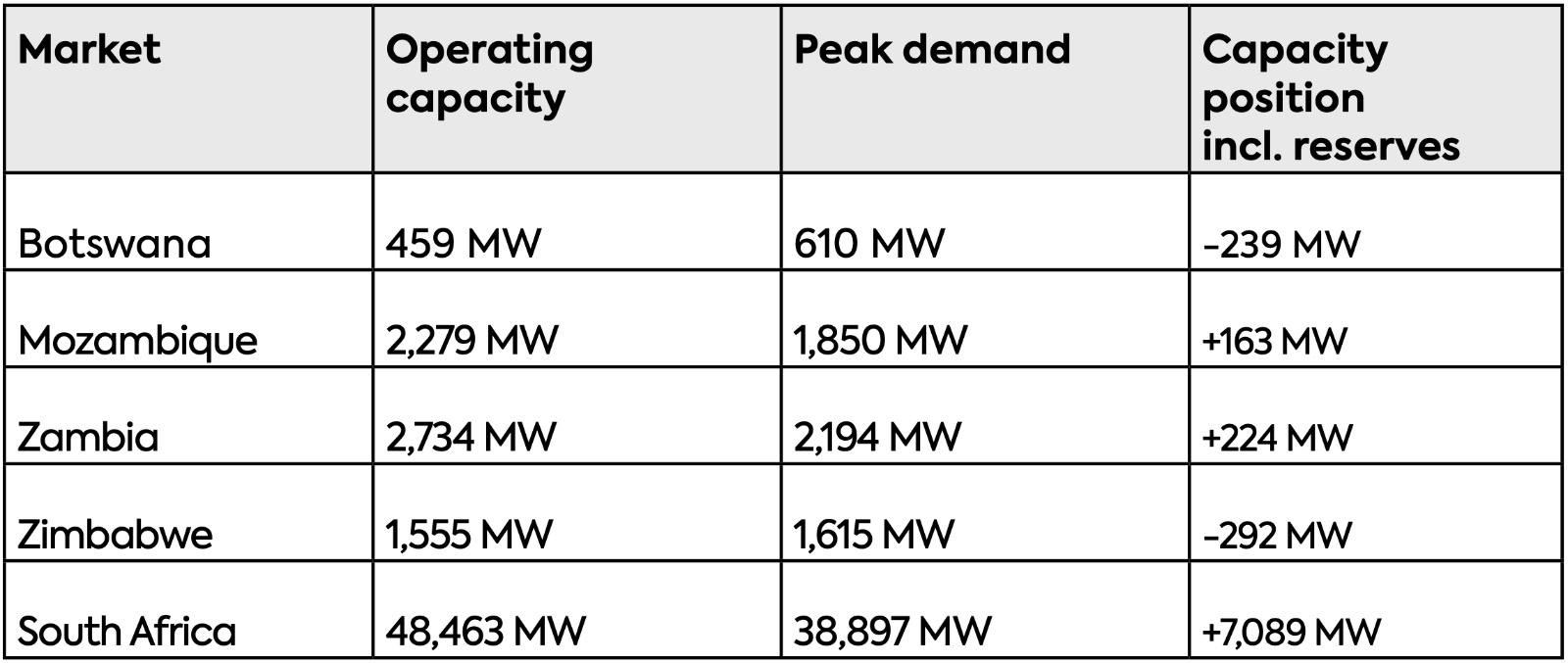
These differences create a clear commercial case for cross-border trading, but transmission remains a limiting factor. In August 2026, 191.² GWh was traded across SAPP’s competitive markets, while transmission bottlenecks along the central corridor prevented 33% of matched bids from being traded.
SAPP bilateral transactions also require a secured transmission path, so physical grid availability remains central to regional market liquidity.² The World Bank’s RETRADE-SAPP program is intended to deepen regional participation, prepare transmission projects, and attract more private capital into cross-border infrastructure.¹⁴
For developers and traders, congestion is therefore a revenue risk as well as a gridplanning issue. It can affect connection timing, dispatch, curtailment, the ability to deliver contracted power, and the value of flexibility at particular locations.
BESS and the value of Flexibility
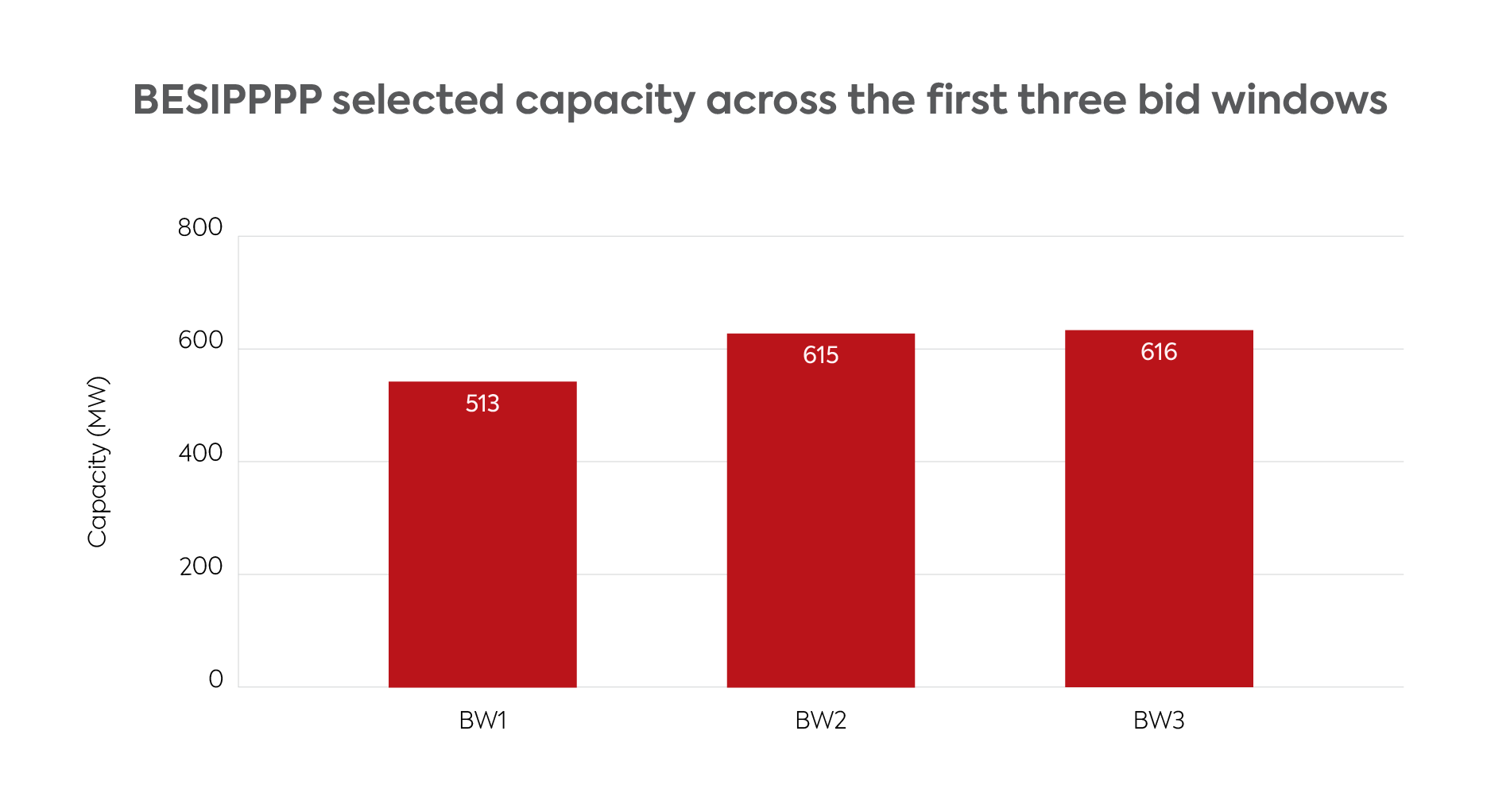
South Africa’s Battery Energy Storage Independent Power Producer Procurement Programme (BESIPPPP) has established a first large-scale route to market for storage. Bid Window 1 (BW1) covers 513 MW / at least 2,052 MWh across five four-hour projects.¹⁵ Bid Window 2 (BW2) appointed eight preferred bidders totaling up to 615 MW, while Bid Window 3 (BW3) appointed five preferred bidders totaling 616 MW.¹⁶,¹⁷
The government estimated investment of R12.8 billion for BW2 and R9.5 billion for BW3, equivalent to roughly €690 million and €510 million respectively at late-September 2026 exchange rates.¹⁶,¹⁷,¹⁸
These projects are being procured as power-system assets. Their contracts include capacity, energy, and ancillary services rather than relying primarily on merchant arbitrage.¹⁷ Eskom also identifies renewable integration, ancillary services, congestion relief, curtailment mitigation, and grid stability among potential storage applications.¹⁹
The BESS revenue stack
As trading develops, private BESS projects can combine several value streams: energy shifting between low- and high-value periods, shaping renewable supply for PPAs, reducing portfolio imbalance, providing ancillary services, and supporting constrained grid locations. The accessible mix depends on market rules, connection location, operational limits, and competition from other flexible resources.
SOLA’s Naos-1 project shows how this model is moving into private procurement. The project combines a 435 MWp solar PV plant with 660 MWh of contracted battery storage, and will supply Sasol and Air Liquide through long-term PPAs using wheeling.²⁰ SOLA describes it as South Africa’s first utility-scale solar and battery project built specifically to wheel electricity to private end-users.
For a trader, BESS can serve as a portfolio asset rather than an attachment to a single solar plant. The dispatch decision then depends on which use has the highest risk-adjusted value at that moment: meeting a PPA obligation, reducing imbalance exposure, selling into a higher-price period, or providing a system service.
At the regional level, SAPP’s short-term markets and planned transmission expansion provide a framework in which more flexible generation and storage could help address periods of surplus and scarcity.²,¹⁴ The size of that opportunity will depend on participation rules and available cross-border capacity
From market revenue to Bankability
More routes to market create additional revenue options, but they also broaden the set of risks lenders need to understand. A long-term fixed-price PPA transfers much of the powerprice exposure to the buyer. Merchant and trader-backed structures leave more price, balancing, liquidity, and grid exposure with the project or its commercial partner.
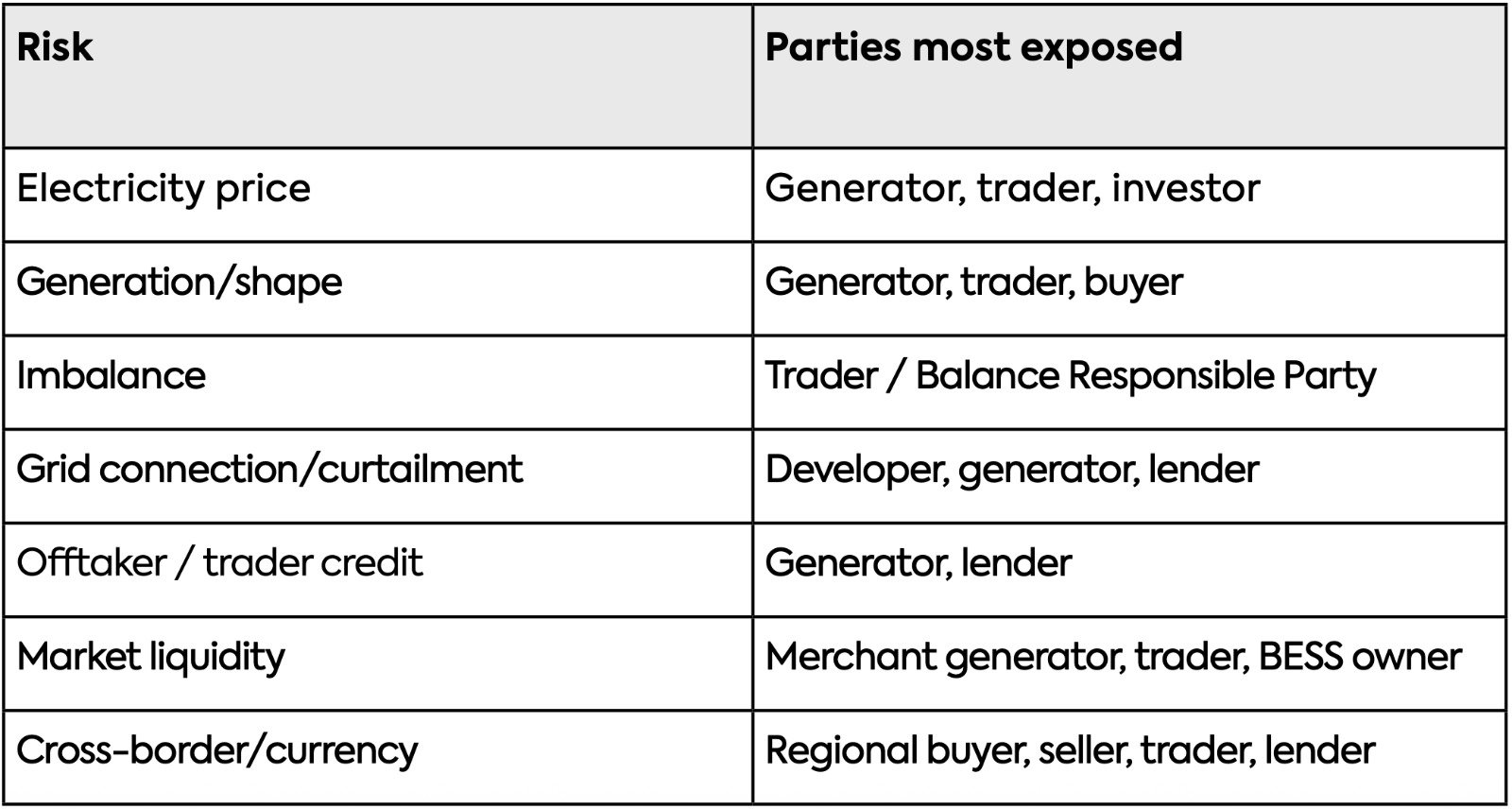
Standard Bank describes this broader shift in the African project finance as one in which industrial buyers procure directly, traders and aggregators build larger portfolios, and batteries are paired with renewable generation.²¹ Under these structures, lenders need to assess the trader’s financial strength, customer concentration, contract duration, replacement provisions, collateral, forecasting capability, balancing exposure, and access to alternative buyers.
Portfolio diversification can reduce dependence on a single customer, but it does not eliminate counterparty risk. Bankability depends on whether the commercial structure can redirect power, replace customers, and manage market exposure under downside conditions.
Contracted and market revenues can coexist
The opening of wholesale markets does not imply that long-term PPAs lose their role. A more plausible financing model combines contracted revenues with selective market exposure. Examples include a PPA with a merchant tail, a trader-backed floor with market upside, or a solar PPA combined with BESS optimization revenues.
Physical trading also creates demand for hedging. SAPP already offers weekly and monthly physical forward products, and deeper liquidity could support a broader set of price-risk tools over time.² Renewable energy certificates and carbon products can add value for some buyers, but they should complement a viable electricity revenue model.
What will make a project stronger?
Projects operating in a more market-based electricity system will need to combine commercial flexibility with strong risk management. The following factors will be particularly important:
- Credible grid access and a realistic view of congestion and curtailment risk.
- Counterparties and traders with sufficient credit quality and replacement options.
- Forecasting, scheduling, and flexibility that limit shape and imbalance exposure.
- Several routes to market and contracts that clearly allocate price, volume, grid, and currency risk.
The core development question is therefore broader than annual generation and PPA price. Developers and investors need to know when electricity will be produced, where it can be delivered, who will manage the trading position, and which risks remain with the project after contracts are signed.
These are also the questions that will be addressed at the Solarplaza Summit Renewable Electricity Trading Southern Africa on 2 December 2026 in Johannesburg. The event will bring together utilities, IPPs, traders, investors, banks, aggregators, grid operators, and corporate offtakers to discuss market rules, wheeling, aggregation, cross-border trading, BESS revenues, ancillary services, RECs, and carbon products, with a focus on the commercial structures needed as the market develops.
Sources
1 South African Government (2024) Electricity Regulation Amendment Act 38 of 2024. Retrieved from
https://www.gov.za/documents/acts/electricity-regulation-amendment-act-38-2024-english-isizulu-20-aug-2024
2 Southern African Power Pool (2026) Market Overview. Retrieved from
https://www.sapp.co.zw/market-overview-06
3 National Energy Regulator of South Africa (2025) NERSA Approves Market Operator Licence for NTCSA and Establishment of Electricity Market Advisory Forum. Retrieved from
https://www.nersa.org.za/files/files/2025/11/UpdatedMediastatement-NERSAapprovesMarketOperatorlicenceandestablishementofEMAFandGCAR.pdf
4 National Transmission Company South Africa (2026) Update on the Establishment of the Wholesale Electricity Market in South Africa (SAWEM). Retrieved from
https://www.ntcsa.co.za/wp-content/uploads/2026/03/NTCSA-Media-Statement_SAWEM_26-March-2026.pdf
5 National Transmission Company South Africa (2026) South African Wholesale Electricity Market. Retrieved from
https://www.ntcsa.co.za/sa-wholesale-electricity-market-sawem/
6 Government Communication and Information System (2026) South Africa’s economy from stabilisation to expansion. Retrieved from
https://www.gcis.gov.za/content/newsroom/blogs/2026-09/south-africas-economy-from-stabilisation-to-expansion
7 GreenCape (2026) Large-Scale Renewable Energy Market Intelligence Report 2026. Retrieved from
https://greencape.co.za/wp-content/uploads/2026/06/Renewable-Energy-MIR-2026-Digital.pdf
8 National Transmission Company South Africa (2026) The South African Wholesale Electricity Market Code, Rev 2.3. Retrieved from
https://www.ntcsa.co.za/wp-content/uploads/2026/02/Market-Code-v2.3.pdf
9 Southern African Power Pool (2026) Market and Monthly Reports. Retrieved from
https://sapp.co.zw/market-reports
10 Cliffe Dekker Hofmeyr (2025) The Trader’s Legal Landscape. Retrieved from
https://www.cliffedekkerhofmeyr.com/en/news/publications/2025/Sectors/Projects-Energy/projects-and-energy-alert-20-august-The-traders-legal-landscape
11 Eskom (2026) Wheeling. Retrieved from
https://www.eskom.co.za/distribution/tariffs-and-charges/wheeling/
12 Eskom (2026) Virtual Wheeling. Retrieved from
https://www.eskom.co.za/distribution/virtual-wheeling/
13 National Transmission Company South Africa (2024) Transmission Development Plan 2025-2034 Public Report. Retrieved from
https://www.ntcsa.co.za/wp-content/uploads/2024/12/TDP-2024-Public-Report_Rev1.pdf
14 World Bank (2025) World Bank and Southern African Power Pool Partner to Expand Regional Power Trade. Retrieved from
https://www.worldbank.org/en/news/press-release/2025/11/04/world-bank-and-southern-african-power-pool-partner-to-expand-regional-power-trade
15 Engineering News (2026) Battery Energy Storage Independent Power Procurement Programme, Bid Window 1, South Africa: Update. Retrieved from
https://www.engineeringnews.co.za/article/battery-energy-storage-independent-power-procurement-programme-bid-window-1-south-africa-update-2026-05-22
16 South African Government (2024) Preferred Bidders under Battery Energy Storage Independent Power Producer Procurement Programme Bid Window 2. Retrieved from
https://www.gov.za/news/media-statements/minister-kgosientsho-ramokgopa-8-preferred-bidders-under-renewable-energy
17 South African Government (2025) Battery Energy Storage Independent Power Procurement Programme Bid Window 3. Retrieved from
https://www.gov.za/news/media-statements/minister-kgosientsho-ramokgopa-battery-energy-storage-independent-power
18 European Central Bank (2026) Euro foreign exchange reference rates: South African rand. Retrieved from
https://www.ecb.europa.eu/stats/policy_and_exchange_rates/euro_reference_exchange_rates/html/eurofxref-graph-zar.en.html
19 Eskom (2026) Battery Energy Storage System. Retrieved from
https://www.eskom.co.za/distribution/battery-energy-storage-system/
20 SOLA Group (2026) A First-of-its-kind Private Solar and Battery Project: Naos-1. Retrieved from
https://solagroup.co.za/first-of-its-kind-private-solar-and-battery-project-naos-1/
21 Standard Bank (2026) The Rules of Power Are Changing in Africa. Retrieved from
https://corporateandinvestment.standardbank.com/cib/global/insights/the-rules-of-power-are-changing-in-africa

To learn more about
the topic beyond this white paper,join Solarplaza Summit RE Trading Southern Africa on 2 December, taking place in Johannesburg.
