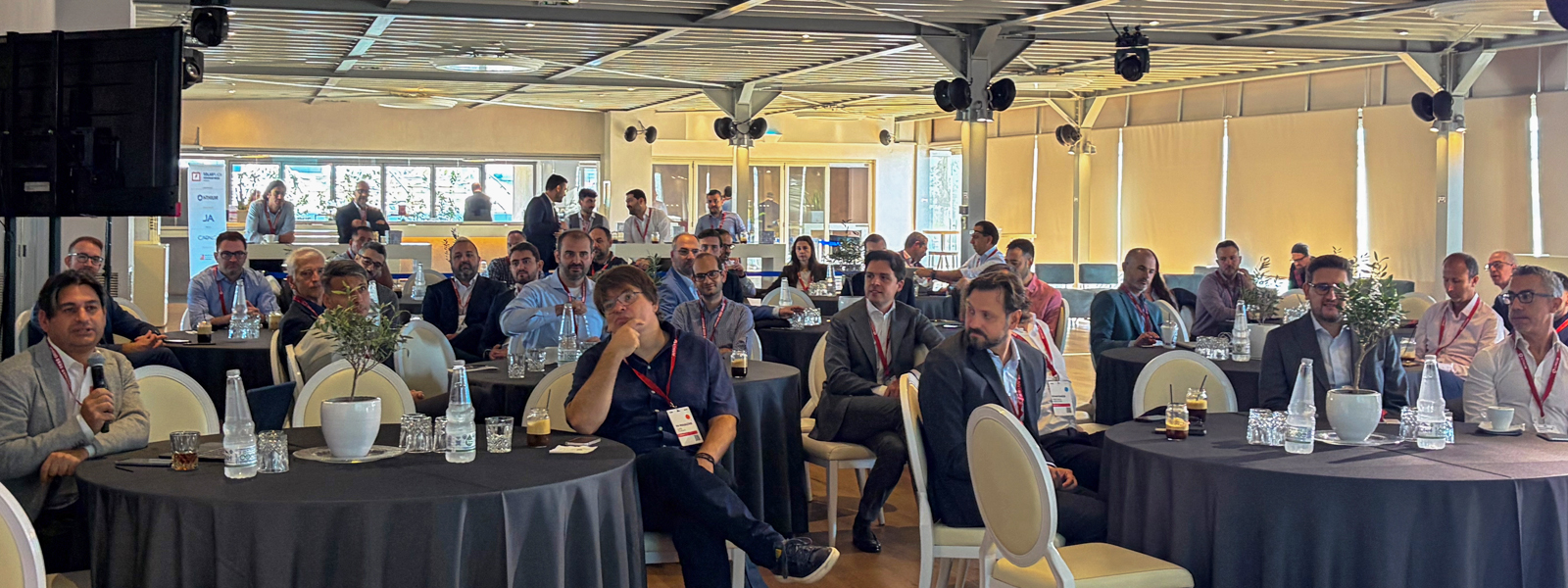
Greece logged 382 hours of negative power prices by 15 September 2026, up from 115 in all of 2025 and 11 in 2024. On 24 September, the Solarplaza Seminar BESS Greece brought developers, investors, lenders, suppliers, and traders to Athens to work out what that means for battery energy storage systems (BESS). Nobody on stage questioned the need or the economics. The debate was about delivery: who gets a grid connection, who finances it, and who trades it. This report walks through the day in the order an investor would ask the questions
Key takeaways
- The need is proven. Negative-price hours more than tripled in a year, and ion Ventures expects 3.5 TWh of renewable curtailment in 2026.
- The pipeline dwarfs the target. Licenses cover 55.3 GW of standalone BESS, against a national plan of 4.33 GW. Forecasts for 2030 range from 4 GW to 8.6 GW.
- Grid access is the bottleneck. Speakers blamed slow connection terms and shifting priority rules, not technology or capital.
- Co-location and longer duration lead. Aurora Energy Research puts solar-plus-storage returns above 11%, and 4 hours is replacing 2 hours as the standard.
- Banks will lend, on new terms. Expect 10-year tenors, more equity, and cash sweeps. The offtake contract decides how much debt you get.
- Optimizers are about to be scarce. A 500 MW cap per group means a 7 GW market needs at least 14 of them.
1. Why Greece needs storage now
'A negative price event for a battery is the best thing you can have, but they're also not sustainable.'
- Sebastiaan Groenhuijsen, ion Ventures
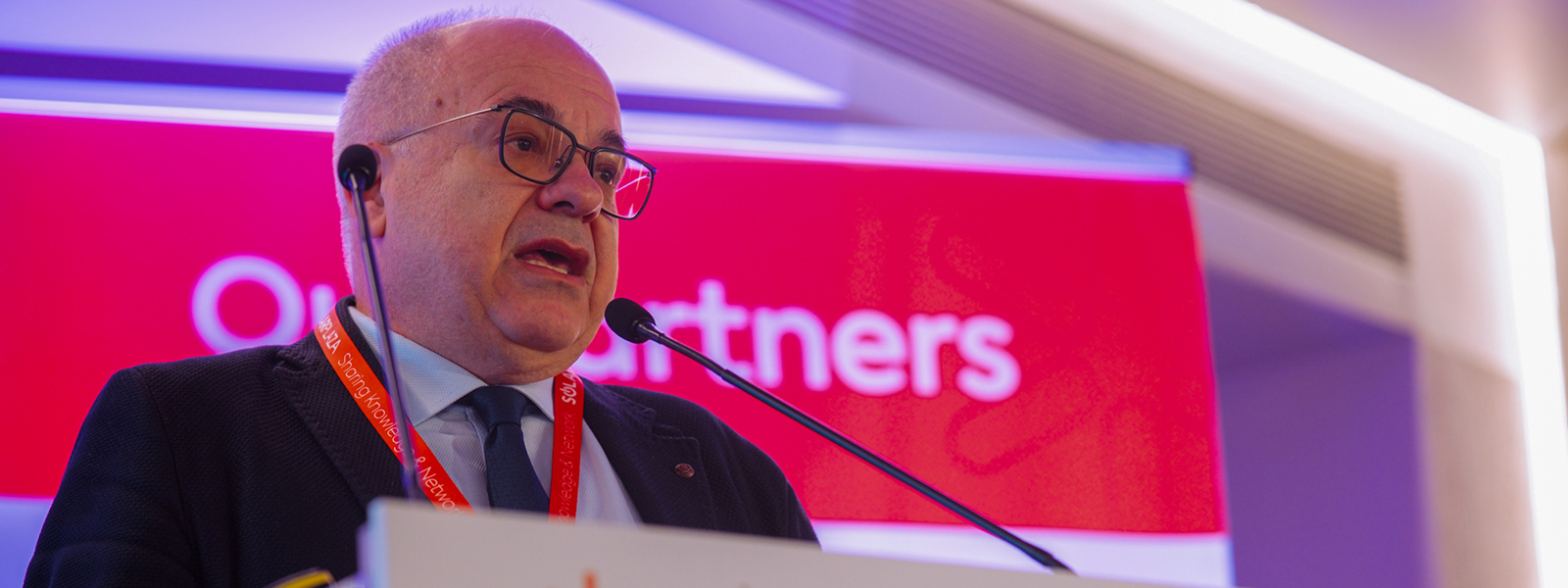
Stelios Psomas, Policy Advisor at the Hellenic Association of Photovoltaic Companies (HELAPCO), titled his opening slide 'The new business-as-usual'. It showed monthly curtailment of renewables peaking above 400 GWh in spring 2026, alongside the jump in negative-price hours.
The cause is solar growth that outpaces flexibility. Greece added 2.3 GW of photovoltaic (PV) capacity between January and August 2026 alone, and Psomas expects more than 20 GW installed by 2030.
For storage owners, that pain is the business case. Capalo AI showed day-ahead prices swinging between €0 and €300 per MWh within single days in mid-September. Optimus Energy called the Greek day-ahead spread one of the most attractive in Europe.
For solar owners and their lenders, it is a threat. Virginia Murray, Partner at Watson Farley & Williams, said curtailment and negative prices are affecting the viability of existing PV projects. She has seen debt transactions for pure solar decline. Her point about lenders: 'All of the Greek banks are hugely exposed to the solar market.'
2. How big, how fast
'Every single year the market is more than our expectation.'
-Stelios Psomas, HELAPCO
Appetite is not the problem. As of August 2026, storage licenses covered 55.3 GW of standalone BESS, 11.8 GW of co-located BESS, and 16.7 GW of pumped hydro. A scheme offering grid priority to 4.7 GW of unsubsidized standalone batteries drew 12.15 GW of applications, according to Optimus Energy.
What exists today is far smaller. Three auctions awarded 900 MW of subsidized projects, and the first capacity came online in April 2026. Estimates of what is operating ranged from about 200 MW (ion Ventures, with another 300 MW installed but not commissioned) to 600 MW or 700 MW (Apostolos Panos, President of the Hellenic Association of Energy Storage Systems).
The 2030 forecasts presented in Athens differ by a factor of two:
| Source | BESS capacity by 2030 |
|---|---|
| National Energy and Climate Plan | 4.33 GW |
| Aurora Energy Research | 4 GW to 5 GW |
| Energy Ministry (unofficial) | 5 GW to 7 GW |
| Optimus Energy | Up to 6.8 GW |
| HELAPCO, basic scenario | 8.6 GW (25.7 GWh) |
Psomas considers even his 8.6 GW conservative. He pointed to 20 years of solar forecasts that undershot, and to Bulgaria: 'Bulgaria was almost zero two years ago and in two years it created a miracle.' He closed with an invitation: 'Let's meet again in 2030 to see if I'm right or not.'
Others were cooler on the near term. Murray doubts much will be installed in 2027 and expects 'a bit of a dip' before a stronger 2028. Asked where the market will be in three years, Joshua Murphy, Head of Energy Storage at Econergy, needed three words: 'Delayed. Delayed. Delayed.'
3. What is holding it back
'I'm English. I like a queue. We haven't had that queue. We've had people jumping ahead. We've had the rules changing.'
- Virginia Murray, Watson Farley & Williams
Panos named two causes for the slow start. The rules on who gets connection terms first have changed too often, and investors lack both a secure timeline and a minimum of secured revenue. 'It's not a matter of technology introduction anymore,' he said. 'Now it's time of implementation.'
The queue now runs in a set order. Auction projects came first. Batteries serving clusters of solar plants are receiving 1,000 MW of offers, of which 500 MW has been issued. After that, the standalone priority scheme and co-located projects alternate in 1,000 MW tranches.
That scheme creates its own problem. Murray expects offers to cover less than half of the applications, and she expects litigation. Panos proposed a faster route: let operating solar plants add storage by modifying their existing connection agreements.
The physical grid worried speakers less than the paperwork. Psomas reported that the distribution operator expects room for 7 GW more renewables and storage by 2030.
The Bulgaria comparison
Bulgaria came up in almost every session, usually as the neighbor that moved faster. Aurora expects it to end 2026 with 5.4 GW of BESS, against 1.0 GW in Greece. Liuba Andreeva of Capalo AI, which trades batteries in both countries, objected from the audience: 'I heard like two times, Bulgaria, Bulgaria, Bulgaria. No.' In her view, Greece offers the more attractive opportunities. Psomas agreed on the cause of the gap: Bulgaria used European funds better, and that money is now spent.
What speakers want from the ministry
Nobody asked for subsidies first. They asked for predictability. Groenhuijsen wants a three-to-four-year plan of regulatory changes: 'It's the unexpected changes that are killer.' Murray kept hers shorter: 'When you make a deadline, stick to it.'
Murphy offered the outside view. In the United Kingdom (UK), he said, almost every substation ended up with 20 GW waiting to connect. Organizing the queue up front, as Greece has done, 'is actually not a bad one', even if he called that an unpopular opinion.
4. What to build
'Only safety. Nothing more than that.'
- Konstantinos Natsis, PPC Renewables, on what keeps him awake
Co-located beats standalone on paper. Aurora's modeling shows solar-plus-storage projects earning internal rates of return (IRR) above 11% across Southeastern Europe. Sharing the grid connection and development costs can cut capital costs by up to 15%. Standalone 2-hour batteries land between 10% and 12% in Aurora's central case, and below 6% in some low-price cases.
The UK went the same way. ion Ventures showed co-located capacity growing from under 30 MW in 2020 to between 800 MW and 1,100 MW in 2025. Groenhuijsen's advice for Greece: put storage on every new PV project and retrofit existing ones where possible.
Mind the midday rules. Greek regulation bars standalone batteries from injecting power between 11:00 AM and 03:00 PM local time, with reduced limits in the hours either side. Psomas was clear that these limits are absolute.
Four hours is the new two. Most Greek applications are for 2-hour systems. Psomas expects investors to ask the regulator for 4 hours 'very, very soon'. Natsis, Chief RES Engineering & Construction Officer at PPC Renewables, said 3-hour and 4-hour systems are now more cost-effective for investors. PPC has built both: 100 MW of 2-hour and 50 MW of 4-hour capacity in Greece.
Eight hours is on the table. Hithium presented a 6.9 MWh container built for 8-hour duration. Against its own 4-hour product on a 1 GWh site, the company claims 3% lower capital costs. On an 800 MWh layout, it claims half the footprint. JA Solar, by contrast, sees 2 to 4 hours as the market for now and has no 8-hour product. Groenhuijsen urged developers to design for 6 and 8 hours today.
Choosing a supplier. Natsis listed what PPC weighs beyond price: fire safety, traceability, and whether the supplier has people nearby during construction. Murray made the last point with a question to the room about waiting 'two weeks for the Chinese engineer to get a visa'. She saw nodding.
Prices and supplier health. Murray cited an 81% fall in battery prices over eight years. Natsis reported a slight increase in the past month and called pricing 'a tango between the suppliers and the market'. Murray also flagged China's pause on approvals for new battery factories and put the lenders' question on her slide: 'Is your supplier safe?'
Building at scale. Panagiotis Stamoulis, Head of BESS Operations Unit at PPC Renewables, warned against buying from five or six suppliers without common standards: 'We just end up with five incompatible islands.' Natsis added a lesson from construction. Unlike solar modules, batteries cannot sit idle while the grid connection catches up, so 'timing really matters here'.
5. How to get it financed
'You can't finance a project based on how good the warranty is. You have to finance the project on how good the battery is.'
- Virginia Murray, Watson Farley & Williams
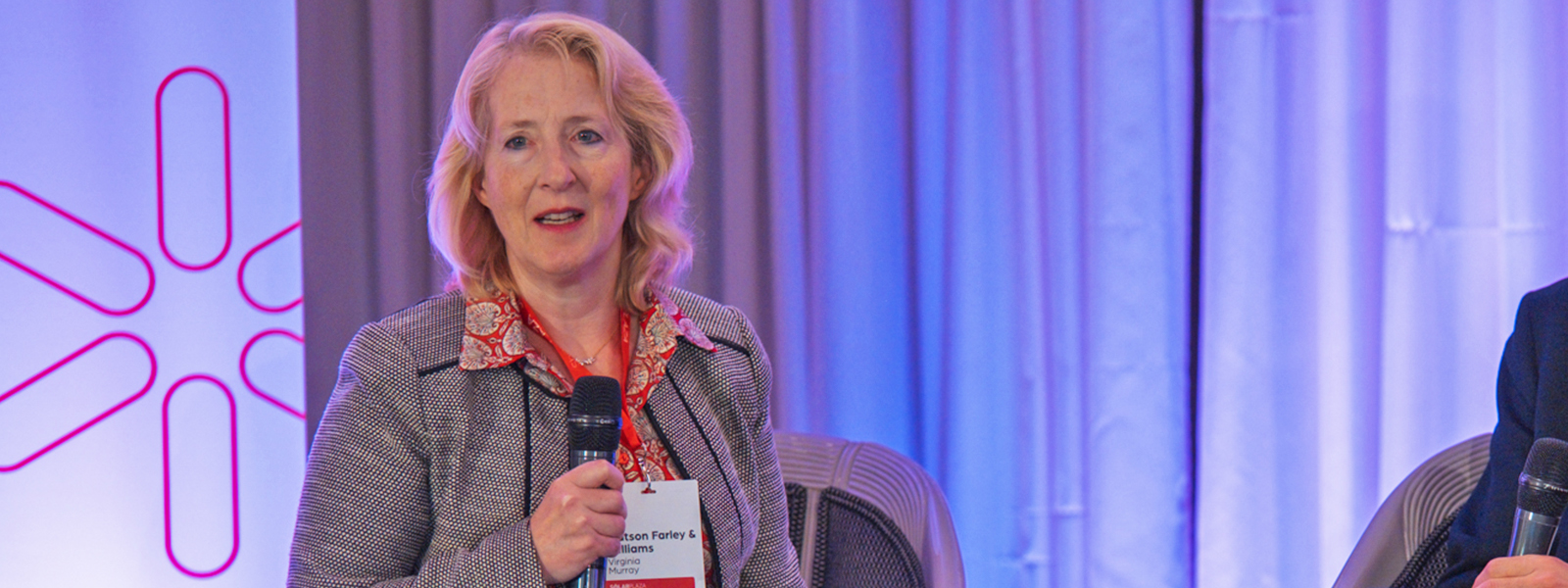
Murray opened the financing session with the lender's view: 'Bankers hate risk.' A solar plant with a fixed tariff is easy to model. A battery with half a dozen revenue sources is not.
Greek banks want the business, she said, and they know the developers. What they do not yet understand is how the revenue streams will behave. The UK gives them reason for caution: frequency response and balancing income there fell 80% in two years as batteries rolled out.
Her forecast for Greek BESS debt:
- A maximum tenor of 10 years, whatever the warranty says. Suppliers now offer up to 20 years.
- A much higher equity share than solar ever needed.
- Cash sweeps to pay down risk early.
'The money will be there,' she said. 'It'll just look very, very different.'
The offtake contract moves these numbers more than anything else. Murray understands that a tolled battery in the UK can raise 80% to 85% debt, against 40% to 60% with full market exposure. Murphy gave a live case: signing a floor took two Econergy projects from about 60% debt to 70% and removed the need for a reserve account.
Greece is not there yet. Christos Pantazis of Metlen Energy & Metals noted that Romanian banks already finance floor-plus-revenue-share deals, while Greek banks still price mainly on a fixed component. Panos summed up the gap: 'Capital chases opportunity', while financing 'wants predictability'.
6. How the revenue works
'The toll is just paying you for being essentially a hotel.'
- Joshua Murphy, Econergy
The stack today. A Greek battery can trade in the day-ahead and intraday markets and sell balancing services to the grid operator. Nicolas Kyriakoglou, Manager at Baringa, tracked the 11 assets already trading. Reserve markets are not yet open to them, and balancing activations are still in trial operation. On current schedules, balancing would supply more than 60% of revenue for some assets once they are paid for it.
The stack tomorrow. Aurora's long-term view for a 2-hour Greek battery is 70% energy arbitrage and 30% capacity payments for ancillary services. Asked which revenue fades first, Kyriakoglou picked reserves, with balancing 'not too far behind'.
The UK warning. Groenhuijsen showed what saturation did to British batteries. Revenues ran at £150,000 to £200,000 per MW per year during the energy crisis, fell to between £40,000 and £70,000 in 2023, and have recovered to between £60,000 and £90,000. He places Greece about six years behind Great Britain, with one difference: a solar-heavy system will keep arbitrage a larger share of the total.
Toll, floor, or merchant. Every finance and operations speaker came back to the same three contracts. Murphy has reviewed more than 300 offers across five countries and shared what each costs.
| Structure | What the owner gives up | What the owner keeps | Debt it supports |
|---|---|---|---|
| Merchant | 3% to 7% of revenue to the optimizer | All market risk and all upside | 40% to 60% (UK, per Murray) |
| Floor | 9% to 20% of revenue | A guaranteed minimum and a share of upside | About 70% (Econergy, UK) |
| Toll | 20% to 30% of forecast revenue, and 30% to 40% in Greece | A fixed payment and availability risk only | 80% to 85% (UK, per Murray) |
The Greek toll discount is steeper because the market is new and nobody knows how saturation will play out. Kyriakoglou described the trade-off: 'If everybody wanted to do tolling, everybody would be happy, everybody would get financed, happy days.' Equity wants upside, though.
Two details to check before signing. A floor that settles annually does not protect monthly cash flow. And under a toll, the owner still owes availability, so supplier warranties must match the toll's penalties. Optimus Energy put a number on that: a 10% shift in efficiency, cycling limits, or availability moves revenue by more than €1.5 million a year for a 50 MW, 100 MWh battery.

7. Who trades your battery
'It's really quite strict the way it's currently phrased. So no.'
- Virginia Murray, asked whether aggregators can find a loophole
Greece has a rule no other market discussed in Athens shares. No group may own or control more than 500 MW of storage. At the end of July 2026, the cap was extended to projects under management and aggregator agreements, with annual declarations.
Panos called the idea sound. It aims to stop storage from concentrating the way gas-fired flexibility has. His objection is timing: 'We must create the market' first, then worry about competition in it.
The arithmetic is simple. If Greece reaches 7 GW by 2030, it needs at least 14 optimizers that banks will accept, as Murray's slides put it. Panos ran the numbers the other way: with the few companies able to offer hedges today, the cap supports about 2.5 GW through 2029.
That hits financing directly. Banks want optimizers with a track record, and the experienced names will fill up. Pantazis said Metlen supports the ministry's goal but sees a challenge in finding new counterparties, with smaller balance sheets, that can stand behind tolling deals.
It also changes who can play. Solarplaza's Edwin Koot contrasted this with the early solar years: 'I have a piece of land. You know what? I'll put some modules on there. I'll supply to the grid and I'm going to get rich.' Storage does not work that way.
For owners, the practical answer is to keep contracts short and measurable. Twelve-month optimization agreements are common internationally. Murphy writes benchmarking clauses into his: an optimizer that finishes in the bottom half of the market twice in a row can be replaced.
8. How to run it
'They could be the worst performing with this amazingly cool chart.'
- Joshua Murphy, Econergy, on judging optimizers by their dashboards
The closing session moved from contracts to daily practice. Andreeva set the tone: 'Just building the BESS and connect the BESS to the grid is not enough.'
Know what your optimizer is doing. Murphy showed one day of trading for a UK asset, split into half-hour periods across several markets. It looks impressive, he said, and tells you nothing about whether the asset beat its peers. On the league table for that month his example, the 50 MW Swangate battery, ranked second at £77,123 per MW per year.
Build your own benchmark. Greece has no public league table. Murphy's workaround, which Econergy uses in Romania, is to give similar assets to two different optimizers and compare them. Andreeva made the matching demand from the trading side: owners should insist on real-time technical and financial data, and on an optimizer who can explain its logic.
Put the data in the contract. Econergy pulls every optimizer's data into its own system through one interface, and does the same for six battery manufacturers. '20 different formats from 20 different providers doesn't work,' Murphy said. His rule for reporting clauses: ask for more than you think you will need.
Expect the paperwork to take longer. Capalo AI is bringing its first Greek asset, a solar-plus-storage hybrid, into the market. Andreeva expects qualifying it for balancing services to be the hard part. In Bulgaria the rulebook said 45 days and it took more than two months. In Poland it took seven.
Operate as a fleet. Stamoulis listed what keeps a large operator busy: safety, availability, cybersecurity, and adapting to new market rules. 'Safety is table stakes,' he said. The two he finds hardest are cybersecurity and keeping control systems flexible without shortening the life of the asset.

What comes next
Greece gave the world the marathon, and its storage build-out is shaping up as one. The applications are in and the capital is waiting. The next 12 months will show whether connection offers arrive on the timetable the ministry has promised.
Murphy expects a crunch when they do. Everyone leaves the queue at once, and there are only so many high-voltage engineers, technical advisors, lawyers, and optimizers to go around. Andreeva gave the hopeful version: more hybrids, a flatter midday price dip, and a market still far from saturated.
The advice for anyone holding a Greek storage license came through consistently across the four sessions. Plan for delay, design for 4 hours or more, decide early how much market risk you want, and choose the party that trades your battery as carefully as the battery itself.
We will be back in Greece to see how it plays out. Psomas has already set the date for the final verdict: 2030.
Continue the conversation
The storage discussion moves on to three more markets this fall:
- The Solarplaza Summit Bulgaria, 14 October 2026, Sofia. Greece's most-cited neighbor gets its own day.
- The Solarplaza Seminar BESS Czechia, 19 November 2026, Prague.
- The Solarplaza Seminar BESS Ireland, 26 November 2026, Dublin.
Both seminars follow the same four-part format as Athens: market, technology, financing, and operations.
