In our recent webinar, "Buying BESS from China: How to Control Cost, Quality and Compliance", industry experts explored how international BESS buyers can navigate China's manufacturing landscape successfully. China offers access to an unmatched, highly competitive manufacturing ecosystem, but differences in capabilities, product quality, commercial practices, and regulatory mandates make procurement complex. Featured speakers Johnny Browaeys, Ralf Jungblut, and Anurag Bhakar shared actionable strategies for project developers, IPPs, and EPCs seeking to establish bankable, high-performing energy storage projects.
Key takeaways
- Relationships drive long-term reliability: Buying BESS hardware is an entry point into a 20-year operational relationship. In China, establishing trusted relationships ("circles") unlocks supplier accountability, custom engineering, and conflict resolution that standard contract terms alone cannot guarantee.
- Quality control begins in the factory: Most BESS underperformance starts early, through ungraded cells or insufficient manufacturing oversight, rather than in the field. Rigorous lifecycle quality assurance, including cell-level incoming checks and witnessed Factory Acceptance Tests (FAT), is critical for asset bankability.
- Define pass/fail criteria in procurement: Defining acceptance criteria during commissioning is a primary cause of disputed project handovers. Pass/fail criteria for both FAT and Site Acceptance Testing (SAT) must be contractually locked before production begins.
- The EU Battery Regulation (EUBR) mandates upfront data: Regulatory compliance is shifting from post-delivery certification to upfront supplier selection criteria. Full supply chain traceability down to the mine level and primary carbon footprint data are now essential for EU market access.
- The battery passport is a live system: The upcoming EU Battery Passport is not a static PDF document, but a dynamic, updateable digital architecture tied directly to the physical serial numbers of individual units.
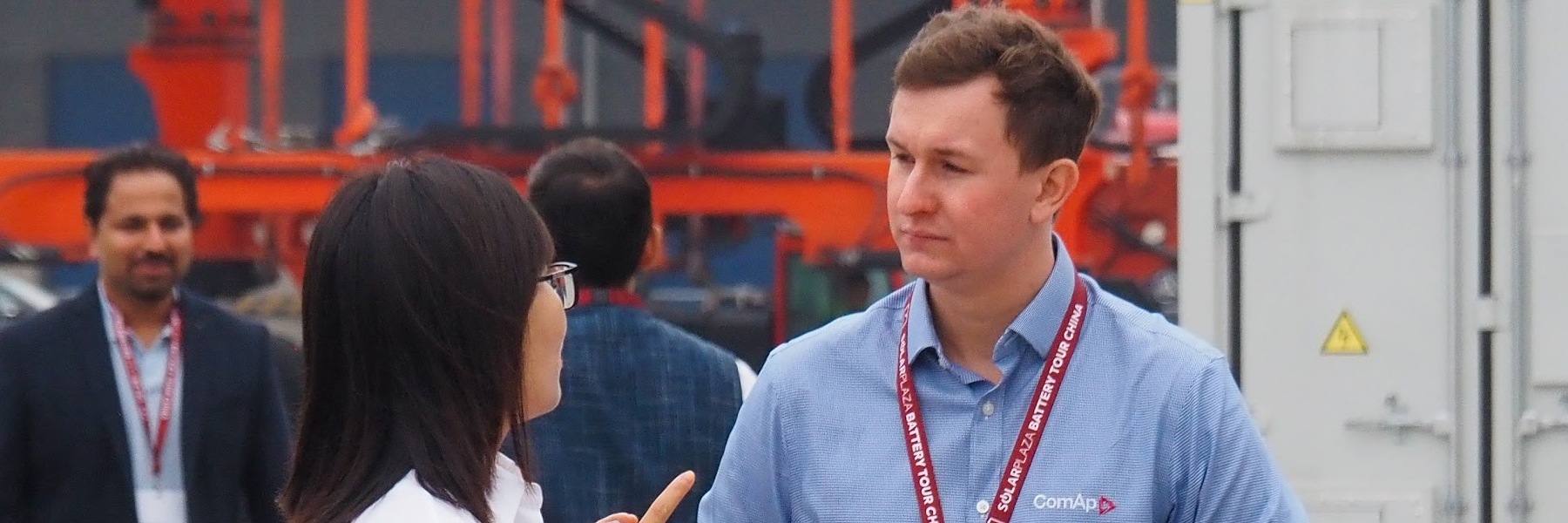
Building reliable partnerships in the Chinese ecosystem
Johnny Browaeys emphasized that navigating Chinese BESS procurement requires an understanding of Chinese business dynamics. In China, business interactions outside an established "circle" (relationship network) tend to remain strictly transactional and competitive. Within a circle, high social accountability and mutual reliance take over. European buyers who rely solely on rigid legal frameworks often miss genuine supplier commitment. Sourcing BESS is not just buying hardware, but establishing a 20-year partnership to ensure suppliers remain responsive as grid codes shift, firmware requires updates, or field challenges emerge.
By leveraging indirect relationship networks and demonstrating mutual value, such as offering European market access, regulatory clarity, or proprietary software capabilities, even smaller European developers can secure tier-one volume pricing and customized manufacturing specs from major Chinese suppliers.
The Chinese "circle" dynamic
- Outside the circle: Transactional, highly competitive, strictly reactive, and prone to impasses during disputes.
- Inside the circle: Driven by social accountability, mutual reliance, flexibility to tailor to spec, and long-term problem-solving.

De-risking BESS deployment across the lifecycle
Ralf Jungblut outlined the structured technical quality assurance (QA) steps required to protect project bankability and operational lifetime. Kiwa breaks down quality assurance into six essential lifecycle phases:
- Procurement QA: Technical specifications (such as IEC 62619 or UL 9540A) and QA contract clauses are locked in prior to agreement signatures.
- Manufacturing QA: Conducting cell-level incoming checks: grading for capacity, internal resistance, and open-circuit voltage, to prevent cell imbalance in completed modules.
- Factory Acceptance Testing (FAT): Formal sign-offs on FAT procedures before testing begins, ensuring complete serial traceability from individual cell batches to final container units.
- Logistics & site receipt: Monitoring environmental conditions during transit (shock, tilt, humidity) and verifying goods upon site delivery.
- Site installation QA: Verifying structural pads, cable terminations, DC isolation, and safety interlocks prior to energization.
- Commissioning & SAT: Executing step energization protocols and running Site Acceptance Tests against pre-agreed baselines for usable capacity, round-trip efficiency (RTE), and system response times.
Performance gaps are almost always established long before hardware leaves the factory. Explicitly integrating measurable pass/fail criteria into procurement contracts is the most effective safeguard for project investors and lenders.

Navigating the EU Battery Regulation & battery passport
Anurag Bhakar detailed the regulatory changes facing importers and developers supplying the European market. The EU Battery Regulation transforms compliance from a final paperwork check into an active supply chain data management program.
To comply, companies placing batteries on the European market must capture primary data across two core requirements:
- Carbon footprint declarations: Gathering plant-specific manufacturing energy data, performing Life Cycle Assessments (LCA), and establishing functional unit calculations per 1 kWh.
- Responsible sourcing due diligence: Establishing supply chain mapping back to the mine level for critical raw materials: cobalt, lithium, nickel, and natural graphite, accompanied by third-party verified environmental and social risk management documentation.
With mandatory Digital Battery Passports on the horizon, compliance readiness must be evaluated during supplier selection. Procurement contracts must clearly define data ownership, audit rights, and required update intervals to prevent future market access barriers.
Conclusion & next steps
Sourcing BESS hardware from China provides significant commercial advantages, but transforming competitive quotes into reliable, bankable assets requires an active approach across commercial relationships, technical quality assurance, and ESG compliance. To rewatch the full session and dive deeper into the technical slides, access the webinar recording here.
To gain on-the-ground experience, inspect production lines firsthand, and connect directly with tier-one suppliers, join us on the upcoming Solarplaza Battery Tour China on 12-16 October 2026 in Hefei and Shanghai. Reserve your place on the Solarplaza Battery Tour China page to elevate your sourcing strategy.