With increasing price volatility and renewable curtailment across the Nordic power markets, utility-scale Battery Energy Storage Systems (BESS) have become central to grid flexibility and asset optimization. In our recent webinar hosted by Solarplaza, Rachel Locquet, Lead Consultant and Head of Price Forecast at Clean Horizon, provided deep, data-driven insights into the evolving market dynamics, shifting revenue models, and financial bankability of storage assets across Denmark, Finland, and Sweden.
Key Takeaways
- Rapid capacity growth: Installed and operational BESS capacity has expanded rapidly across the region, particularly in Finland, which surged from 295 MW in September 2025 to 1.614 GW by September 2026.
- Repricing of ancillary services: FCR and mFRR reserve prices have sharply declined due to structural market saturation driven by doubled battery certification and wind asset pre-qualification.
- Shift to wholesale trading: Revenue models are transitioning from capacity-based ancillary payments toward energy arbitrage across Day-Ahead and Intraday continuous/auction markets.
- Regional divergence: Denmark maintains high price spreads (up to a daily spread of €279/MWh in DK1) and strong interconnection with Germany, whereas Northern Sweden and Finland face night-time negative pricing driven by wind.
- Longer duration advantage: Transitioning to trading favors 4-hour BESS configurations over shorter 1- or 2-hour assets to maximize daily spread capture.
- Grid fees & conditions drive returns: Operational costs, such as grid fees and electricity taxes, can account for up to 34% of OPEX in Denmark (DK1), making flexible grid agreements crucial to project IRR.
Market dynamics and the repricing of ancillary services
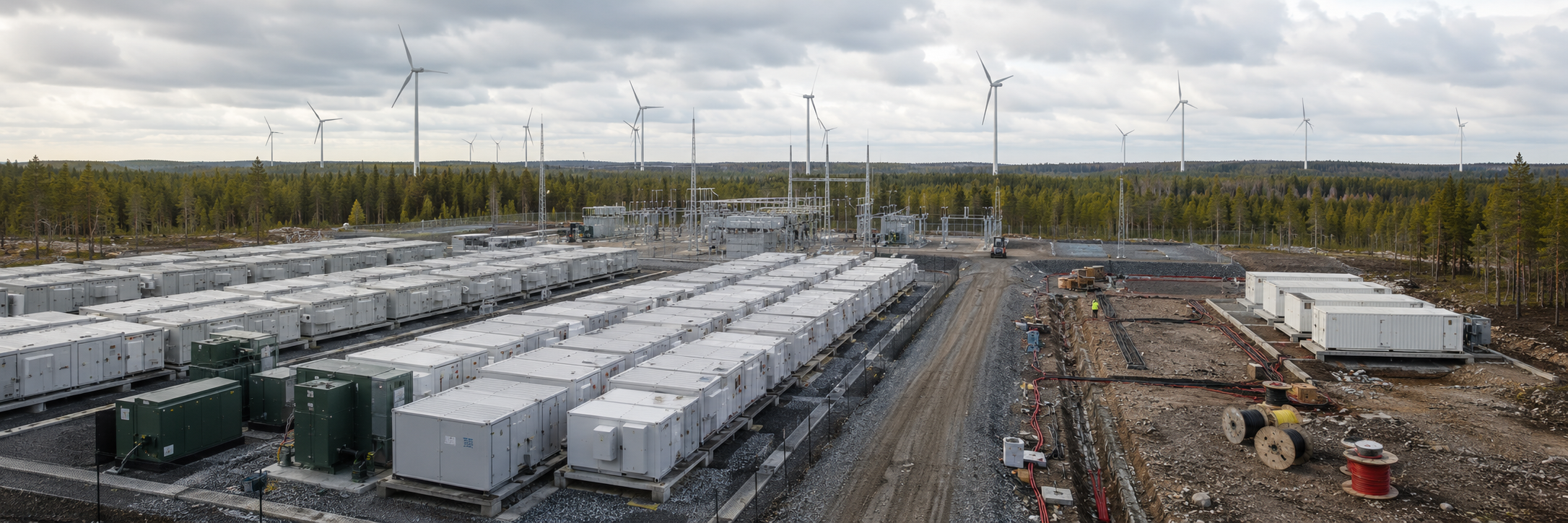
The Nordic battery market historically attracted investment due to high frequency containment and reserve prices. However, rapid buildouts have structurally repriced these shallow markets. In Finland, certified BESS capacity on reserve markets doubled within a single year, exceeding total procured market volumes across FFR, FCR-N, FCR-D, and aFRR. Coupled with increased wind power pre-qualification bidding at lower marginal costs, reservation auction prices dropped significantly. For instance, Swedish mFRR capacity prices fell from nearly €50/MW/h to under €5/MW/h.
Wholesale volatility and the rise of intraday arbitrage
While ancillary revenues have compressed, volatility in the wholesale electricity market is rising. High solar penetration in Denmark drives deep midday price troughs, while high wind output combined with low overnight demand causes frequent negative price events in Finland and Northern Sweden. To maximize returns, battery operators are increasingly stacking Day-Ahead position-taking with Intraday auctions and continuous trading. Intraday liquidity on Nord Pool continues to scale, particularly in Denmark and Finland, enabling optimized dispatch engines like Clean Horizon’s COSMOS to capture sub-hourly price fluctuations.
Building a bankable business case
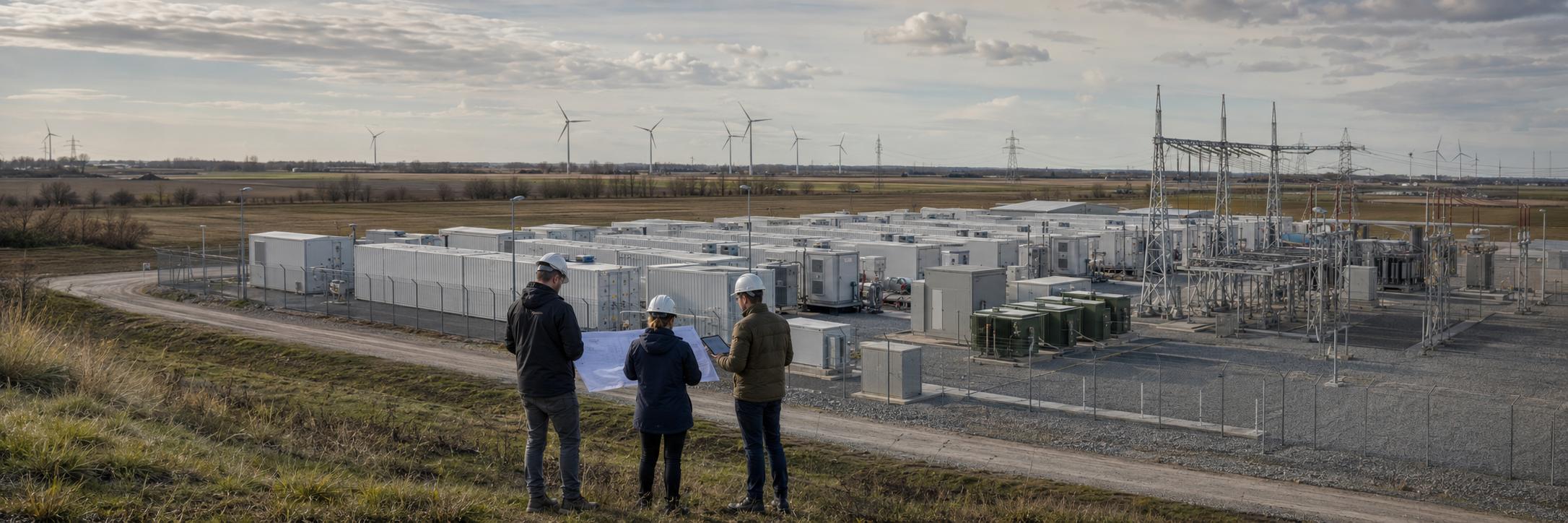
Achieving strong project economics now requires strict attention to local network tariffs, connection agreements, and commercial structuring rather than relying solely on market price projections. Network fees and taxes can make up a significant portion of project OPEX. For example, a 100 MW / 400 MWh asset in Denmark DK1 securing a Limited Grid Access Agreement can increase its 18-year project IRR by 9% due to reduced fixed grid fees. Furthermore, market-aligned injection limitations during peak solar hours show minimal impact on gross revenues while substantially lowering connection friction. While outsized early-stage IRRs have moderated, well-structured projects with robust offtake structures (e.g., tolling or floor agreements) continue to reach bankability.
Join us at the Solarplaza Summit Nordics 2026
To delve deeper into the strategies, financing structures, and policy developments shaping renewable energy and storage across the region, join us in person at the Solarplaza Summit Nordics 2026 on 15 September in Copenhagen. Network with top-tier IPPs, developers, investors, and utilities as we explore how to unlock the next phase of Nordic energy storage growth.
Visit the official event page to learn more and secure your seat: Solarplaza Summit Nordics.