Norway’s power market has long been associated with abundant hydropower, strong export capacity and relatively stable price dynamics. Even though fundamentals and transparency remain strong, that picture is now changing. Low reservoir levels, rising demand expectations, limited new generation buildout, regional grid constraints and increasing interconnection with continental Europe are all reshaping how market participants should think about the country’s electricity market.
To explore these changes, we spoke with Julien Cossé, Chief Strategy Officer at Nord Pool. In his view, Norway’s power market remains deeply influenced by hydropower, but the conditions surrounding that system are becoming less predictable.
“This year is particularly dry, with Norwegian reservoirs being low,” Cossé explains. Without substantial precipitation during the autumn months, reservoir levels could fall toward record lows by the end of the season and remain under pressure into 2027.
Longer term, he sees climate change as a factor that could weaken Norway’s historical price stability, as reservoir levels become more volatile, especially in Northern Norway.

Key takeaways
● Hydropower remains strong and central, but less predictable: Norway’s power market is still deeply shaped by hydropower, but reservoir volatility and changing weather patterns are making price dynamics less stable.
● Demand growth could tighten the market: New consumption from data centers, industrial electrification, hydrogen, battery manufacturing, and transport could reduce Norway’s power surplus if new generation does not keep pace.
● New generation is lagging: Limited development of new capacity is becoming a central concern, especially as the pipeline for onshore wind and solar remains weak, while offshore wind will take time to materialize.
● Interconnection cuts both ways: Stronger links with continental Europe give Norway access to more flexibility, but also expose the market to greater price volatility.
● BESS will complement, not replace, hydropower: Battery opportunities in Norway are likely to emerge around market spreads, ancillary services, balancing markets, and multi-market optimization, especially in regions affected by grid constraints.
● Flexibility is the new investment signal: Julien Cossé’s core advice is to focus less on average power prices and more on the value created by volatility, flexibility, location, and timing.
A market still built on flexible hydro, but facing new pressures
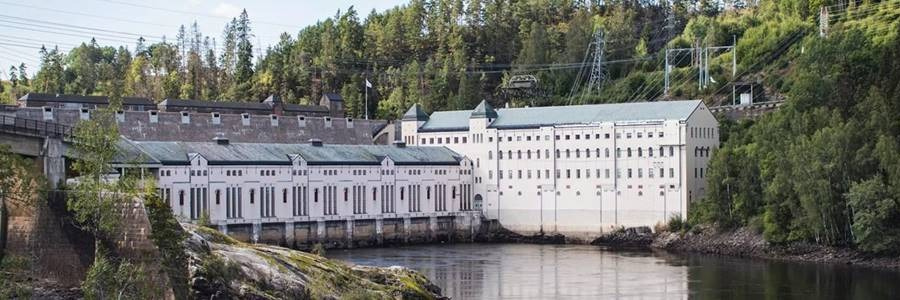
Hydropower remains the foundation of Norway’s electricity system. Large reservoirs have historically allowed producers to optimize generation over long periods, helping smooth seasonal imbalances and support relatively predictable price patterns.
But hydrology is no longer the only force shaping the market. According to Cossé, concern is growing around Norway’s future supply-demand balance. Electricity consumption is expected to increase, while very little new generation capacity is currently being developed.
He points out that Norwegian production capacity has only increased from 40.4 GW to 40.9 GW since 2021, while the wider Nordic region has added between 2 and 2.5 GW per year over the same period.
If demand grows while new supply remains limited, Norway’s power surplus could decrease considerably. Over time, this could change the country’s position in the Nordic and European power system.
“There is already a consensus that the surplus will naturally decrease,” Cossé says. “The only question is when and by how much.”
For developers, investors, utilities and policymakers, this changes how Norway should be assessed, which is both a challenge and a great opportunity. The country can no longer be viewed as a stable hydro market with abundant low-cost electricity. It is becoming a market where demand growth, new supply constraints, grid bottlenecks and weather-driven volatility all play a larger role in investment decisions.
Diversification is becoming more urgent
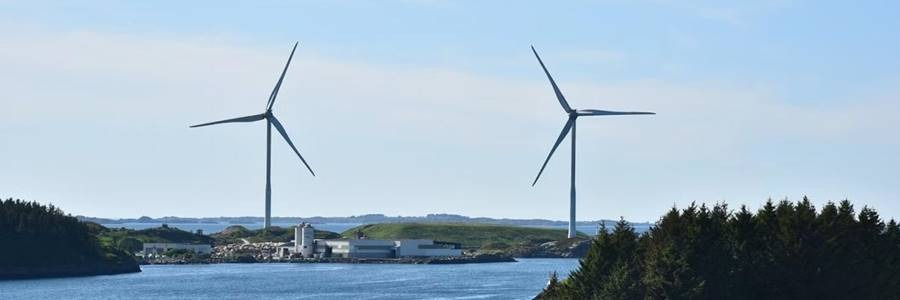
One of the biggest challenges is the limited pipeline of new power generation assets. Cossé highlights onshore wind as a striking example. In his view, onshore wind output can be very low at times, while the pipeline of new projects is almost empty. Solar is also rarely built in Norway, while offshore wind is expected to play a larger role only toward the 2030s through projects such as Sørlige Nordsjø II and Utsira Nord. Nuclear, meanwhile, remains a much longer-term prospect.
According to Cossé, Norway needs greater diversification in its generation mix. Without it, the country could face negative consequences, including lower investment, slower industrial growth and fewer jobs.
This is an important shift for a market historically anchored in hydropower. The question is not whether hydropower remains central. It does. The emerging question is whether hydropower alone can support the next phase of electrification, industrial growth and flexibility needs.
Price signals are becoming more complex
Much of the recent debate around the Nordic power market has focused on negative prices, renewable oversupply and growing flexibility needs. This debate is made possible because of a great transparency of market signals and a general trust that the industry places in the market. Yet Norway’s recent experience also shows the opposite side of the equation.
Low reservoir levels and higher prices during the summer have highlighted how quickly scarcity signals can reappear.
“The developments observed this summer highlight a key structural shift in the Norwegian and wider Nordic power market,” Cossé says. “The system is becoming increasingly weather-driven, more volatile and more dependent on flexibility than in the past.”
In earlier market conditions, Norway’s hydro-dominated system often acted as a stabilizing force. Large reservoir capacity still helps smooth seasonal imbalances and maintain more predictable price patterns. Today, the Nordic market is more dynamic, more interconnected with Europe and more exposed to variable renewable generation.
This means market participants need to interpret price signals with more nuance. Negative prices may still occur during periods of renewable oversupply, but low reservoir levels can quickly reduce the frequency of those events and create stronger scarcity signals.
Cossé notes that in 2025 and during summer 2026, fewer negative prices were observed due to low reservoir levels, particularly in Southern Norway.
For investors, this points to a market where average prices tell only part of the story. Volatility, spreads, location and flexibility value are becoming more important.
Demand growth could redefine Norway’s market balance
Future demand growth is emerging as a key signal for investors, developers and utilities watching Norway’s power market. Across the Nordic region, electricity consumption is expected to rise significantly toward 2040, driven by data centers, industrial electrification, hydrogen production, battery manufacturing and transport electrification.
Cossé expects demand to grow if investments are made in new industrial facilities. Data centers could begin to have a visible impact starting in 2027, while green industries may become more relevant starting in 2028.
But he stresses that production capacity must follow demand. If new supply does not keep pace, Norway’s current export surplus could decline, and the country could become a net importer. That would have direct consequences for prices.
But on the other hand, this creates a positive, clear investment signal. The future Norwegian power market will depend on how much demand materializes, where that demand is located, how flexible it is, and how quickly new generation and grid capacity can be delivered.
Cossé also points to the importance of demand-side flexibility. As consumption grows, Norway will need more ability to shift demand to periods when power is cheap and abundant.
“What Norway needs as well is greater demand flexibility, shifting consumption when power is cheap and abundant, through market-based prices,” he says.
This will also depend on energy policy, including how the national regulated price mechanism, “Norgespris,” evolves and under which conditions it will be continued.
Interconnectors bring flexibility and volatility
Another major structural factor is Norway’s increasing connection to continental Europe. New interconnectors give Norway greater flexibility, especially during periods when domestic cheap power is scarce. They also expose the Norwegian market more directly to b price dynamics.bb
This has its ups and downs. Interconnection can help system security and market efficiency, but it can also bring more volatility into the Norwegian market.
For developers and investors, this creates a more complex environment. Southern Norway, in particular, is increasingly shaped by its connections to continental Europe. This can create stronger price spreads and new opportunities for flexible assets, but it also requires a more sophisticated understanding of cross-border market dynamics.
Where BESS fits in a hydro-dominated market
Hydropower has long been Norway’s primary source of flexibility. That raises an important question for the storage sector. Where can batteries create value in a system that is already highly flexible?
Cossé sees Norway as a highly flexible power system because of its large hydropower reservoirs. At the same time, he notes that the market is fragmented by grid capacity constraints. This creates specific opportunities for BESS.
He identifies three main areas of interest for BESS in Norway. The first is increasing market spreads, particularly in Southern Norway, where the power system is more closely connected to continental Europe.
The second is ancillary services and balancing markets. Batteries can respond within milliseconds, faster than hydropower, which gives them a role in short-duration system balancing and high-speed flexibility.
The third is energy trading and optimization. BESS can capture value from a broader revenue stack across multiple markets, from very short-term response to longer trading horizons, thanks to a liquid and deep market.
This means batteries are not competing directly with hydropower as Norway’s main source of flexibility. They are more likely to complement the hydropower system by addressing faster, more localized and more market-specific flexibility needs.
For Cossé, the opportunity is closely linked to market access and optimization. Nord Pool provides trading and clearing tools across day-ahead and intraday markets, as well as data solutions and battery benchmarks, including the Clean Horizon and Nord Pool battery indices.
Focus on volatility, not average prices
When asked what advice he would give to developers, investors, utilities and policymakers preparing for the next phase of Norway’s power market, Cossé’s message is clear.
“Focus less on average power prices and more on value from volatility and flexibility,” he says.
For developers and investors, the key question is when, where and under what system or network conditions electricity demand growth will materialize. A project’s value will depend on its location, grid access, flexibility potential and exposure to price spreads.
For asset owners, assets that can provide flexibility are likely to capture a growing share of market value. This includes batteries, demand response, flexible generation and smart consumption.
For utilities, the priority will be building portfolios that can optimize across energy, balancing and ancillary service markets, rather than focusing on a single revenue stream.
For policymakers, the challenge is to ensure that market design continues to reward flexibility, provide investment signals and support efficient system operation. This will be critical to maintaining security of supply while enabling electrification and decarbonization.
Norway’s next power market chapter
Norway remains one of Europe’s most distinctive, flexible and transparent power markets. Its hydropower base gives it a flexibility advantage that few other countries can match. Yet the market is entering a new phase.
Reservoir volatility, limited new generation, rising demand, regional congestion, interconnection with Europe and the growing value of flexibility are all changing the investment landscape.
Cossé’s message is that market participants should look beyond average prices. The next phase of Norway’s power market will be shaped by volatility, location, flexibility and timing.
These themes will be explored in more detail at the upcoming Solarplaza Summit Norway PV & Storage, where Julien Cossé will deliver the presentation ‘Norway’s changing power market: demand growth, flexibility needs & investment signals.’
The session will examine how developers, investors, utilities and policymakers should interpret Norway’s changing market signals, and what these shifts mean for the next wave of solar, storage and flexibility investment.
Join us in Oslo on 24 November to hear more from Julien Cossé and other market experts on how Norway’s power market is evolving, and where the next opportunities are emerging.