De-risking Europe's water and power assets
Reservoirs across Southern and Central Europe lost visible volume again this summer. For water authorities, that means rationing plans and emergency pumping. For hydro operators, it means throttled turbines and lost generation hours. Floating Photovoltaics (FPV) usually gets pitched as a clean-energy play, measured in megawatt-hours. That undersells it. Sitting directly at the water-energy nexus, FPV is also an active drought-defense asset - one that protects raw water supplies while it generates power.
Key takeaways
- Floating PV arrays reduce reservoir evaporation, with reductions in published studies ranging roughly 40% to 70% depending on panel density and site conditions.
- Hydro-hybrid installations help preserve hydraulic head during dry spells, giving operators more flexibility to shift generation toward high-value evening hours.
- FPV's effect on water quality - including algae dynamics - is a genuinely active research area, not a settled win; new field data from Dutch drinking water reservoirs is starting to fill that gap.
- Quantified water-retention data gives developers a tangible co-benefit to bring to public tenders and permitting conversations with municipalities.
- Financial institutions like ING are now backing multi-use FPV assets, drawing on several years of operational return data.
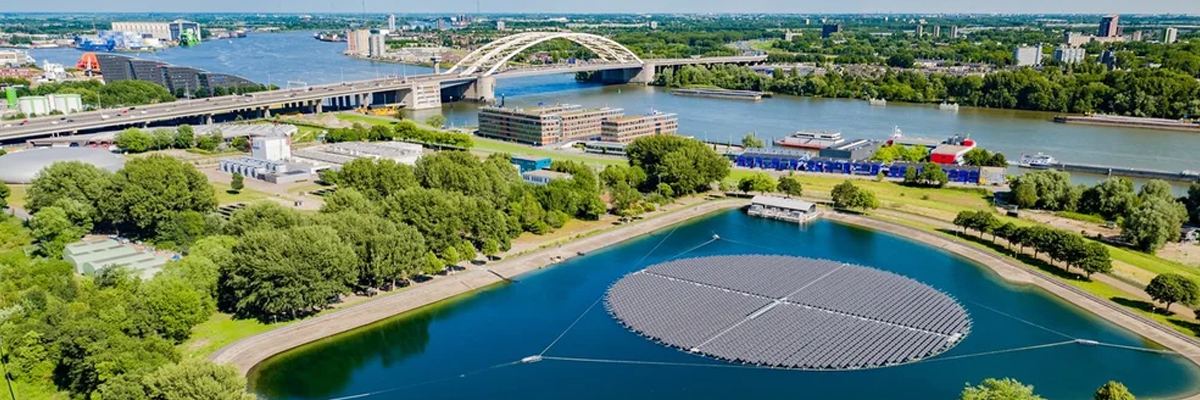
Image credit: Evides
Evaporation: the clearest water case for FPV
Open water in direct sun and wind loses volume fast - that's simple physics, and it's the single biggest water-loss point for exposed reservoirs. Covering that surface with FPV panels cuts it substantially: research published in the International Journal of Low-Carbon Technologies and MDPI Water puts the reduction at 40% to 70%, depending on panel density and the local microclimate.
Scaled across Europe's water bodies, that adds up to hundreds of millions of cubic meters retained annually. For a municipal water authority, every cubic meter kept in the reservoir is one less cubic meter of emergency pumping - and more resilience heading into the next heatwave.
Hydro-hybrid: buying time and flexibility for dam operators
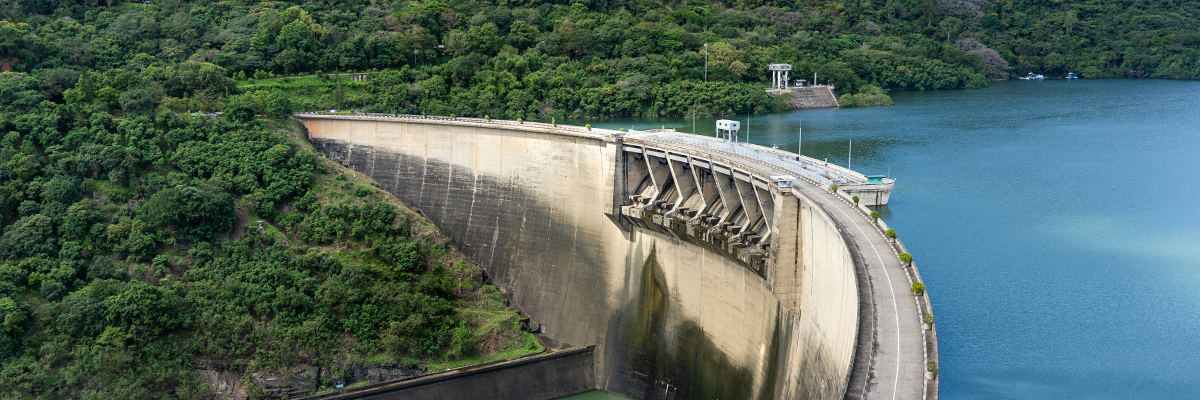
Pairing FPV with existing hydropower solves a real operational headache: declining hydraulic head during drought. When inflow drops, hydro plants are often forced into curtailment just to protect minimum pool levels.
By keeping more water behind the dam, FPV helps operators hold head levels longer into the dry season. Instead of running turbines continuously at low efficiency to cover baseload, operators can lean on daytime FPV output and save the water - then dispatch hydro into the evening price spike once solar drops off. Rather than a straight loss, seasonal scarcity becomes more like a flexible, manageable asset.
Water quality: real research, not a settled story
Drought and warm water are a known recipe for toxic cyanobacteria (blue-green algae) blooms, which force drinking water utilities into costly chemical treatment or intake shutdowns. It's tempting to assume that shading the water with panels simply solves this - less sunlight, less algae. The reality on the ground is more complicated.
That's exactly the gap that field research is starting to close. Dr. Giovanni Sandrini, Microbiology Researcher at Evides Waterbedrijf, has been studying a floating solar system on a Dutch drinking water reservoir and found a more nuanced picture: some algae types declined under the panels, while benthic cyanobacteria actually increased in the shaded zone. It's a useful reminder that FPV's water-quality effects depend heavily on site conditions, coverage, and which organisms you're tracking - and it's precisely this kind of granular, evidence-based finding that utilities and developers need before they can bank water-quality benefits into a business case.
Permitting and public tenders: an underused argument
Land-use conflict and grid-connection pushback are slowing ground-mounted solar across Europe. FPV sidesteps the land fight by using artificial water bodies instead - but developers who pitch it purely on clean energy output often still run into municipal skepticism about water impacts.
The developers getting ahead of that are the ones building quantified water-retention and quality data directly into their public Requests for Proposals. Framed well, that turns FPV from "another solar project" into a tangible co-benefit for the municipality - a stronger footing for winning concessions and moving faster through local permitting.
Where water management meets project finance
Turning these water-saving co-benefits into a bankable financial model takes real data and proven risk frameworks - which is exactly what's on the agenda at the Solarplaza Summit Floating PV Europe, taking place on 8 October 2026 in Amsterdam.
Two sessions worth planning your day around:
- Water quality research: Dr. Giovanni Sandrini (Evides Waterbedrijf) presents direct field research on how FPV arrays affect water quality and microbial dynamics in drinking water reservoirs, including where the effects are more complicated than the industry narrative suggests.
- Bankability data: Financial experts from ING share several years of asset return data, showing how multi-use FPV assets can achieve lower risk profiles and more bankable project financing.
As climate pressure keeps building across Europe, water security is becoming part of the renewable energy business case, and not just a side note. Project developers, water utilities, hydro operators, and financial investors: join us at the Solarplaza Summit Floating Solar PV Europe in Amsterdam on 8 October 2026 to work out how to quantify, pitch, and finance the full value of floating solar.

