On July 9, 2026, at the Solarplaza Summit Italy 2026, technical advisory firm Protos presented an analysis on how to solve data center grid connection constraints. The session explored how co-locating solar PV and BESS directly with micro and edge data centers can bypass grid capacity caps while cutting delivered energy costs.
Key takeaways
- Data center energy demand: Electricity consumption from European data centers is projected to double by 2030, driven by AI computing workloads and cloud services.
- Bypassing grid congestion: Co-locating on-site solar PV and 4-hour battery storage with edge data centers allows facilities to operate above local grid connection limits through peak shaving.
- Substantial cost savings: Behind-the-meter solar self-consumption eliminates grid network tariffs and system charges, saving up to €55/MWh in delivered power costs.
- UPS replacement: Modern BESS installations can replace traditional diesel generators and standalone Uninterruptible Power Supply (UPS) hardware, providing uninterrupted emergency backup power while serving as grid-interactive assets.
The energy challenge of the digital expansion
The growth of AI, cloud computing, and industrial automation requires significant expansion of digital infrastructure across Southern Europe. In Italy, data center electricity demand is rising rapidly, particularly in the primary digital hub of Milan and around Rome.
However, data center developers face a major obstacle: grid connection bottlenecks. Securing high-voltage power allocations from network operators can take years, delaying project commissioning.
To address grid constraints and manage operating costs, developers are turning to co-located 'Energy-for-Data' models that integrate solar PV generation and BESS directly with data facilities.
Architectural sizing: the 50 MW data center model
Engineering analysis presented by Protos illustrates how hybrid power architectures solve grid constraints.
Consider a 50 MW data center facility with an IT compute load of 40 MW. In a congested substation area where the distribution grid can only supply 40 MW of continuous capacity, an unmitigated project would stall.
System architecture parameters:
- Total facility peak load: 50 MW
- Available grid capacity: 40 MW
- Co-located solar PV: 35–40 MW
- Co-located BESS capacity: 50 MW / 200 MWh (4-hour)
- Minimum BESS state of charge: 60% (reserved for emergency continuity)
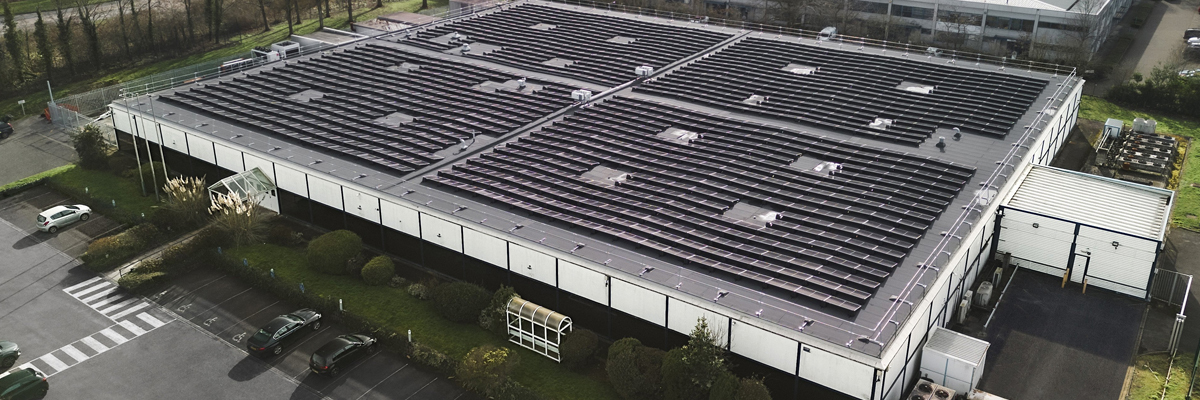
Image source: nLighten
Operational power flows
- Direct solar self-consumption: During daylight hours, the co-located 35–40 MW solar array supplies power directly behind the meter, meeting daytime facility requirements and reducing grid draws.
- Battery buffer and peak shaving: Excess solar generation charges the 200 MWh battery. During evening peak hours or periods of high compute activity, the battery discharges to cover power needs above the 40 MW grid threshold.
- Grid continuity: The main grid connection supplies steady baseload power within approved capacity limits, while the battery maintains a minimum 60% state-of-charge reserve to guarantee uninterruptible backup.
Financial fundamentals: cost reductions and return uplift
Building behind-the-meter solar and storage capacity requires upfront CapEx, but the operational savings generate strong financial returns.
Delivered energy cost stack comparison:
- Grid-only delivered energy cost: ~€185/MWh
- Commodity base: ~€130/MWh
- Network tariffs and system charges: ~€55/MWh
- Hybrid PV+BESS delivered cost: ~€150/MWh
- Net operational savings: ~€35/MWh
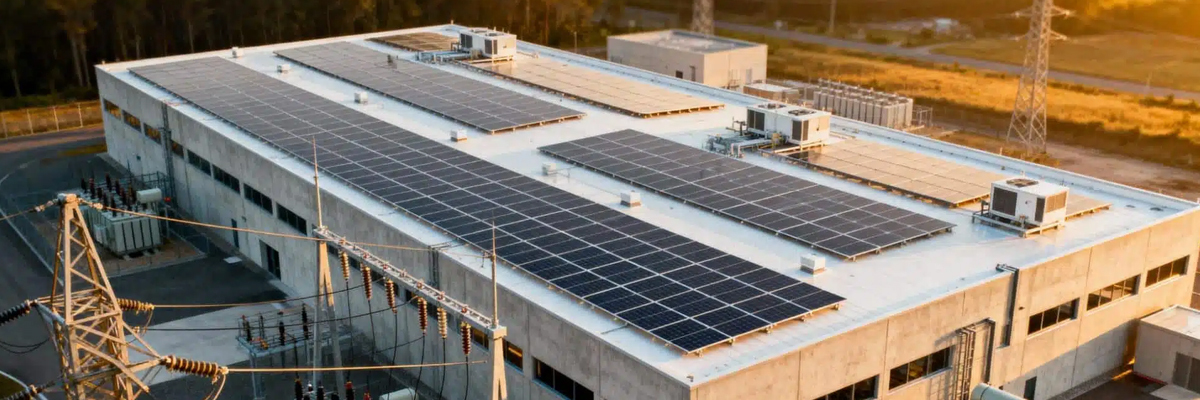
Image source: Hanwha Data Centers
The cost reduction drivers
- Avoided network tariffs: Consuming electricity generated behind the meter avoids grid transmission, distribution, and system levies, saving roughly €55/MWh on self-consumed power.
- Commodity price hedging: On-site solar power delivers electricity at a predictable Levelized Cost of Electricity (LCOE), protecting data center operators from wholesale market price volatility.
- Overall return impact: Combined energy savings improve project returns, providing an estimated 300 basis points (+3%) uplift to overall project Internal Rates of Return (IRR).
Dual-use storage: replacing UPS infrastructure
In traditional data center designs, emergency backup power relies on lead-acid or lithium UPS systems paired with diesel generators. These assets represent significant capital costs while remaining idle most of the time.
Modern grid-interactive BESS installations serve a dual purpose:
- Primary function: Continuous power buffering, solar integration, and peak shaving.
- Secondary function: Immediate millisecond-response emergency backup, replacing traditional UPS systems and reducing reliance on diesel generators.
When battery state-of-charge levels exceed resilience thresholds, operators can also participate in Terna's fast-frequency response and balancing markets, unlocking additional revenue streams.
If you want the full picture of the market dynamics, grid connection reforms, and project finance discussions analyzed at The Solarplaza Summit Italy 2026, read our complete event report here: Italy's solar & storage market is evolving. Here's why.

