China added 66.4 GW and 189.5 GWh of new energy storage capacity in 2025, bringing its cumulative installed base to 144.7 GW and 373.7 GWh. According to the China Energy Storage Alliance (CNESA), newly added energy capacity surpassed the combined total of all previous operational years for the fourth consecutive year. By the end of 2025, China accounted for 51.9% of total global new energy storage capacity and 43% of total global energy storage capacity when including conventional pumped hydro storage.
We created this analysis for investors, market analysts, and project developers who need to evaluate the structural trends shaping China's energy storage growth. We distilled these insights directly from our white paper, 'Navigating China's BESS Supply Chain', which is available for download on its landing page.
Key takeaways
- China commissioned 66.4 GW and 189.5 GWh of new energy storage capacity in 2025, expanding its operational power capacity by 51.9%.
- Standalone energy storage assets now represent approximately 60% of total cumulative capacity across the country.
- Regional deployment remains heavily concentrated in northern and northwestern provinces with abundant solar and wind resources.
- National policies are shifting the domestic market from mandatory developer requirements toward market-driven price signals and longer storage durations.
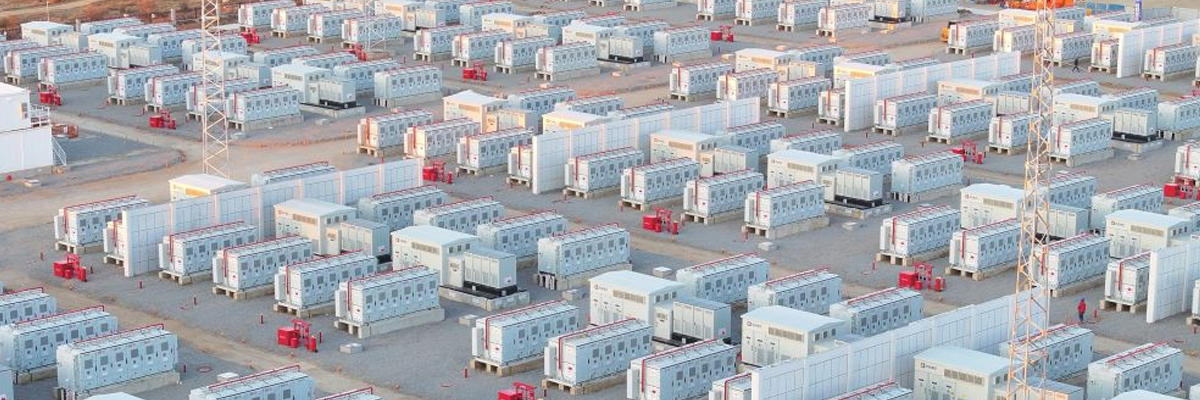
Image source: BYD
Market scale and capacity expansion
Global battery energy storage deployment reached 108 GW in 2025 according to International Energy Agency (IEA) estimates, with utility-scale installations making up 80% of new capacity. China remained the primary driver of this buildout, accounting for roughly 60% of global battery storage additions during the year. Annual shipments reflected this rapid industrial scaling, with InfoLink estimating global Energy Storage System (ESS) shipments at 421.16 GWh and Benchmark placing stationary Battery Energy Storage System (BESS) cell shipments above 600 GWh.
Within China's domestic New Energy Storage asset base, lithium-ion battery technology maintains a dominant position, representing 96.9% of cumulative installed capacity at the end of 2025. Alternative technologies, including flow batteries, compressed air, sodium-ion batteries, flywheels, and supercapacitors, continue to undergo commercial testing but remain a small fraction of overall installations.
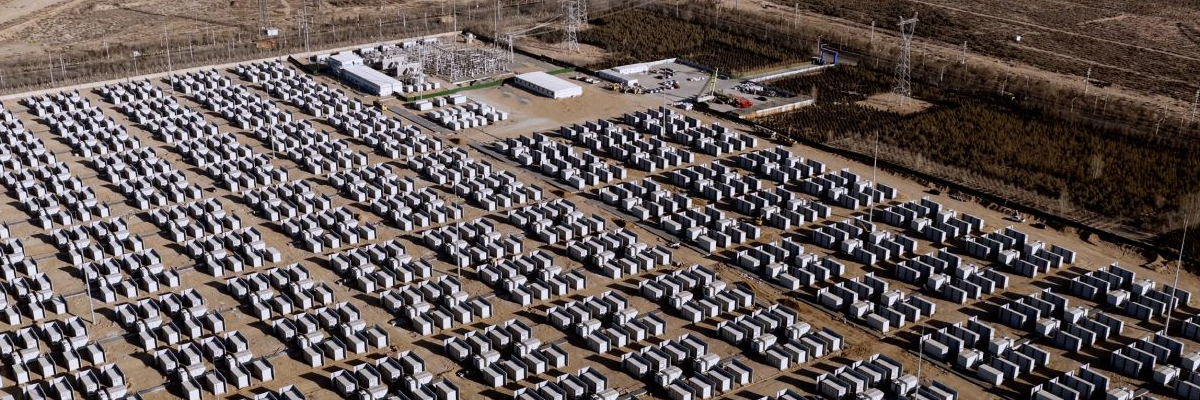
Image source: Envision
The growth of standalone storage assets
The commercial structure of Chinese storage assets has evolved beyond simple renewable pairing requirements. Standalone energy storage has become the primary development model in the country, accounting for approximately 60% of total cumulative installed capacity. In 2025, developers commissioned China's first gigawatt-scale standalone BESS project, alongside more than 260 new hundred-megawatt-scale installations, representing a 40% increase in large-scale asset additions compared to 2024.
Project deployment is concentrated in provinces experiencing heavy wind and solar buildouts. CNESA identified North and Northwest China as the leading growth regions, with Inner Mongolia and Xinjiang recording compound annual growth rates above 250% between 2020 and 2025. The top ten regions for newly commissioned storage capacity in 2025 were Inner Mongolia, Xinjiang, Hebei, Yunnan, Gansu, Shandong, Jiangsu, Ningxia, Qingdao, and Guangdong. Each of these regions added over 5 GWh of storage, collectively accounting for nearly 90% of national installations.
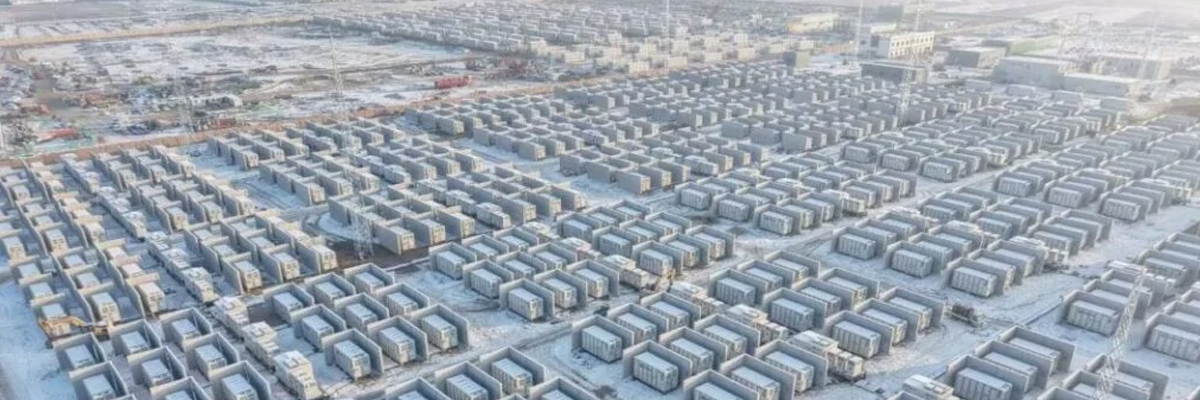
Image source: HyperStrong
Policy evolution and duration targets
China's regulatory landscape is moving away from mandatory renewable co-location quotas toward market-based revenue mechanisms. Government authorities issued 869 national and regional policies related to New Energy Storage in 2025, focusing on spot market integration, technical standardization, and battery lifecycle management.
This regulatory evolution is encouraging longer storage discharge durations. The average discharge duration of operational New Energy Storage projects in China increased from 2.11 hours in 2021 to 2.58 hours in 2025. CNESA forecasts that average duration will reach 3.47 hours by 2030 as assets focus more on peak shifting, capacity provision, and wholesale energy trading.
Looking toward 2030, CNESA projects that China's cumulative New Energy Storage capacity will reach between 371.2 GW under a conservative scenario and 450.7 GW under an ideal scenario, representing compound annual growth rates of 20.7% to 25.5%. S&P Global projects a similar trajectory, expecting China's operational BESS capacity to roughly triple between 2025 and 2030.