What does it take to unlock the power of renewable energy in the places that need it most — where the grid is unstable, capital is scarce, and risks run high? Join us in this one-off ‘Future of Energy’ podcast episode, as we talk with Andrew Johnstone, CEO of Climate Fund Managers.
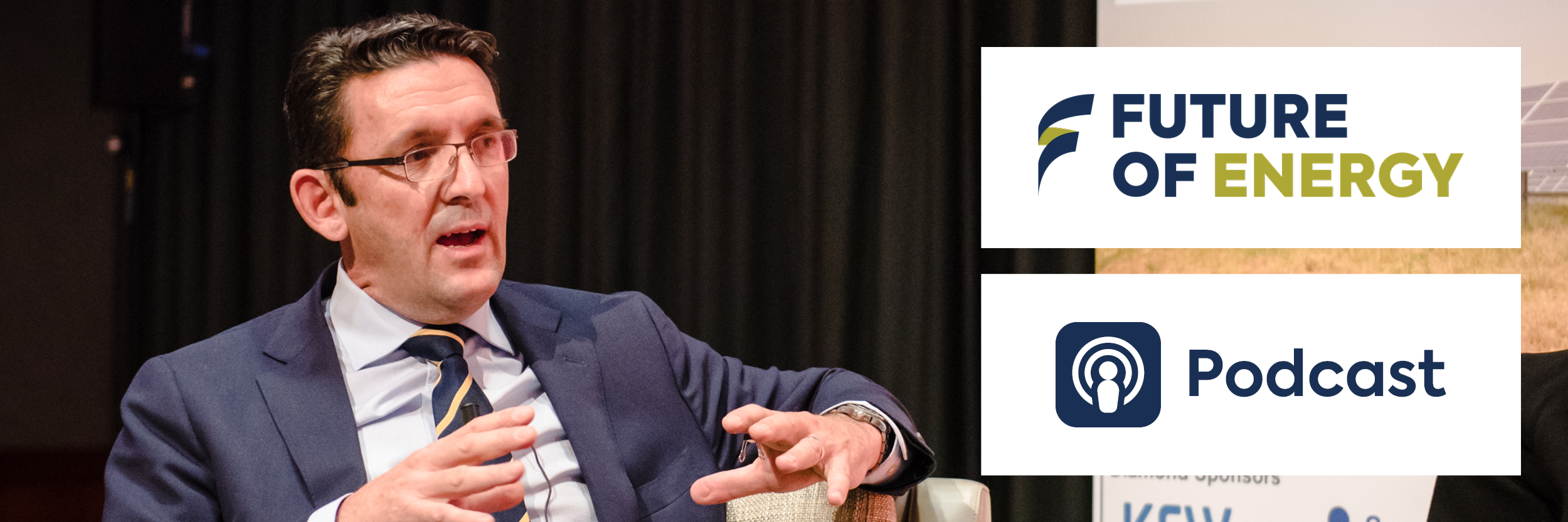
With over three decades of experience structuring infrastructure finance across Africa and beyond, Andrew offers a rare insider’s view into how blended-finance models are being used to channel global capital into high-impact clean energy projects in emerging markets. From scalable business models to real-world lessons on investment, this conversation is for anyone asking: how do we turn ambition into action — and what role does finance play in delivering energy access, cash returns and climate impact at once?
Tune in and get ready for an eye-opening 20 minutes that speaks to both purpose-driven investors and solar industry professionals seeking practical insights.
Podcast summary:
In this episode of Future of Energy, FMO speaks with Andrew Johnstone, CEO of Climate Fund Managers (CFM), ahead of the bi-annual Future of Energy conference co-hosted by Solarplaza and FMO. Johnstone, a veteran of infrastructure and blended-finance projects, explores how the world’s capital markets can be mobilized to accelerate the clean-energy transition in emerging economies.
The conversation delves into the financing gap that still hampers renewable deployment in developing regions, where risk perceptions deter private investment despite enormous solar and wind potential. Johnstone explains CFM’s blended-finance model, which combines public, private, and philanthropic funds to de-risk projects and attract institutional investors. This approach, he argues, can transform “unbankable” ideas into scalable infrastructure, bringing both financial returns and measurable climate impact.
Throughout the episode, Johnstone stresses the need for speed: the energy transition must not only be sustainable but also equitable and rapid. He points to success stories where targeted financing unlocked local jobs, improved grid stability, and delivered affordable power to underserved communities. Yet, he also warns that capital must be aligned with policy and execution capacity to avoid bottlenecks.
Listeners gain an insider’s perspective on what it takes to structure finance that serves both profit and purpose, as well as insights into how collaboration between investors, governments, and developers can reshape global energy markets. For industry professionals and investors alike, the episode offers both practical examples and a vision for what “finance for good” can achieve in the decade ahead.

