16 Sep 2025
Copenhagen
16 Sep 2025
Copenhagen
Monday 15 September 2025

Tuesday 16 September 2025

Anders Hjärpe
Svensk Solenergi

Nicola Kopij Zanin
Solarplaza
Session 1
Renewables are headed for a long-term marriage: Energy Storage. Stand-alone and co-located BESS assets are defining the Nordics' energy landscape through new revenue streams and profitability opportunities. Traditional business models based on stand-alone PV appear harmful and outdated. We kick off the day by providing you with a clear snapshot of what is going on in the Nordics' BESS utility-scale market and how it is expected to shape over the next few years.
What is happening in the Nordics RE market?
Current revenue profiles based on the Storage Index
Insights into the future revenue streams and business model for storage, based on the latest results of Clean Horizon's price forecasts

Rachel Locquet
Clean Horizon
As the energy transition accelerates, the demand for power transmission and grid flexibility is rapidly increasing. This is particularly true in Denmark, where the national transmission system operator (TSO), Energinet, plays a pivotal role in supporting the evolving energy landscape. How can Energinet provide the necessary support to power producers during this new capacity ramp-up while ensuring system stability, flexibility, and reliability?
Solving complexities from cross-border energy trading
Balancing intermittent renewable energy sources with consistent grid performance
Ensuring flexibility to manage fluctuations in demand and supply during peak times
Providing clear timelines and processes for new capacity connections

Morten Pindstrup
Energinet
During this session, you will have the opportunity to hear directly from the market leader IPPs & investors active in the Nordics and other major European markets on how they are riding the expected megatrends shaping the RE industry and adapting to the volatile power market. Gain crucial insights into expected business models, predictions in terms of profitability for utility-scale assets in Denmark, Sweden, Finland, and Norway, and how the solar industry will evolve to be even more resilient to increased fluctuations.
Comparing long-term strategies in the Nordics power market
Are hybrid & co-located assets the future?
Utility-scale PV: still an attractive investment?
Will PV + BESS assets become a necessity for a project to be bankable?
Expected extra revenues from storage assets: what uptake potential can investors consider?

Amelia Oller Westerberg
SWECO
Jasmin Bejdic
Copenhagen Energy

Tim Gadatsch
Nordic Solar
Warren Campbell
Alight

Holger Bang
European Energy
Morning networking break
Powered by

At last year's Summit Nordics an impressive 97% of attendees were able to make at least one valuable business connection. Don't miss out!
Session 2A
Optimizing battery energy storage systems (BESS) requires a clear understanding of both technical layouts and financial performance. This session will explore how different system configurations impact efficiency, safety, and revenue potential. Leveraging data and trends from real-life projects, we will examine best practices for BESS design, modeling approaches for layout optimization, and strategies to maximize revenue streams. Attendees will gain a practical view of the current adoption landscape, insights into key performance drivers, and a forward-looking perspective on how innovative layouts and modeling techniques can shape the future of energy storage economics.

Laura Rodríguez
RatedPower

Julian Scheer
RatedPower
In this session, LONGI Solar presents its GSE (Global Solar Ecosystem) service solution, designed to add value across the entire PV plant life cycle. The presentation examines how this solution can optimize every stage of a project, from initial design and development to long-term operations and maintenance (O&M), ensuring maximum performance and profitability in the challenging Nordic market. The session highlights how an integrated approach to technology and service can empower developers and asset managers to navigate complexities and enhance the overall return on investment for their utility-scale projects.

Ganeshkumar TS
LONGi
When analyzing the overall quality of a project, it is crucial to master KPIs such as NPV, IRR, Payback, ROI, and LCOE, along with revenue and OPEX estimations when it comes to the component choice for your asset. This panel will gauge the key parameters asset managers and project owners must consider for utility-scale projects in the Nordics.
Erik Enqvist
Glint Solar

Georg Urban
Voltage Clean Energy
John Susa
WHES
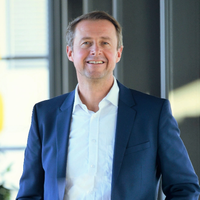
Dirk Holzrichter
Goldbeck Solar GmbH
Session 2B
The focus on revenue maximization and optimization in our industry is essential, as these revenues justify the significant investments in battery storage. There’s a fine balance between maximizing immediate revenues and ensuring the longevity of battery assets. Improper or excessive use can not only cut short the battery’s life but also limit its ability to operate at peak efficiency, leading to missed opportunities and increased maintenance costs. What can we learn from malfunctioning issues in the past, and what measures can we take to enhance battery longevity and improve ROI?
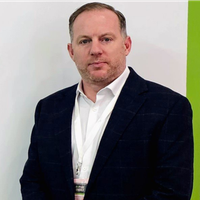
David Minnis
Huawei

Christoffer Caesar
Soltech
Safety remains one of the most critical concerns in the use of BESS. Despite advancements in technology and the implementation of strict standards at both the component and system levels, incidents involving battery fires have continued to occur in recent years. These events are particularly hazardous due to the high energy density of the cells and the potential for fire propagation to surrounding systems or installations. Such risks raise serious concerns not only for personal safety, but also for environmental protection and financial or insurance considerations. To address this challenge, we are introducing the highest level of safety assurance through a crucial large-scale burn test, designed to replicate worst-case scenarios and provide valuable insights for risk mitigation.

Krisztián Gérusz
Sungrow
Operating across various European markets presents significant operational complexity for utility-scale BESS developers due to fragmented sourcing, varied compliance requirements, and inconsistent support. This session will outline how a pan-European orchestration model can streamline the execution process. It will cover how centralized procurement, unified certification standards, and coordinated logistics and after-sales service can enable more reliable and scalable deployment across the continent. Key points include:
Addressing fragmented sourcing and cross-border compliance mismatches.
Reducing lead times through coordinated logistics and customs support.
Standardizing quality control and certifications across EU markets.
Enabling scalability with one point of contact for multi-country execution.
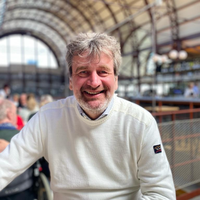
Gerard Scheper
PVO International
Networking lunch break
Join our Speed Networking activity in the Foyer during this break. Starting at 13:30!
Session 3
Whether deployed as standalone systems or integrated into hybrid setups with REs, BESS trading strategies are critical for optimizing returns.
The question of where you can earn the most in the Nordics market depends on various factors, including market dynamics, regulatory frameworks, pricing mechanisms, and the specific use cases for BESS. Different trading strategies, such as frequency regulation, energy arbitrage, and ancillary services, offer specific revenue streams. Understanding these opportunities and tailoring strategies to the Nordics' unique energy landscape can maximize profitability.
Which trading strategies can investors bet on to capitalize on power trading in the Nordics?
Increasing volatility in electricity prices: enough opportunities for higher returns?
Assessing the impact of increasing RE penetration on day-ahead markets and real-time pricing
Managing uncertainty in future electricity market pricing

Pierre Lebon
cQuant
As developers strive to navigate fluctuating energy prices and the uncertainties of the market, PPAs are seen as a crucial tool to provide financial stability and predictability. However, while PPAs offer numerous benefits, they also come with potential challenges and considerations that must be carefully managed. Are PPAs an effective hedge against market volatility, or do they introduce new layers of complexity that developers need to anticipate?
Unstable and falling capture rates: which counterparty bears such risk
Main contractual risks and considerations when negotiating PPAs
How easy is it to meet the offtaker's needs?
Which types of PPAs should you opt for?

Mikkel Kring
Our New Energy
PPAs are evolving beyond simply locking in baseload prices. These agreements are becoming dynamic tools that provide businesses and energy producers with opportunities to optimize costs, hedge against market volatility, and support sustainability goals. To maximize the value of a PPA, it is essential to understand the intricacies of the Nordic energy market, tailor the contract to specific operational needs, and leverage innovative strategies. We do it through this panel discussion, led by market players actively involved in Nordic-signed PPAs.
How can contracts be tailored to include flexible pricing models, green certificates, or additional exposures?
How can PPAs be used as a hedge against market volatility and rising energy costs?
What prices are we observing for Nordic PPAs?
Mikkel Kring
Our New Energy

Jenny Ekman
Flower
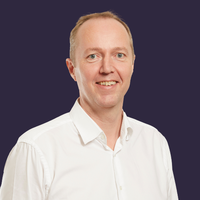
Mikkel Hauge Jensen
Mind Energy

Ellen Ekblom
Alight
Afternoon networking break
Powered by
Connect with 200+ key stakeholders and experts across the entire RE value chain who focus on the Nordics market.
Session 4
While secure revenue streams offer the most attractive project financing profile for banks, merchant exposure may be able to offer a higher risk-return profile. Investors must ensure their business models are updated and remain competitive in order to reach positive NPV projects. This becomes even more challenging as storage revenue streams have to be structured and integrated into financial models.
It all starts with project financing, and during this panel discussion, the major lenders will share their insights on how to maximize the chances of structuring successful financing deals, and how they price in the risk for projects with cash flow exposure based on BESS.w exposure based on BESS.
What project characteristics should developers and IPPs aim for in order to obtain project financing?
Can BESS merchant projects be financed?
Financing options from commercial banks: what terms are being offered?
Private debt strategies as an alternative to traditional equity financing
Nicola Kopij Zanin
Solarplaza
Kinga Charpentier
EY-Parthenon
Bo Nordberg
Nordic Investment Bank (NIB)

Christoffer Adrian
DNB

Andreas Ditlev Duckert
Obton
Driven by the energy transition, the Nordic power market is undergoing structural changes that are reshaping the investment outlook for PV and BESS. This presentation explores how evolving policy frameworks and future market design choices will impact the financial viability of these technologies. Key design shifts to consider include
Maël Denys
Aurora Energy Research
Nicola Kopij Zanin
Solarplaza
Networking drinks
Network and enjoy drinks with participants from Denmark, Sweden, Finland, Norway, Germany, the Netherlands, Spain, and many more!
Got questions?
We’ve got you covered — explore our most frequently asked questions about Solarplaza Summit Nordics!
Send us an email; we’d be more than happy to help.
Victor Georgescu
Event Manager
For questions about the program and content of the event:
[email protected]
Tor Jörgensen
Business Developer
For questions regarding partnership opportunities:
[email protected]
Sabine Dhevaraj
Customer Care Manager
For practical questions regarding our activities:
[email protected]